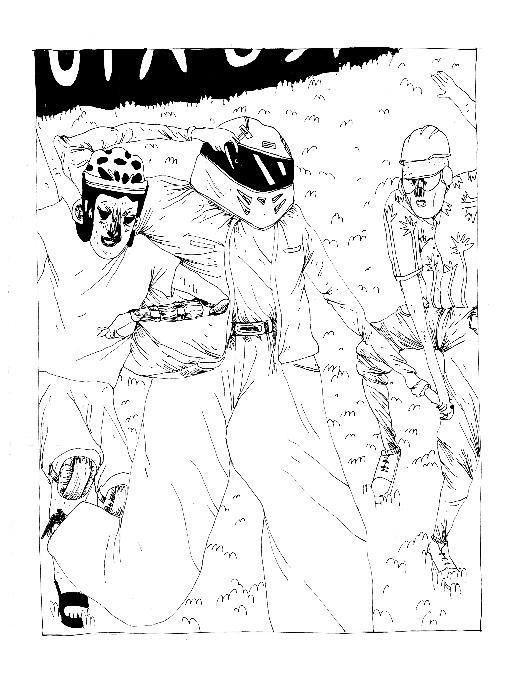
There is a slope outside Brentonico, a village of four thousand souls in the Trentino province, where every year a wheel of cheese is released down the hillside and a small crowd of locals runs after it. This “race” is called formaggio rotolante or ruzzolone del formaggio. The rules are simple: chase the cheese, do not break your neck, and whoever reaches the bottom of the hill first wins something that does not particularly matter. I drive past the road to Brentonico often on my way through Rovereto, and ever since I read ZUZU’s first graphic novel, I have not been able to take that road without thinking of three teenagers in helmets and matching shirts preparing to throw themselves down that slope.
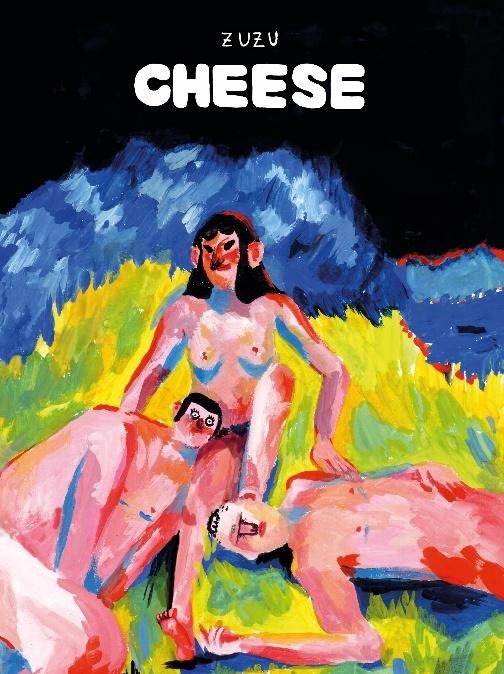
The graphic novel is called Cheese, and the three teenagers are Zuzu, Dario and Riccardo. The book was published in 2019 by Coconino Press, the Roman publisher that has been quietly producing the most interesting Italian comics for two decades. ZUZU, whose given name is Giulia Spagnulo, was twenty-three at the time, the youngest author Coconino had ever taken on. She had finished the book as her thesis at the IED in Rome, where she studied illustration, and had given it to Coconino’s then-director Ratigher, who passed it to Gipi, the ‘dean’ of Italian autobiographical comics, who oversaw its completion. The book won the Boscarato Prize at TCBF as breakthrough author (tied with Fumettibrutti, the other defining cartoonist of this generation), the Micheluzzi at the Naples COMICON and the Gran Guinigi Prize at Lucca C&G. It has since been translated into Spanish, German, and French and was included in the official selection at Angoulême in 2022. It has not been translated into English (yet). Neither has the second book, Giorni felici, published in 2021 and put forward for the Premio Strega by Valeria Parrella. Neither has the third, Ragazzo, published in May 2025 and awarded the Premio Boscarato for best artist that September. This is, as far as I know, the first attempt in English to read her three books as a single project. The lack of translation matters because it means the English-language reader will have to trust the page completely, which is where ZUZU’s work happens.
In its simplest form, the Italian critical conversation around ZUZU has placed her, accurately but insufficiently, in the lineage of autobiographical Italian comics that runs from Gipi through Fumettibrutti. This autobiographical surface is real, but what that reading misses is that ZUZU has been building, book by book, a visual narrative for what cannot be narrated. The body in her work fails to hold its form. The page splits into incompatible registers. Colour drains or saturates when emotion exceeds dialogue. This is how ZUZU’s stories exist. Trauma in ZUZU’s work is a sort of principle that organises how she draws rather than a theme one of her characters carries.
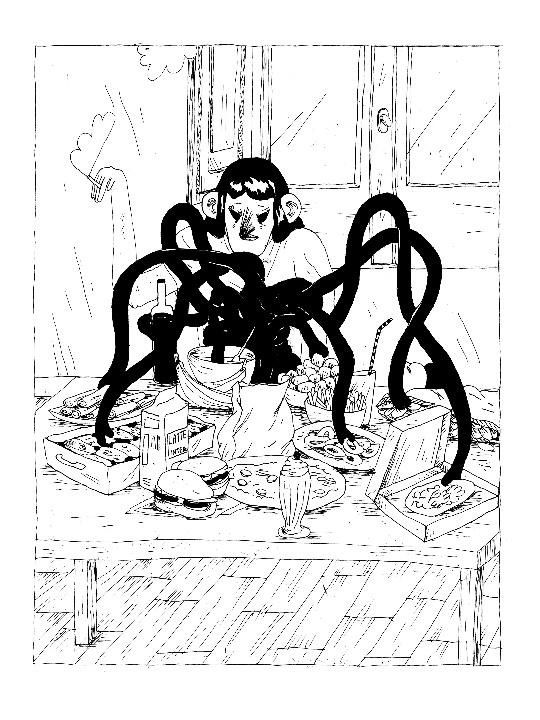
Cheese is divided into three formal registers. The comic-strip pages, in a heavy and somewhat ungainly black-and-white, tell the surface life of the trio: afternoons of boredom in the outskirts of Salerno, crushes, fights, jokes, and the slow approach to the trip north. Inside this narrative, ZUZU inserts two other orders of image. The first is diaristic, full-bleed pages of handwritten text with sparse illustration, fragments that read like something written down at night and read back the morning after. The second is heavier, full-page drawings in which the body of the protagonist has stopped behaving as a body. It swells past its outline, opens to expose organs that take on the contours of a landscape, becoming a place rather than a person. The protagonist of Cheese is bulimic, yet her bulimia is never narrated in the pages, where she is among friends. Rather, it migrates into the inserts, where she is alone. The book is structured around this migration. What can be spoken stays in the strip and what cannot be spoken finds its way into a different order of image.
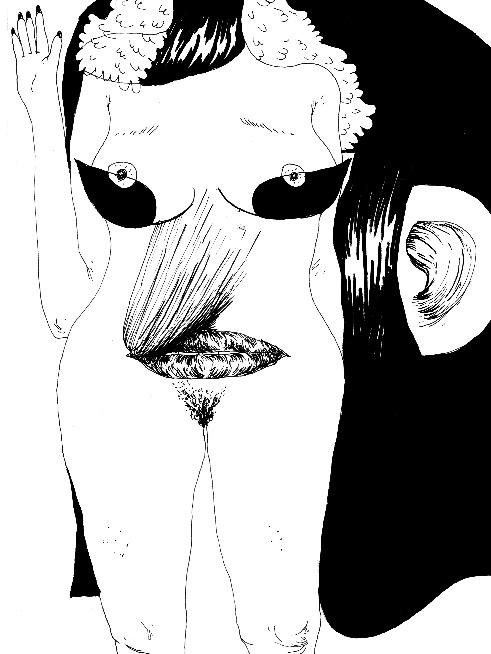
The early Italian reception of Cheese noticed the strength of the inserts and tended to register them as the book’s strongest material, sometimes adding that the narrative pages around the trio could feel episodic by comparison. This observation is not wrong, but the framing undersells what ZUZU is doing. The inserts operate at a different depth of the protagonist’s life rather than at a higher one. The comic strip is where she can be in company.
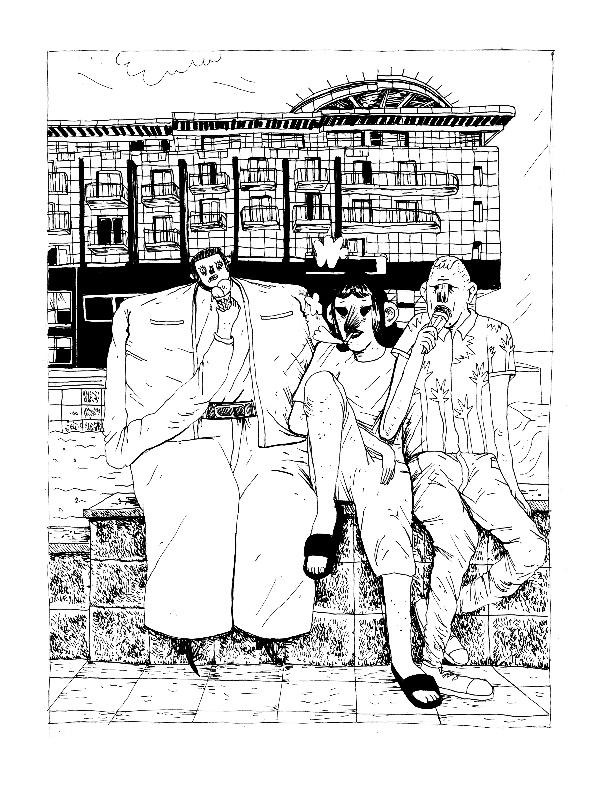
The illustration is where she is alone with a body that she cannot fit inside. The argument of the book is not stated anywhere, but it is visible: no single register could contain the protagonist as she actually is, and the structure of trauma is exactly this partition between zones of the self that do not communicate with each other.
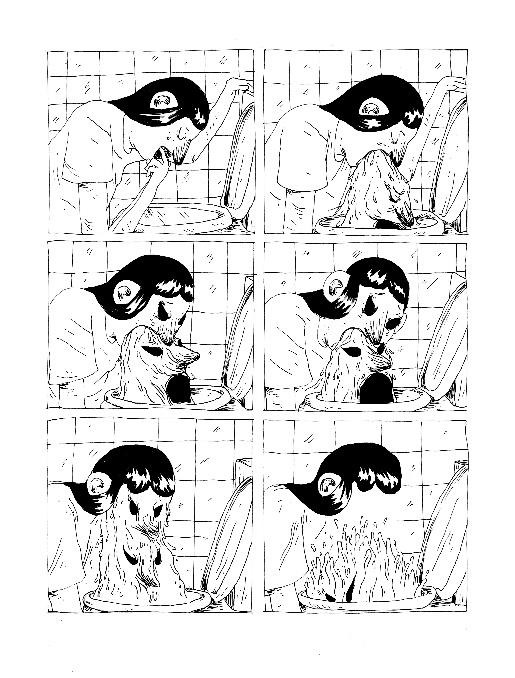
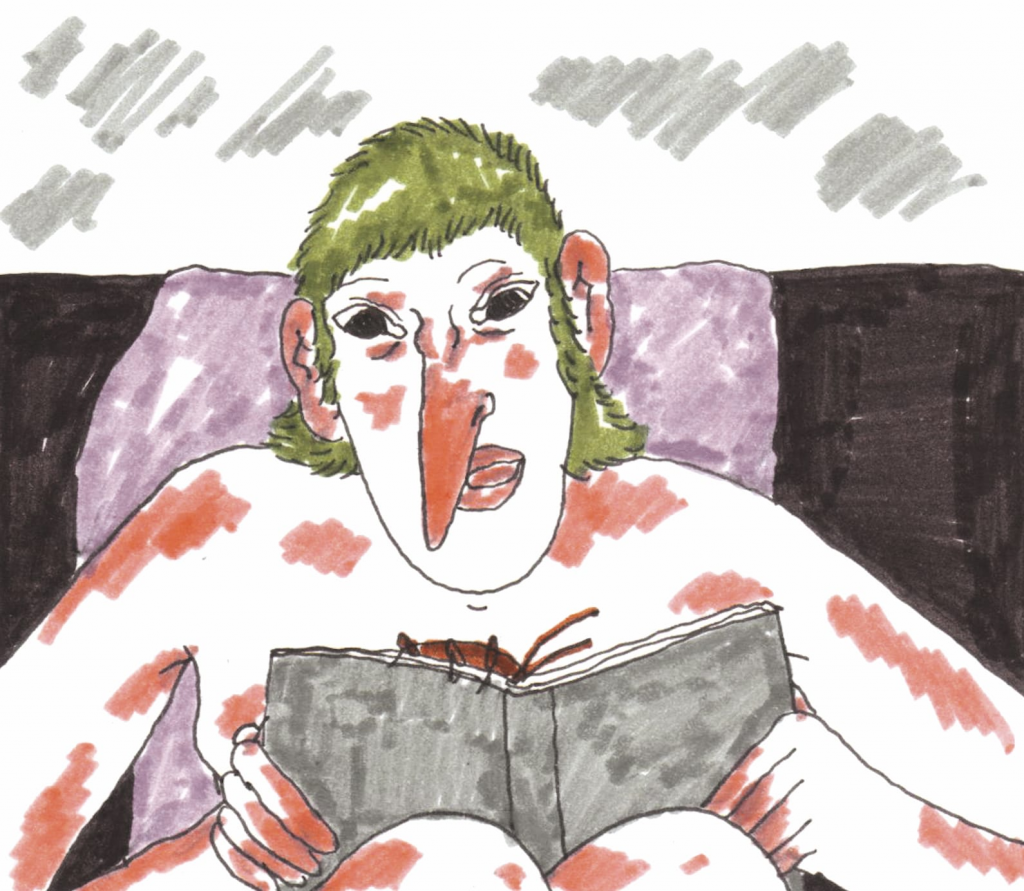
ZUZU’s line in Cheese is heavy. Dense, bituminous ink, deformed and deliberately anti-realistic, descending from Gipi’s looser draftsmanship but pushing toward something more grotesque. Her figures have sharp noses and angular limbs, and one of the things that becomes a marker of ZUZU’s hand across the trilogy, the so-called naso spagnulo, makes its first appearance here. The nose, in her work, is never simply a feature of the face. It is the place where character begins to be drawn, the first decision the page makes about who a person is. Her very first comic, made as a student at IED Rome, was titled ZUZU and was an entire short work built around noses. The drawing in Cheese is not virtuosic and is in no way trying to be beautiful. It’s completely committed to finding a graphic language adequate to a particular kind of damage, and the answer ZUZU gives is a line willing to become ugly wherever ugliness is what the page requires.
And at the end, the cheese. The trio reaches Brentonico. They roll. The book closes on the descent, on the act of throwing oneself down a hillside and seeing what happens. The race is, in the literal sense, a joke: there is nothing to win and no one is taking it seriously. In the structure of the book, it’s the first instance of what will become a recurring gesture across the three graphic novels. The protagonist is in a situation that has become unbearable, and the answer to that is to set her body in motion, to let it roll, to escape by gravity rather than to decide anything. Nothing is really resolved here. The slope ends. The next novel has to start somewhere else.
Giorni felici, published two years later, starts inside another woman. Her name is Claudia. She is preparing for an audition: she will recite Winnie’s monologue from Beckett’s Happy Days, the play from which ZUZU borrows her title. Winnie, as anyone who has read the play remembers, is buried up to her waist in the first act and up to her neck in the second, and she speaks ceaselessly through her own slow burial, insisting that the day is happy. In Giorni felici, Claudia is not buried in sand. She is in her twenties, healthy, in love with two men at once, free in every external sense to choose her own life. She is also, exactly as Winnie is, unable to move. ZUZU has put it more precisely than any of her critics have. “Claudia is not stuck in the sand up to her waist,” she said in an interview at the time of publication, “but she feels blocked, pulled upward and held downward.” The Beckett reference names a condition that the book wants to describe: a paralysis with no outer cause that the protagonist herself cannot quite see.
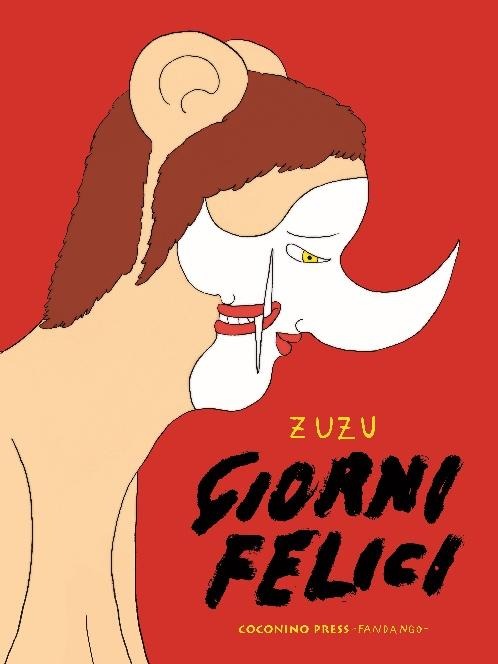
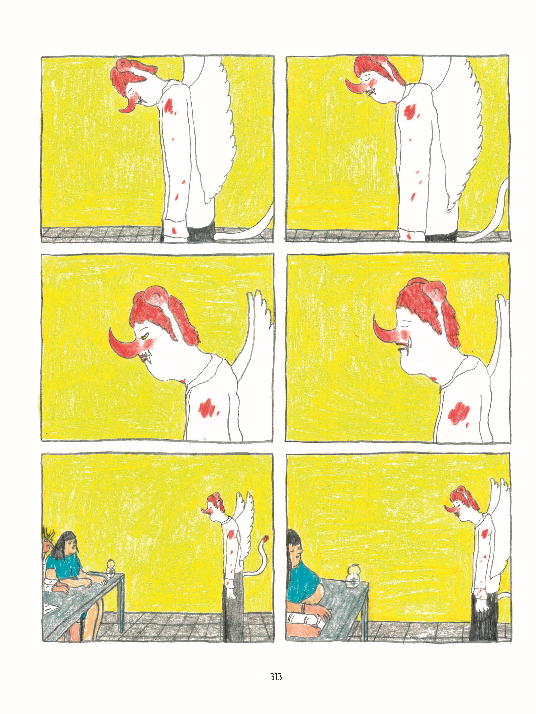
The break with Cheese is total in this book. The black-and-white is gone, replaced by coloured pencils and pastels in a register that some Italian critics have read as Fauvist, although the comparison undersells the deliberate childishness of the palette: reds, yellows, pinks, greens, applied in irregular zones that often overflow the line. The drawing has become softer, more open and less hostile. And the body, instead of splitting, transforms (ZUZU would say it keeps changing). When Claudia’s emotion exceeds what the dialogue can hold, when rage or shame or desire arrives in concentrations too large for the surface of the scene, her body changes shape. She grows tusks like a wild boar, she grows claws, a tail, a pair of wings. She becomes a sphinx or a manticore or something taken out of a medieval bestiary.
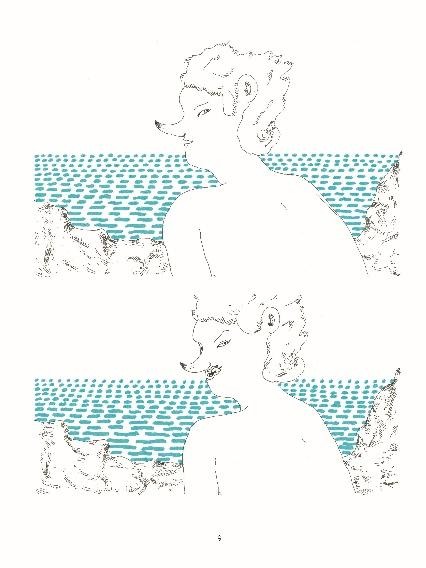
These transformations are visible to the reader, but not, apparently, to the other characters. They happen in plain sight and no one in the diegetic world remarks on them. Claudia herself does not appear to know that she has wings.
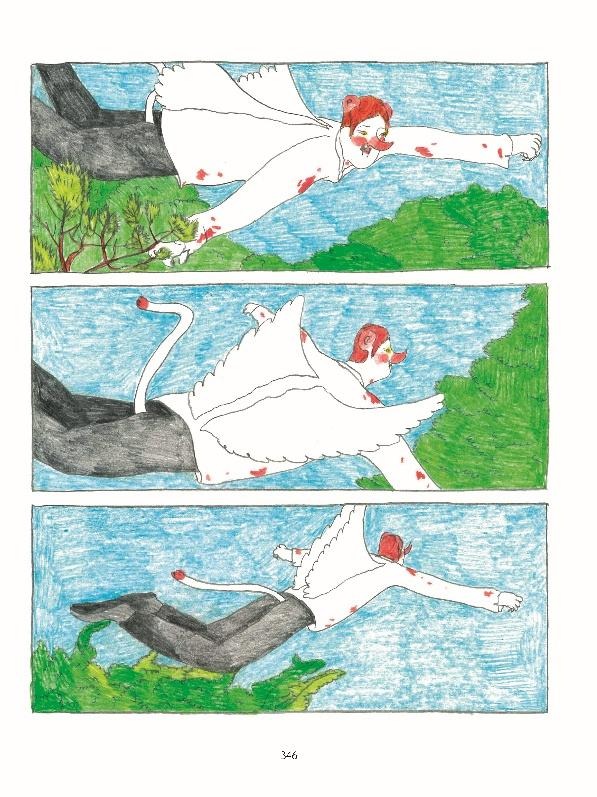
This is the most important formal invention in ZUZU’s work to date. In Cheese, the body had been the surface on which trauma left a record, a record visible to the protagonist herself in the moments of solitude that the inserts isolated. In Giorni felici, the relationship between the body and the reader has changed. Claudia does not see her wings, but we, as readers, do, because ZUZU is showing them to us. The transformations belong to a meaning that the protagonist cannot access and that we, with the page open in front of us, can.
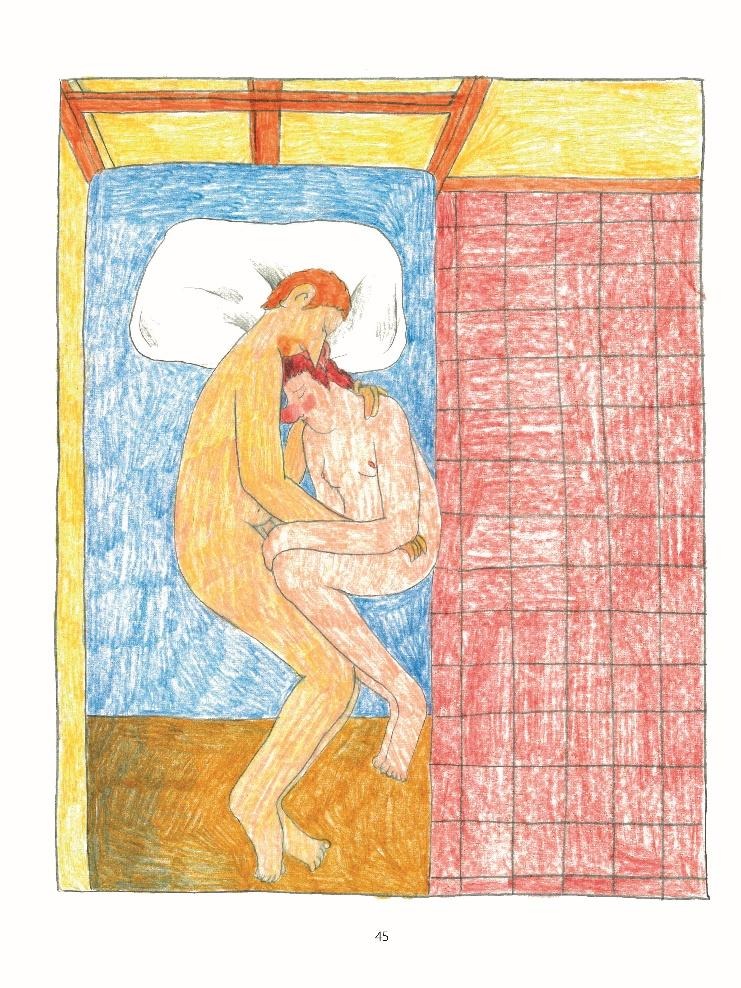
ZUZU has been almost “programmatic” about the formal claim this device makes: “Only comics,” she has said, “allow one to create a visual dialogue between the one who draws and the one who reads, in which the two share a secret that is also a symbol, an image that tells the inner life of the character. To attempt the same operation in a novel or a film would be impossible. Claudia’s wings are more useful to us, trying to understand her, than they are to her, for flying.”
There is a lineage behind these transformations: Leonora Carrington, whose paintings and writings ZUZU has cited as one of her deepest loves. Carrington, the surrealist painter and writer who spent most of her adult life in Mexico, built an entire body of work around women who turn into horses, hyenas, white rabbits, who pass through walls and through the line that separates the human from the animal as if the line were not there. The transformations in her paintings are never explained and never seen as a sort of punishment. They simply occur with the same domestic calm with which one might pour a cup of coffee. Claudia’s wings, I think, belong to the same tradition. They are not a Kafkian metamorphosis of a man condemned to inhabit an insect’s body but a Carringtonian changing of a woman whose interior life cannot stay inside her skin, and who therefore lets it out, in claws and tusks and feathers, with no one in the room noticing.
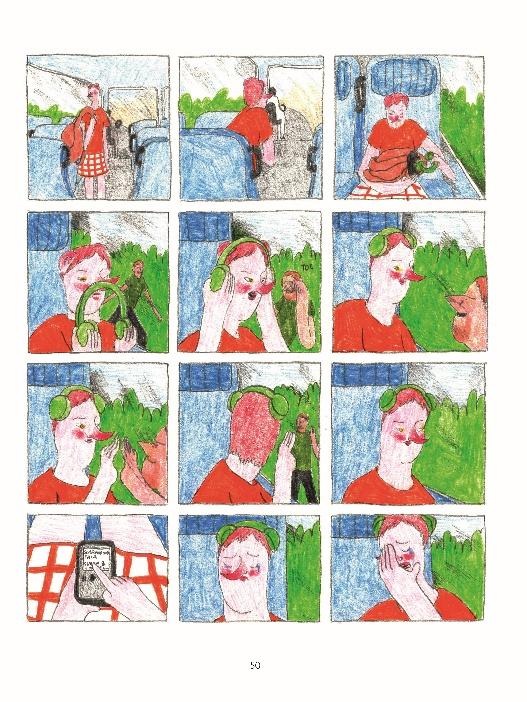
Giorni felici has its weaknesses, and the Italian critics who pointed them out were not wrong. The narrative around Claudia, Giorgio (an ageing bass player in a Radiohead cover band: the relationship that is corroding her), and Piero (an archaeologist living in the provinces: the relationship that is sustaining her) does not always feel as alive as the formal architecture around it. The ending, which several critics found too cathartic, can read as imposed by the requirements of a hardcover book rather than emerging from the material. These are real observations. They are also, I think, observations about the wrong thing. The serious work of Giorni felici happens in the transformations rather than in the love triangle. To read this book for the plot is like to read Beckett for the plot.
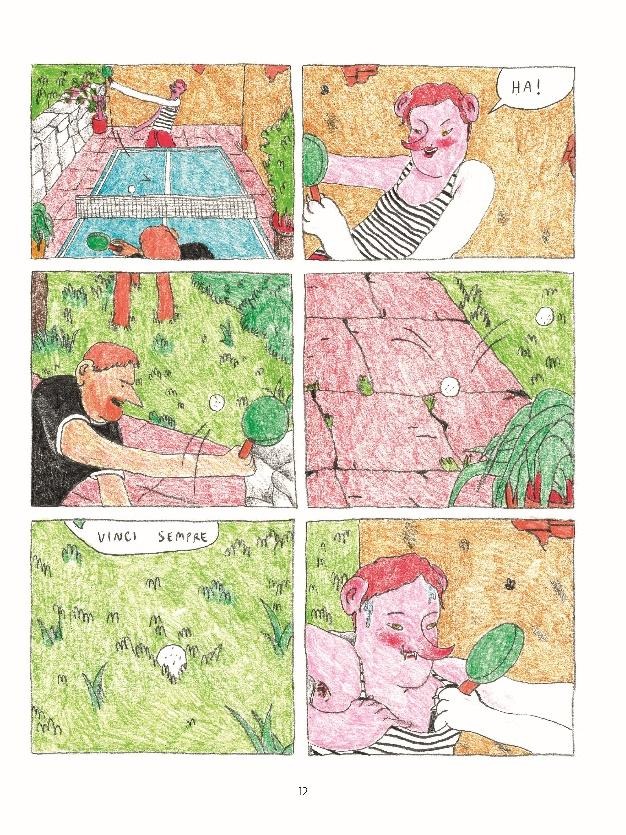
Ragazzo, ZUZU’s third book, published in May 2025, moves outward. It makes two decisions at once, both of them risky. The first is to leave the female alter ego that had organised the previous two books. The protagonist now is Francesco, a high-school boy from the Salerno province whose central trouble is sexual impotence. The second decision is to leave the close third-person attention to a single consciousness in favour of a polyphonic structure that distributes attention across a network of characters: Francesco, his girlfriend Alice, his classmate Andrea who has disappeared, Francesco’s parents, Andrea’s mother, and two older characters named Rita and Luigi who walk down the Amalfi coast carrying their own version of the same trouble. The book is built around a triggering event, Andrea’s disappearance, and the way that event resonates through a community of people who knew him or knew of him, including people who barely register on Francesco’s surface life.
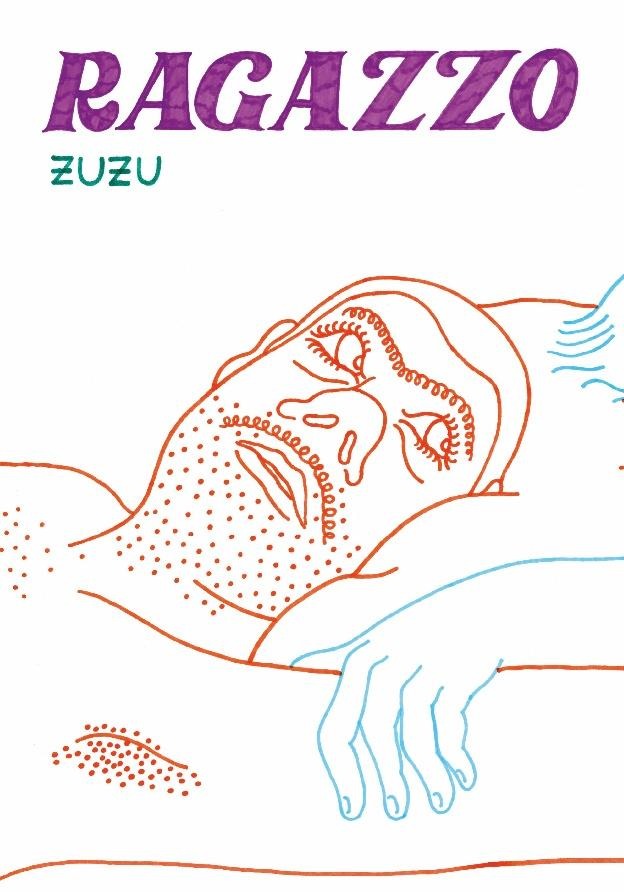
ZUZU has been precise about the reasons for the shift: “Before,” she said in an interview with Il Manifesto after the book came out, “I confronted my own uncertainties and unease as if they were tied to my femininity, with which I could not always coordinate. Then I realised that, more than with my feminine, I was at war with my masculine because I struggled to accept it. This book is an exploration of the masculine element, not programmatic, but conducted page by page.” Francesco is an exploration, conducted in male form, of the same trouble Claudia carried rather than a portrait of a particular boy: a desire that cannot be satisfied, a body that does not respond to the will, a self that does not coincide with itself. His impotence is the male equivalent of Claudia’s metamorphosis. The trouble registers in the body. The question of how to inhabit the body is the question the book is trying to answer.
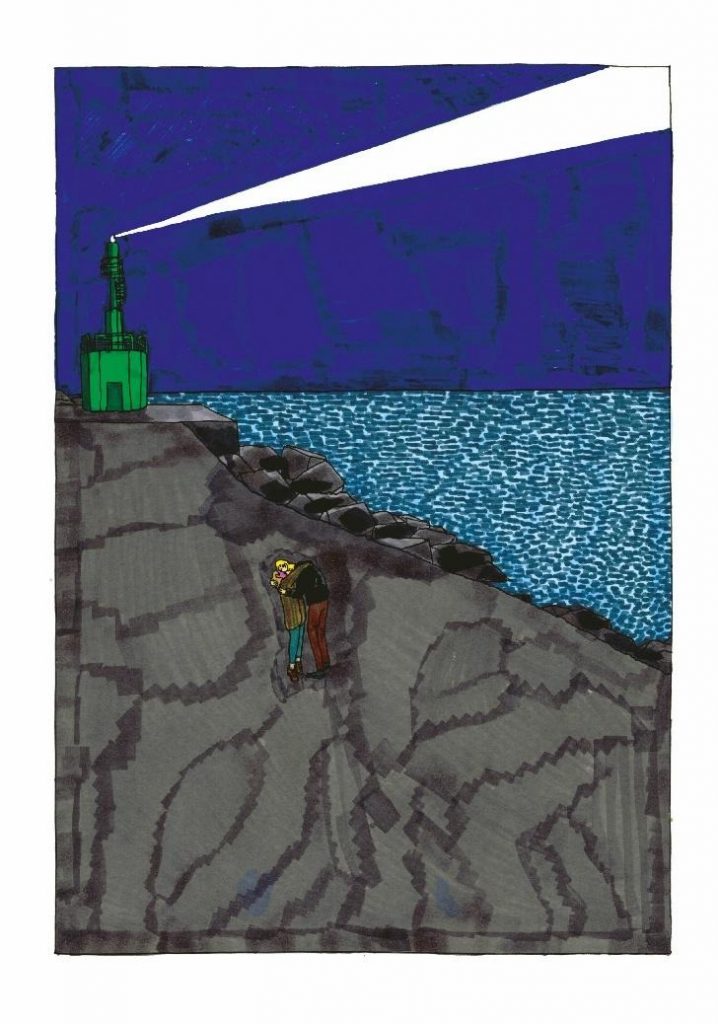
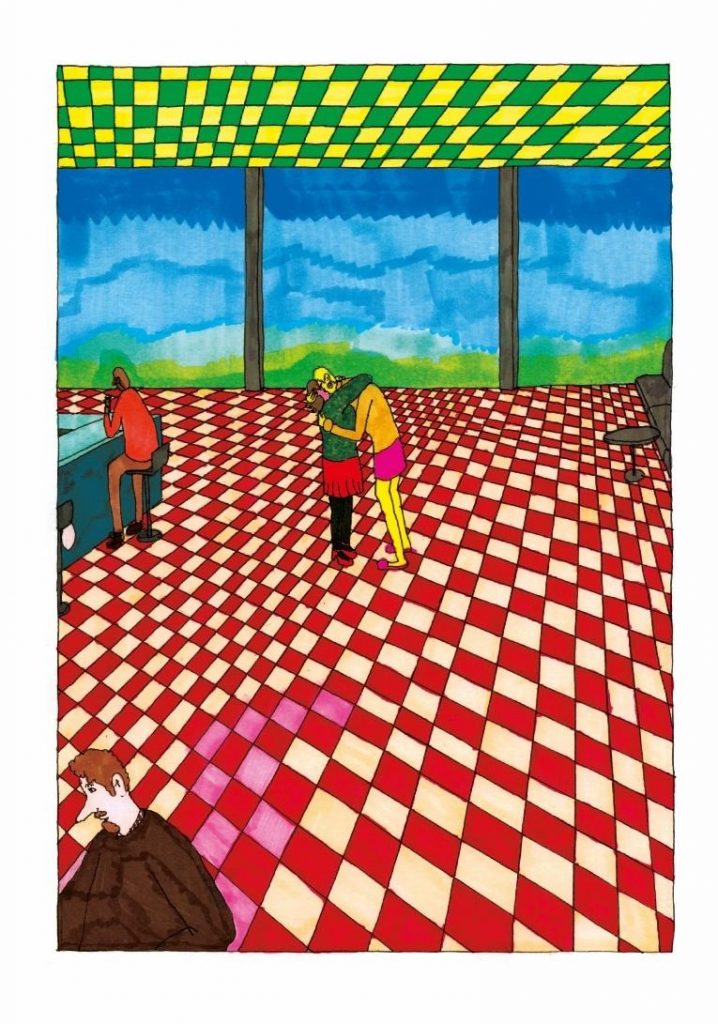
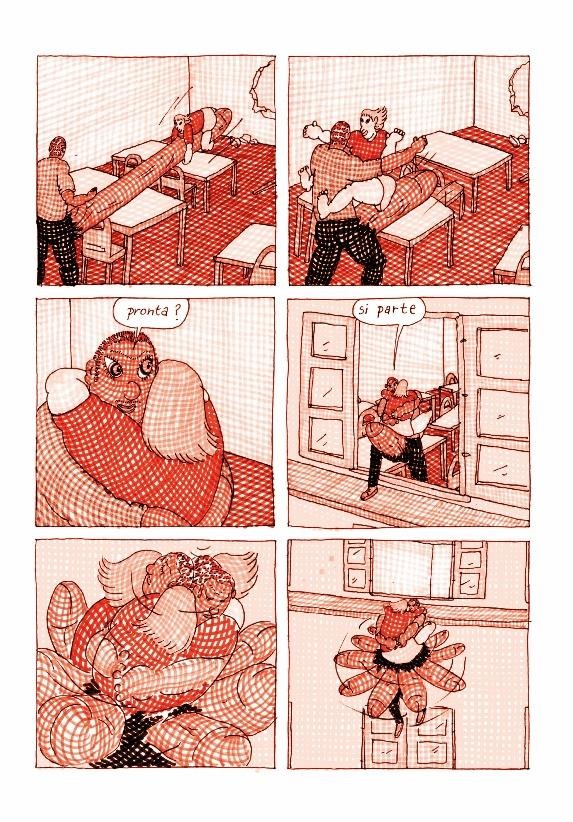
In Ragazzo, ZUZU’s graphic language shifts again. Felt-tip markers replace the coloured pencils, the palette saturates almost to garishness, and the line is at its most childlike and most cartoonish. Pages of small, densely packed panels alternate with larger compositions. When the narrative enters the interior of a character, the colour collapses onto a single dominant hue, red for Francesco, blue for Alice, and the line softens, the world loses its edges. In the moments where Francesco’s desire can be imagined rather than enacted, where the impotence is suspended in the register of fantasy, his body in flight carries Alice into the air, his penis as the impossible organ of liberation. The composition does for Francesco what the metamorphosis did for Claudia: it shows the reader something the character cannot quite show himself, and it shows it in the only place where it can exist.
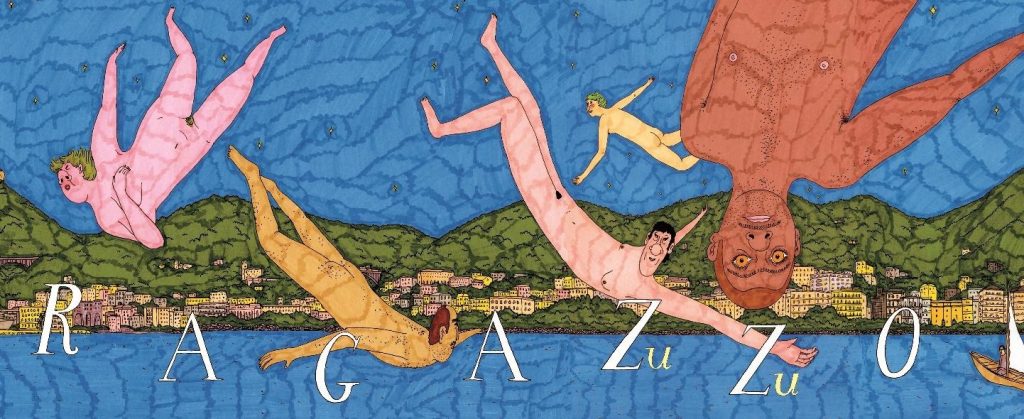
Underneath all three books, named at last by ZUZU herself in the interviews around Ragazzo, is the motif that is the trilogy’s secret subject: “Flight,” she said, talking about Andrea’s disappearance, “is a theme that follows me. It was in Cheese, it’s in Giorni felici, it’s here too.” The trip to Brentonico in Cheese, three teenagers throwing their bodies down a hillside after an object none of them care about. Claudia leaving Piero in the country house to take the train to Rome and from Rome back to Giorgio and from Giorgio back to nothing, in Giorni felici. Andrea’s disappearance in Ragazzo and Francesco’s father Giovanni making the trip from Salerno to Bologna, retracing the boy’s path north as if the geography of the country could explain a vanishing. Each of the three books begins by establishing a situation and then disassembles it through a departure. The departure does not solve anything. It is what the characters can do when they cannot stay and cannot decide. They roll.
The body that splits in Cheese, that transforms in Giorni felici, that fails to perform in Ragazzo, is the same body throughout the trilogy: the body of someone who cannot inhabit themselves and who cannot stop trying. The graphic devices ZUZU has been inventing across these three books, the splitting of registers, the silent metamorphosis, the colour-saturated interior, are devices for rendering what that body looks like from inside, and the page is where they all happen. This is the laboratory ZUZU has been running.
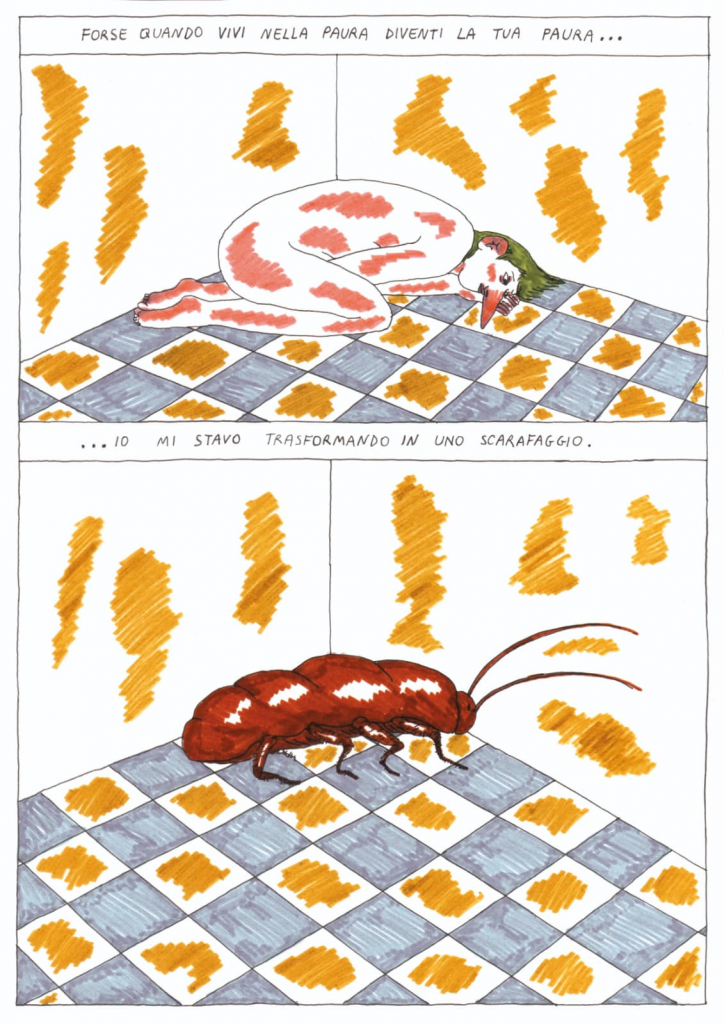
The most recent signal of where this laboratory is heading arrived in late 2025. La fine del mondo is a new monthly magazine, published by Il Manifesto and directed by the cartoonist Maicol & Mirco, which brings together some of the most distinctive Italian comics voices at work today, Gipi and Zerocalcare among them, in a serialised format unusual in a market dominated by graphic novels. ZUZU’s contribution is called La locanda. The focus of the story is a cockroach named Sergio by the narrator-protagonist, an animal she has placed at the centre of the page as the visible form of a fear she cannot otherwise name. The register, at the time of this writing, is openly grotesque, and the autobiographical premise of the earlier work continues here in a new key: the body that fails is no longer recognisably human, but it is still, recognisably, hers.
The obvious reference, the one any reader will reach for first, is Kafka. Sergio is a cockroach. Gregor Samsa, on the famous first page of Die Verwandlung, wakes to find himself transformed into an ungeheueres Ungeziefer, a monstrous vermin that the German tradition has long assumed to be roughly cockroach-shaped. ZUZU is plainly aware of the comparison, and the Kafkian register of La locanda is something she is leaning into rather than avoiding. The first instinct, then, is to read Sergio as ZUZU’s Gregor, and La locanda as a fable of alienation in the line of Die Verwandlung.
But that reading is wrong, or at least it stops short of where the work is actually located. The genealogy of Sergio is Anna Maria Ortese rather than Kafka.
Ortese, who died in 1998 and whose late work has been undergoing a quiet rediscovery in Italy over the last decade, spent her career writing creatures. L’Iguana, the novel she published in 1965, is built around a green lizard who is also a servant girl in a household on a small island, who is also a saint, and who is also, possibly, no more than what she literally is, a lizard. Il cardillo addolorato turns on a goldfinch whose suffering moves through a Naples that is half real and half supernatural. The short story “Un paio di occhiali”, from Il mare non bagna Napoli, has a child put on a pair of glasses for the first time and see the alley around her in a way the alley itself cannot quite survive. The world of Ortese is one in which the animal, the unfamiliar, the small uncatalogued being, is the point through which a different order of reality presses into the human world. The animal is the access rather than a metaphor for anything. And the texture of her prose, which works by apparition rather than by description, is exactly the texture of a page that shows something before it explains it.
Kafka’s metamorphosis is an isolation. Gregor wakes alone, finds his family unable or unwilling to recognise him and dies in a room that becomes his tomb. The transformation is a sentence carried out on a single body and finished by death. Ortese’s creatures simply are. The iguana lives in a household where she is fed and ignored, where her existence as an animal-girl is neither denied nor remarked upon, because in Ortese’s world, the line between the animal and the human is a permeable surface rather than a wall and crossing it does not cost anything. The metaphysical condition of her work is one of cohabitation. The strange and the familiar share a roof.
Sergio the cockroach belongs to the second tradition rather than the first, and Claudia belongs there too. He is a creature inhabited by a consciousness, presented with the ontological calm that ZUZU brings to all her transformed bodies, rather than a man punished by becoming an insect. Claudia’s wings in Giorni felici had already prepared the move, and once one sees the Ortesian filiation, the wings stop looking Kafkian and start looking exactly like the wings of an Ortesian creature, a small, uncatalogued being passing through a world that does not quite know what it is looking at. ZUZU has been building, without saying so, a contemporary chapter of an Italian tradition of women writers for whom the animal body is the place where the unsayable becomes legible, and Ortese is its tutelary figure. La locanda is the moment ZUZU becomes more visibly the writer she had been all along.
It is too early to argue from a few episodes of La locanda that the direction is permanent (maybe!), yet this direction is consistent with everything that came before. Cheese described a body whose damage had to be partitioned into three different orders of image to be told at all. Giorni felici discovered that the page can open a private channel between author and reader and used it to render the interior life of a woman whose feelings exceeded her speech. Ragazzo spread the discovery across a network of characters and demonstrated that the predicament was a generational structure rather than Claudia’s particular problem. La locanda lets the body finally leave the human form and finds, on the other side, the small Ortesian creature that the trilogy had been edging toward without naming.
ZUZU is thirty. Her work has been read, accurately, as one of the major voices of the autobiographical strand of contemporary Italian comics. This reading is correct and incomplete, though. What she has actually been building is something more demanding: a body of work in which the page is the place where the unspeakable becomes visible and in which the formal choices are the argument. To read her this way is to recognise that her three graphic novels are three movements in a single experiment rather than three iterations of a confessional impulse. The experiment is not over. The cockroach is in the locanda now, and someone should be paying attention.
SOLRAD is made possible by the generous donations of readers like you. Support our Patreon campaign, or make a tax-deductible donation to our publisher, Fieldmouse Press, today.

Leave a Reply