This interview is part of an ongoing research project I am conducting on New York’s political and underground comics scene, a world that has fascinated me for many years and has profoundly shaped the way I understand drawing. This research is driven by a desire to reconstruct not only the history of certain artists and their work, but also the friendships, encounters, places, and experiences that transformed comics into a means of political expression and direct engagement with the world.
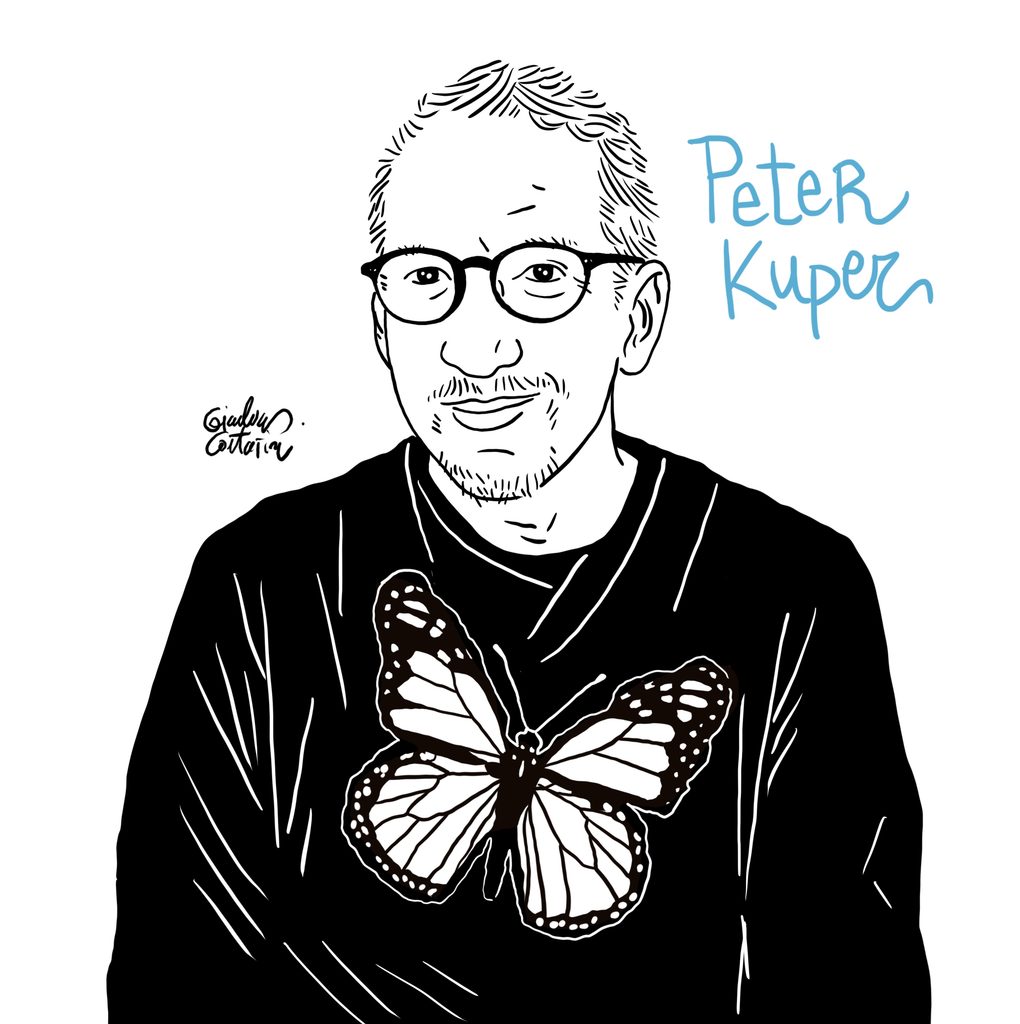
Peter Kuper is one of the figures who best embodies this history. There is something extraordinary about the journey that took him from a childhood spent observing insects to founding World War 3 Illustrated with Seth Tobocman, from the rebellious streets of New York in the 1970s and 1980s to the protests in Oaxaca, and ultimately to his recent Insectopolis. These seemingly distant worlds are connected by the same curiosity and the same need to understand what is happening around us. His drawings bring together the wonder of a child witnessing a cicada’s metamorphosis and the critical eye of an artist who has never stopped confronting the contradictions of his time. Gianluca Costantini (November 2026)
When you think back to your childhood, before comics became such an important part of your life, what kind of child do you remember being? What did you spend your time looking at, thinking about, dreaming about?
There were some key things I remember: An important moment was when I had a babysitter who took me outside at night and, pointing to the stars, she explained to me that the light we were seeing was coming from millions or billions of miles away and, in many cases, they were from stars that no longer existed. The notion that we were just a little dot in the universe never left me.
An important book for me—all this was around the age of four or five— was Crockett Johnson’s Harold and the Purple Crayon about a little boy who gets lost but manages to draw his way home. This and a few other children’s books, like many by Dr. Seuss, had a big impact on me.
In general, I was very visually oriented, like some people are musically inclined— I wouldn’t say I had talent but, my brain was wired to respond to images, which was true regarding the Insect world and illustrated books I looked at. They spoke to me, and that stayed with me my whole life.
You were only four when you saw millions of cicadas emerging from the ground. It is an image that seems to have stayed with you for your entire life. Do you still remember that moment — the sounds, the movement, what it felt like to be surrounded by them? Why do you think that memory never left you?
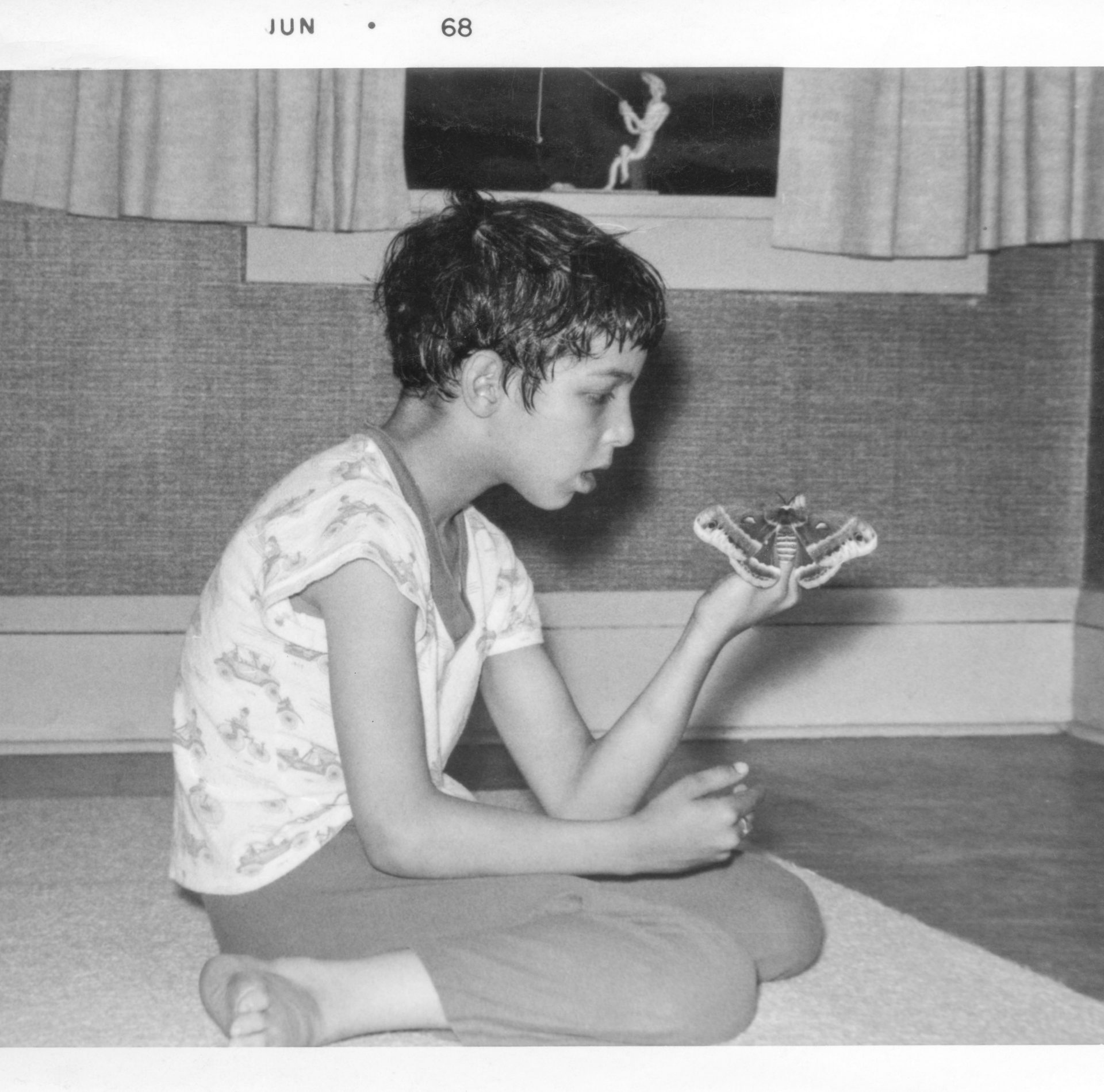
It was a warm summer day the first time I saw cicadas emerging, covering trees by the millions (they emerge in great numbers every 17 years), I was immediately taken with Insects and decided I wanted to be an entomologist. They’re visually so exciting, and with that emergence, you see such great numbers and even the sound, which is distinctly alien, like the sound effects they use in UFO movies. All those details, all that color – – they have red eyes – – fascinated me in an almost indescribable way. With the cicadas, I got to witness them go through the process of metamorphosis. They emerge from the ground in one form and then shed one stage of their lives to have wings and a completely different physical form.
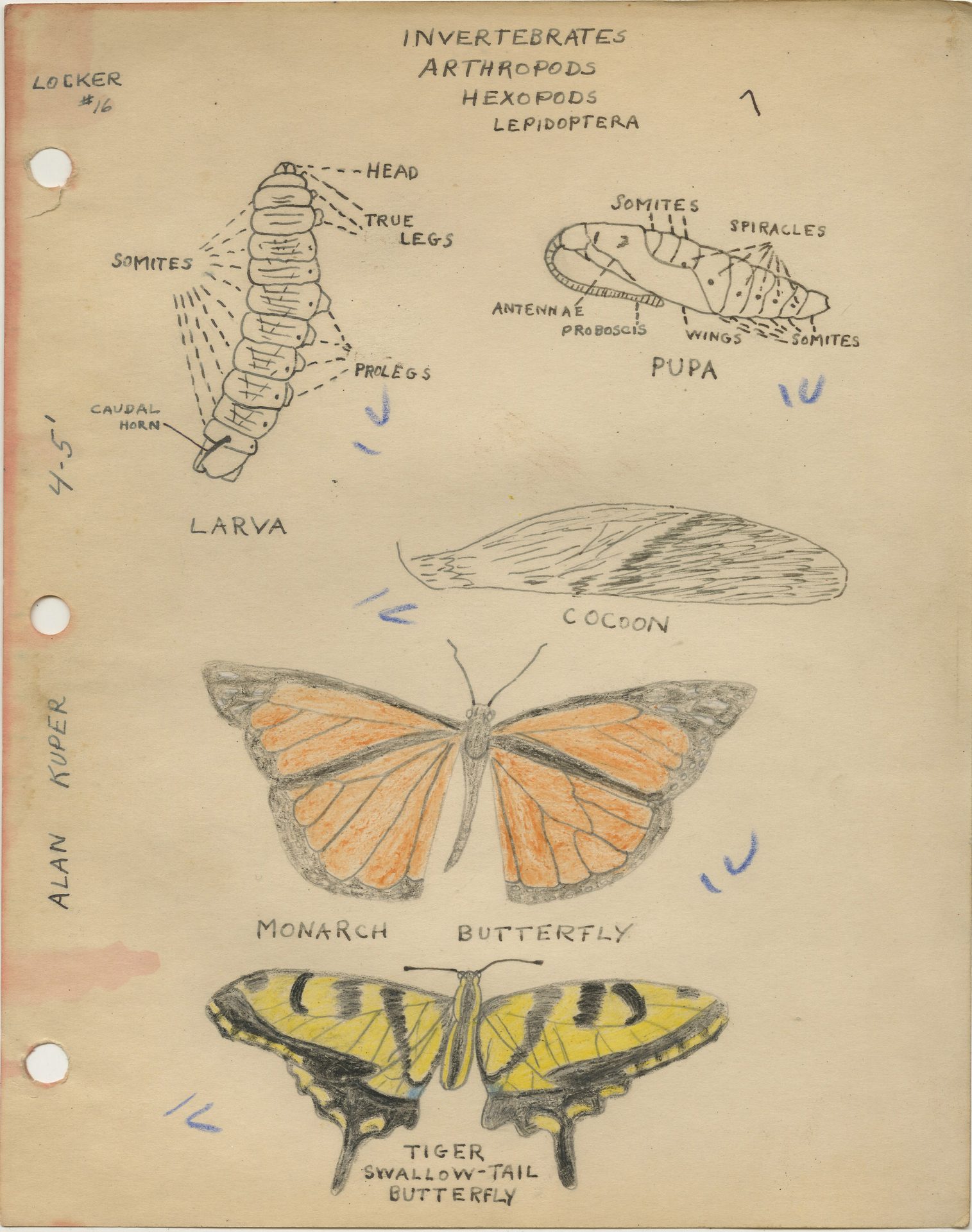
When you were six, your father made a little sign for your desk that said, “Peter Kuper, entomologist.” I love that image of a father taking a child’s passion so seriously. What do you remember about him, and about the way your parents looked at this curious child you were becoming?
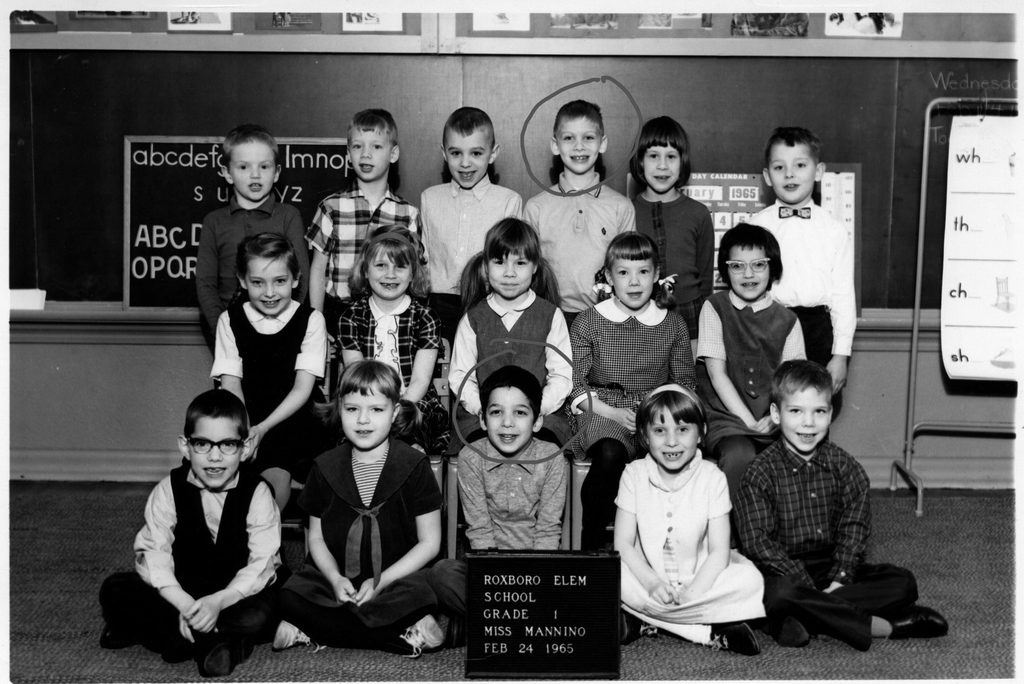
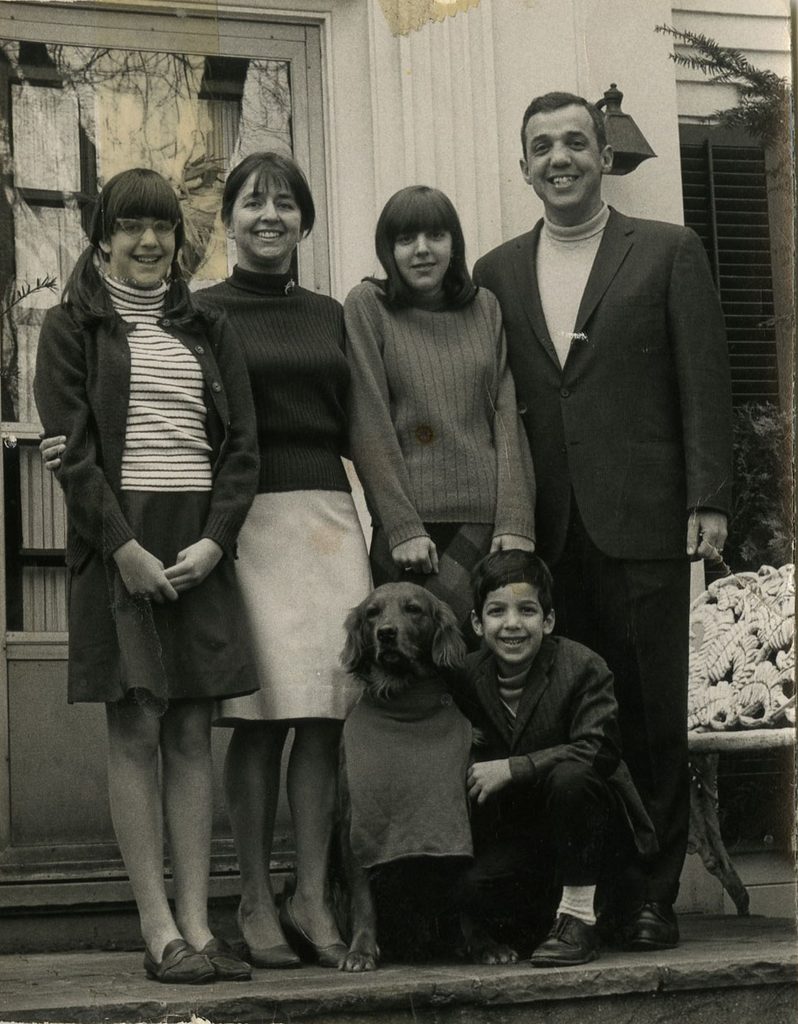
My father had been a very serious Boy Scout growing up. He won all the Boy Scout badges you can get and was also interested in taxidermy when he was younger and nature in general. We took camping trips, and he would collect mushrooms and various wild vegetables. Although I enjoyed it I was always at least periodically hoping we would stay in a hotel! When I was 10, my parents bought a VW camper van. My father was a teacher of electrical engineering, and he had a sabbatical year in 1969. We flew to Luxembourg, where we picked up the VW and then made our way across Europe the whole summer to the tip of Italy, where we got a boat that went to Israel. We lived in Haifa for a year, and I think in many ways it set me, or I should say, knocked me off a normal course. I probably would not be doing what I’m doing today without that experience. Being an outsider in a foreign country, I got beat up a lot. There were the language barriers. There was everything that was so different and the chance to see the United States from a distance. We didn’t have a television set, and I did a lot of reading. This was all hugely important and changed my character. When I got back to the United States, I had trouble relating to any of my old friends. While I was gone, I had become a serious comic book fan. The only person that I could relate to was Seth Tobocman, who had been kind of an outsider his whole life.
As a child, you spent hours looking closely at butterfly wings, dragonflies, spiders, and praying mantises. There is something very intimate about learning to really look at something. Do you think those hours of observation taught your hand — and your eye — something that is still present in your drawings today?
There’s a quality to observing insects that is like entering a fantasy world. Fairies are always drawn with insect wings; watching a caterpillar transform into a butterfly or moth gave me a sense of the almost magical world we live in– there’s a lot of struggle of life and death (I know I assisted in that process, messing with insects, dropping flies into spiderwebs, for example). Seeing these interactions and examining the patterns and colors is breathtaking. I was excited by virtually all aspects of it. I’m sorry for all the collecting I did – I loved many insects to death that I wish I hadn’t in retrospect.
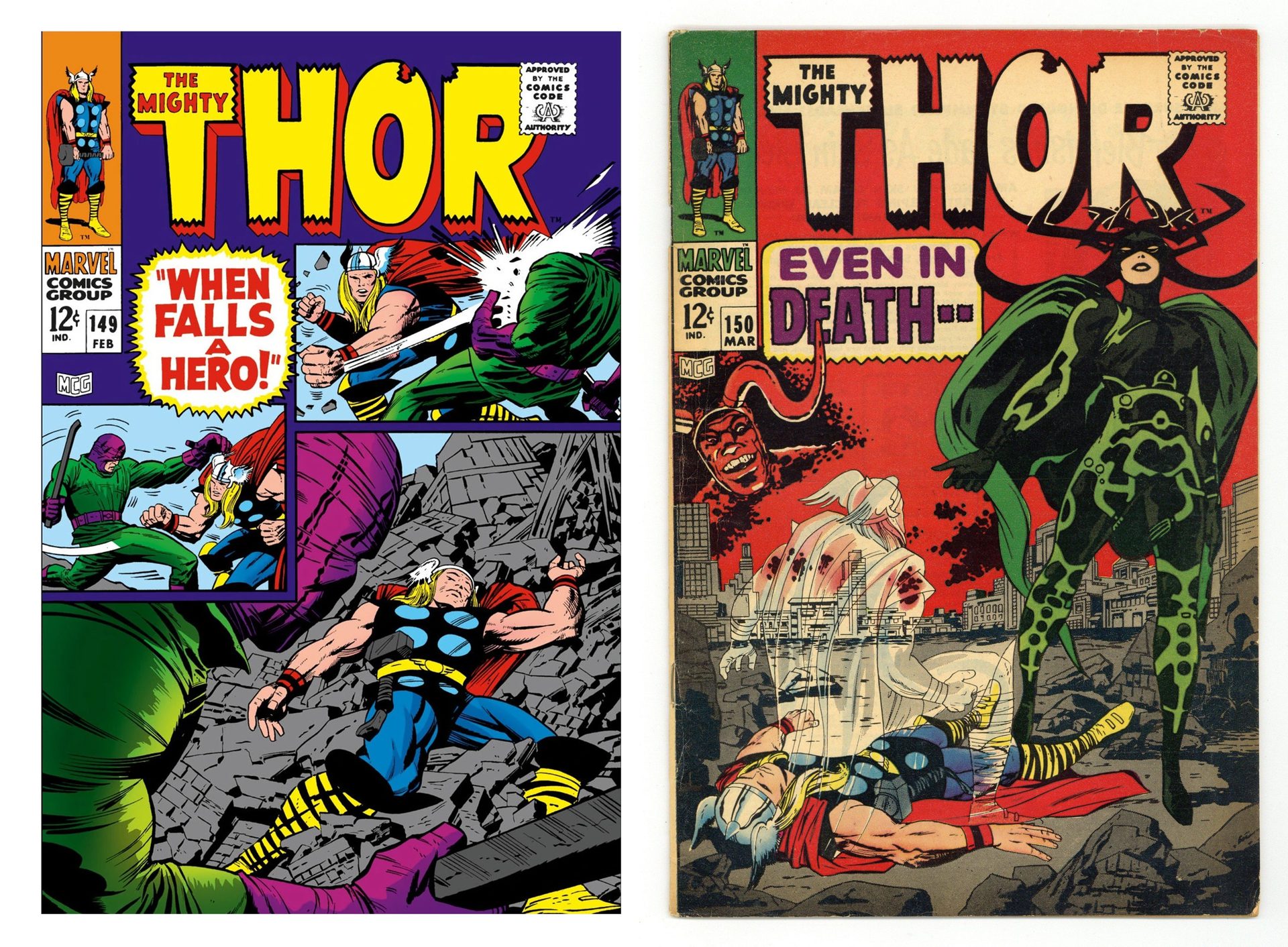
Then comics arrived. You were around seven when you discovered Jack Kirby and Stan Lee’s Thor. You’ve described your journey as going “from spiders to Spider-Man.” But do you remember the actual feeling of holding those comics as a child? Was there a particular page, character, or drawing that made you think: I want to do this too?
I have a very sharp memory of walking into the local drugstore that had an entire wall of comics and a sensation of seeing all of this color and action exploding in front of me, but having an extremely limited budget so I could only take one. That Kirby /Lee Thor issue jumped out at me, and Jack Kirby‘s art still can make my blood rush. I remember reading it and, at the end, the villain, The Wrecker, a character that didn’t last very long, killed Thor, and I felt devastated. How was it possible that I had bought the issue where the main character had died and would never return?? I remember how relieved I was when Thor was revived only one issue later!
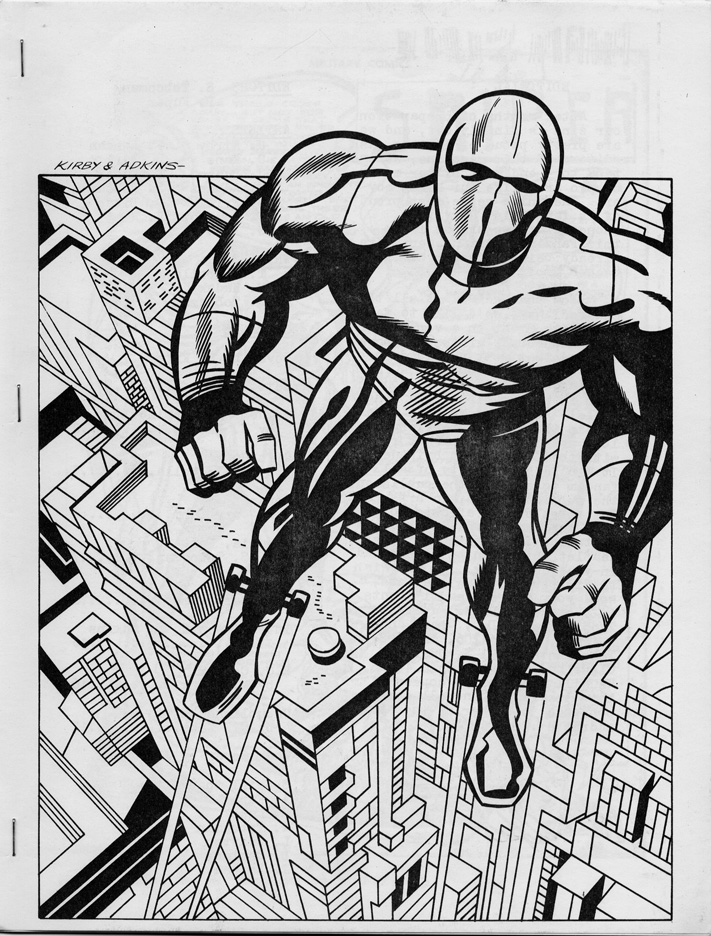
I was very fortunate since, after my return from Israel, Seth and I connected immediately. We dove into the comics world, attending our first comic book convention in Detroit when we were both 11. I barely drew and had very little skill whatsoever, but the art form became part of my DNA very quickly. Getting to go to comic book conventions and do a fanzine, Seth and I did our first fanzine—Phanzine in 1970. Seth’s father had a friend who was a printer, and he printed that first fanzine for free.
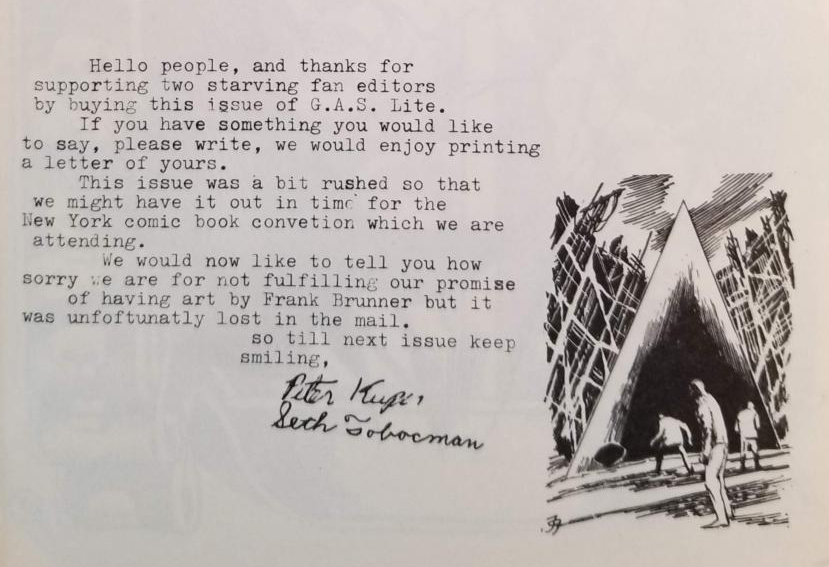
We met other comic book collectors in Cleveland and did the official magazine for that club, called G.A.S. Lite (G.A.S. stood for Graphic Art Society). We managed to produce three issues that included interviews with comic artists like Robert Crumb, Vaughn Bode, Neal Adams, Jack Kirby, and the publisher of Mad, William Gaines. Those were interviews. We got them at comic conventions we attended in New York annually. We published those through junior high school and into high school.
So I was around the art form all the time, reading comics constantly, but it wasn’t until I was about 15 that I started to keep a sketchbook. I got a common teenage disease called ‘mononucleosis’ that put me in bed for a month. As it happened, I had just decided before that I was done with comic books and wanted to start having sex and doing more drugs.
Thankfully, being sick in bed, I read all the comics I had missed – some other comic collector friends got them for me and dropped them off while I was sick— and I started drawing in earnest during that period. When I got out of bed, I informed my father I knew I wanted to be an artist. He said, “OK, do me a finished drawing a week.” I managed to do two drawings before it felt like work, and I stopped presenting him with drawings and just kept sketching. But towards the end of high school, when I realized I had no other passion, I decided to run at cartooning and art in general with a greater commitment.
Before you knew that being a cartoonist was something you could actually do with your life, why did you draw? When you were alone with a piece of paper, what did drawing give you that you couldn’t find anywhere else?
I was reading comics constantly, looking at the artwork; I wanted to try to recreate what excited me. I did a lot of copying, especially underground comics. At that time, there were fewer distractions: no computer games, limited television stations, and comics covered all the bases, with writing and art that took me to other planets, introduced barbarians, and generally sparked my imagination. I had no interest in watching sports on television like almost everybody else my age, so I had a lot more time to focus on comic books.
At the same time, outside that private world of insects and drawings, America was going through the Vietnam War, the civil rights movement, political assassinations, and enormous social upheaval. Do you remember the first political event that really entered your consciousness as a child — the first moment when the outside world suddenly felt personal?
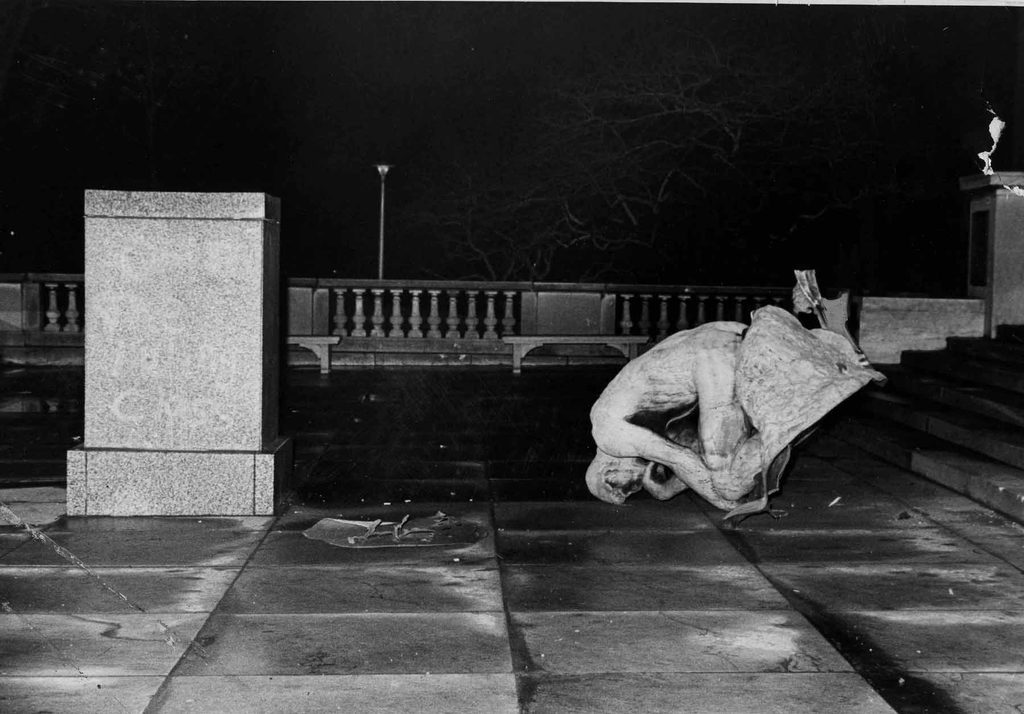
This happened very early in my life because both of my parents were very politically conscious. Since my father taught at a university, he was in close proximity to a lot of the young people who were involved in these movements. When I was maybe six years old, my parents had our family marching in downtown Cleveland with antiwar signs with a small circle of people against the Vietnam War. A man came up to me and yelled at me, calling me a “Red.” I was completely confused and a little bit shaken because my shirt wasn’t red, so I didn’t know why he was so angry! One Halloween, around the same age, I was trick-or-treating and went to a guy’s door to ask for candy. He came out asked who are you voting for for president and I said (the Democrat) Johnson! He yelled at Goldwater! (who is the very conservative presidential candidate) slam the door in my face. The Vietnam War was just around in general, in one form or another, with protests and occasional bombings. There was a statue of Rodin’s ‘The Thinker’ in front of the art museum, and one night protesters blew it up. It became a new piece of art, which is still there today, shredded at the bottom. I thought this was a pretty cool way to express anger at people sitting around doing nothing while young men were dying in Vietnam.
At some point, those two worlds — drawing and politics — began to come together. Do you remember when you first realized that a drawing could do more than entertain, that it could make someone uncomfortable, challenge authority, or say something you might not otherwise know how to say?
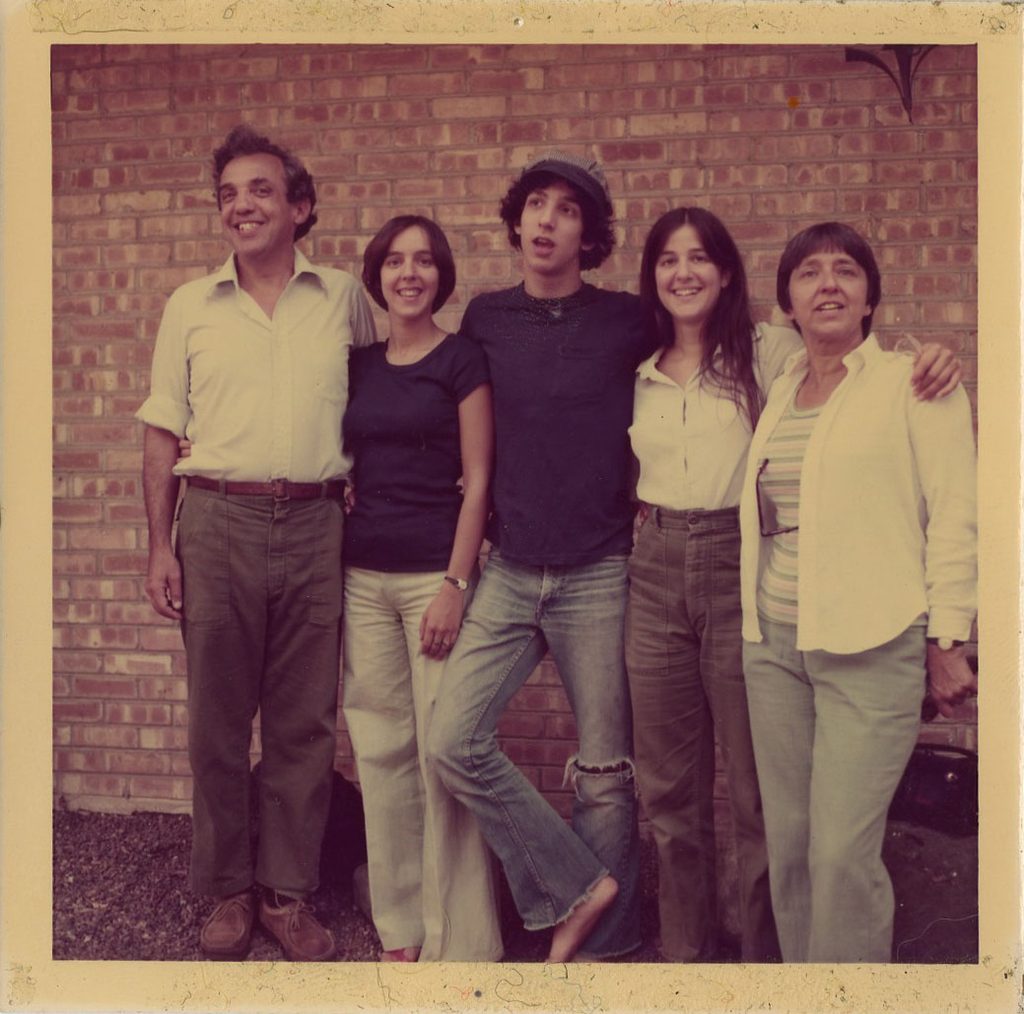
Yes, I have a distinct memory. The father of one of my friends was politically active, working on a newspaper with a group called ‘Teamsters for a Democratic Union’ that was fighting against the mafia in Cleveland who had taken over the union. He asked me to draw a cartoon for it and gave me the ideas. Up to that point, he had always treated us all as children, but after I did that drawing and a few more for him, he related to me in a much more adult, respectful way that really struck me as a new world I wanted to enter. I remember standing in his living room and saying to the ceiling, “OK God, if you give me a voice through cartooning, I promise to say something useful.” I’m an atheist, but can’t help but think that she kept up her part of the bargain.
In 1977, at eighteen, you left Cleveland for New York because you had been offered a job as an illustrator. You arrived and discovered that the job was gone. You stayed anyway, even drawing caricatures on the street to support yourself. I imagine there must have been a moment when going home was still possible. Do you remember that moment? Why didn’t you go back?
Oh yes, there was a distinct moment. I had gone home for what I thought was a week after about six months of living in New York and ended up staying for three weeks. I was telling my mother how depressed I was by myself in New York, and she said, “ Honey, you can just move back home if you want“ I looked at her and said, “Mom, I need to borrow the money for an airplane. I can’t take the bus.” (as I had been, which was a ten-hour overnight journey) I needed to get back to New York as quickly as possible. Thankfully, back then it was very cheap to fly! I got back to my apartment in Brooklyn and literally let my breath out, recognizing that I almost had given up the attempt to be a cartoonist in New York.
Seth Tobocman was already part of your life before New York and long before World War 3 Illustrated. When you think about the two of you as teenagers — before the magazine, before careers, before you knew where any of this would lead — what do you remember most about that friendship? What did you recognize in each other?
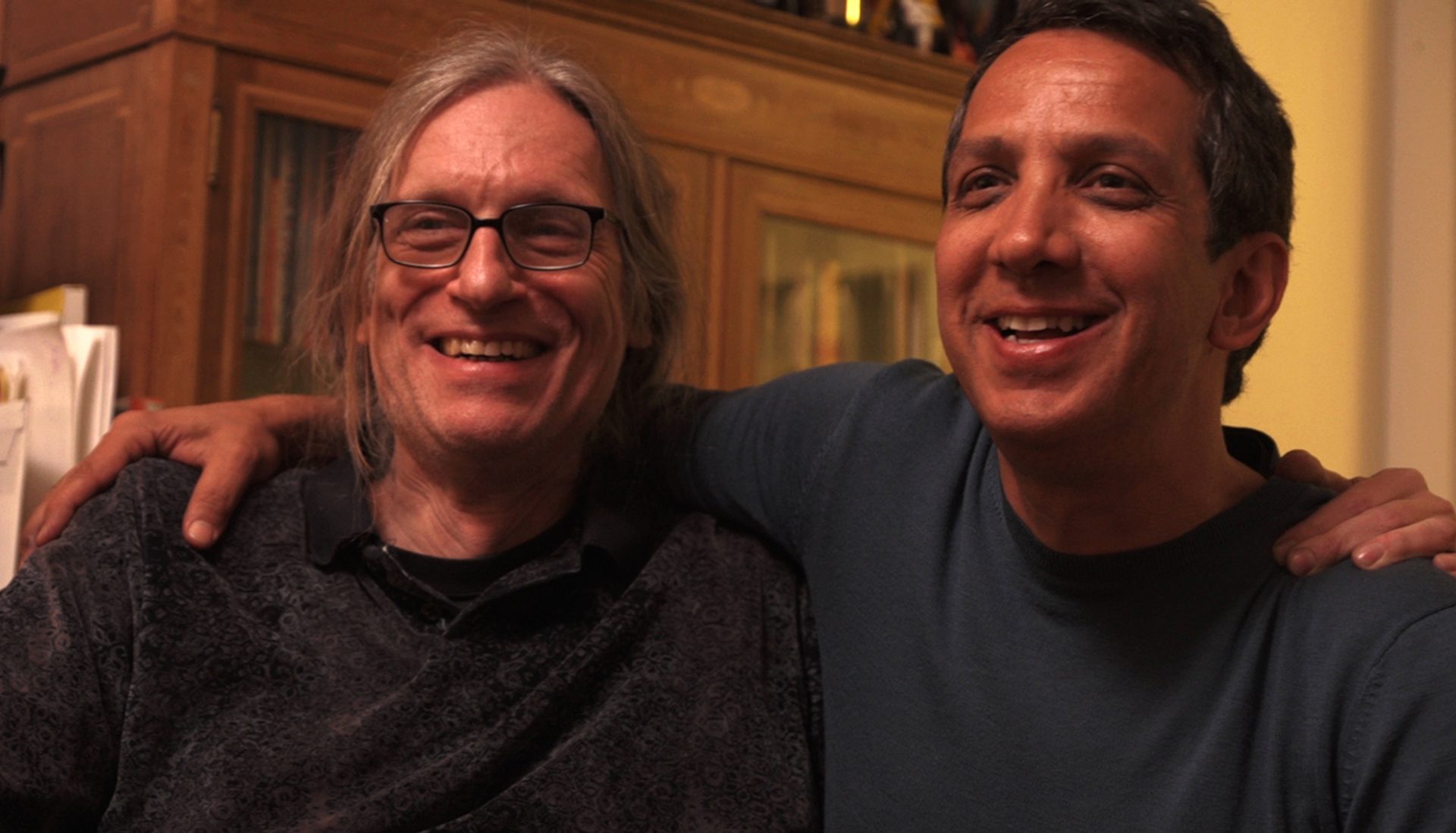
From the very first time I met Seth when I was six, I recognized that he was the most interesting person in the classroom. Not only was he into dinosaurs; he could sculpt them and draw better than anyone else I had seen. Still, it was kind of fraught because Seth was incredibly bright, but not good at sports and, in general, was an outcast from the other kids. I was a “fair-weather friend” to him because socially being with him meant not being with most of the other kids in class. This isn’t anything I’m proud of –it was a Lord of the Flies environment. There was lots of bullying and getting beat up in school, and Seth certainly got the lion’s share of that raw deal. I was much more able to fit in, so sometimes I would choose to step away from him, but the fact was he consistently remained the most interesting person in class (until I hit puberty!), and I wanted to be around him — I went over to his house quite a bit, where it was just the two of us. Growing up with someone over decades like that can certainly have its challenges, but my friendship with Seth is the most rewarding friendship of my life, and in many ways I feel like Seth saved my life—saved me from being a mediocre person who just fit in.
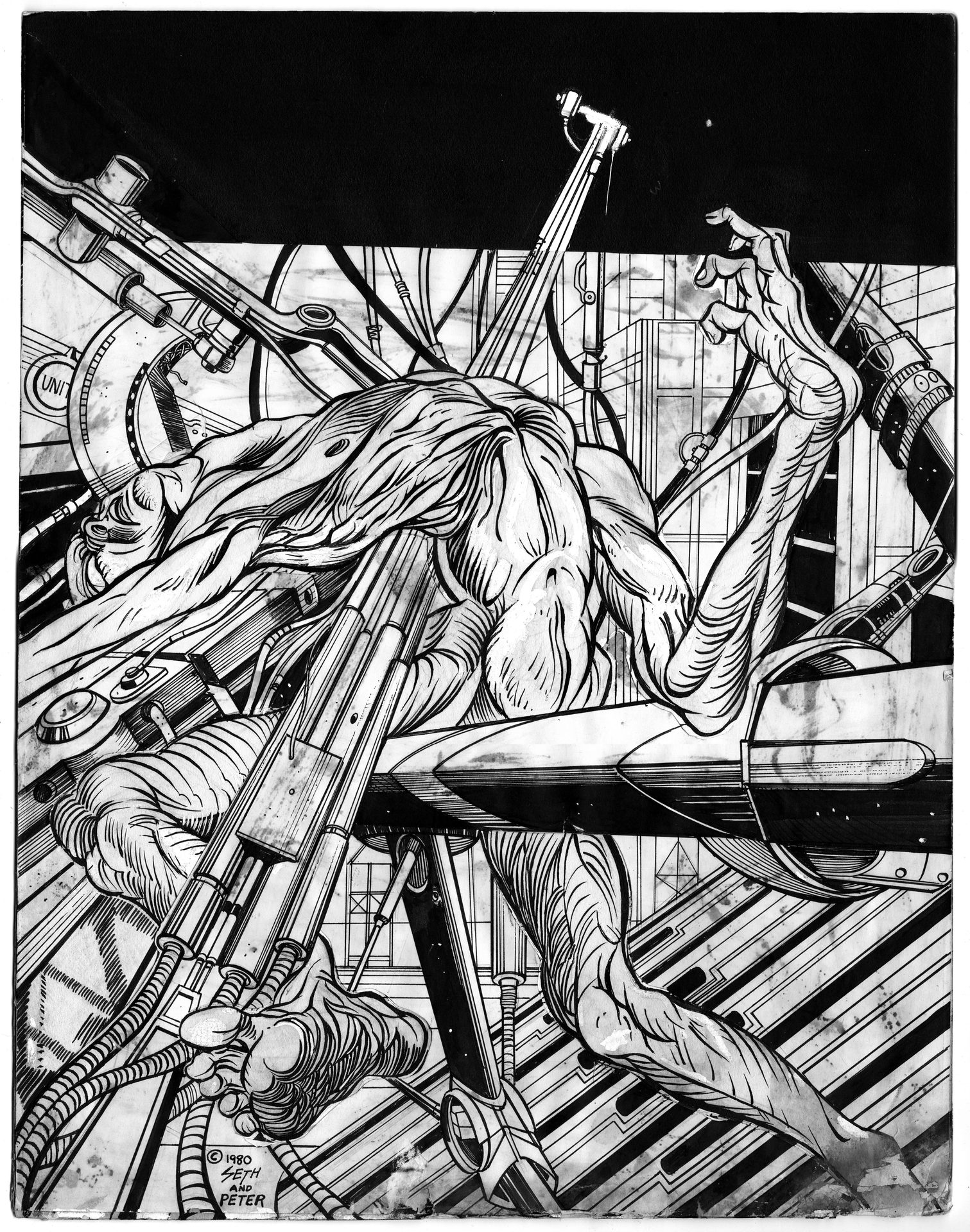
In 1979, you and Seth Tobocman began working on World War 3 Illustrated. What did you feel was missing from comics and the culture around you that made you feel the need to create a publication of your own? Do you remember a particular conversation or moment when you thought: we have to do this ourselves?
Seth and I were both attending the same art school, Pratt Institute, in Brooklyn. After some years apart, we had reconnected and still shared a deep enthusiasm for comics. I had imagined the underground comic scene would be something that we could step into to continue following this passion, but thanks to the closure of a lot of distribution systems for underground comics, the industry had collapsed. I was both in our school and working as an assistant in a studio to comic artist Howard Chaykin. In the same studio were other cartoonists working primarily in superheroes like Walt Simonson, Jim Starlin, and later, Frank Miller. So I felt very connected to the world of comics but less and less interested in the mainstream superheroes and fantasy.
Since Seth and I had done fanzines together, the idea of self-publishing wasn’t remote at all. We both were creating work, but not finding any outlets, so self-publishing was an option we did understand. We both felt an urgency to get our work out to comment on what was happening in the world around us, with Ronald Reagan on his way to Office, the hostage crisis in Iran that was giving a general sense that we were about to be in a nuclear war. I remember thinking, in general, in terms of trying to get work published before the world blew up. New York at the time was very much like the movie Taxi Driver, which was both very exciting and a bit terrifying. In that atmosphere, the title World War 3 Illustrated seemed appropriate.
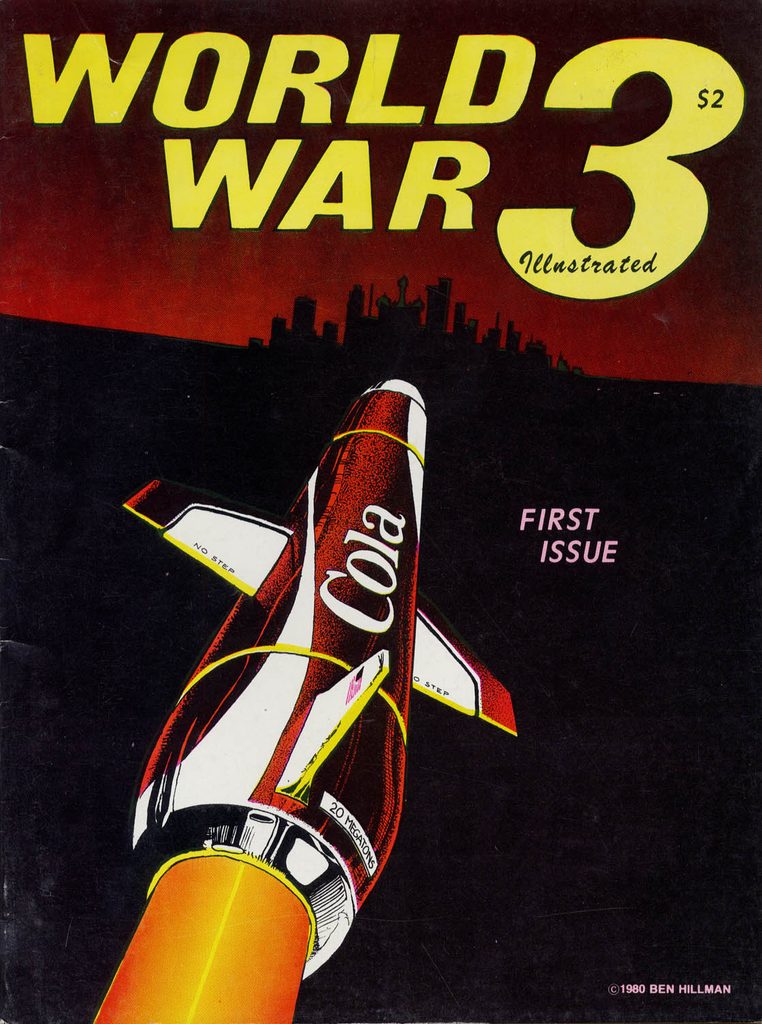
The first issue came out in 1980, at a time when New York was undergoing profound changes, and Ronald Reagan was coming to power. World War 3 Illustrated grew out of the intersection of comics, politics, and life in the city. How did it actually work in those early years? Where did you meet, how did you choose the themes and artists, and how did you print and distribute the magazine? What do you remember about the atmosphere of those first meetings?
On the first issue, it was mostly me and Seth and there was a German artist named Christof Kohlhofer, who Seth wanted to participate because he was both doing interesting work and had a foot in the fine arts world. He was a bit older and mostly hands-off in the whole process. Seth and I found a printer through Ben Katchor, who was working as a typesetter at the time and did type setting for us, but also directed us to where we could buy paper for the cover at a Hasidic clothing store and then print the interior in a different place and then put cover and interior together and hand staple at ourselves. I remember being very excited about just being around a printing press, the smell of ink, and having direct contact with the whole process of putting the magazine together. And those days it was a fairly primitive process. No computers, glueing type down by hand — very DIY.
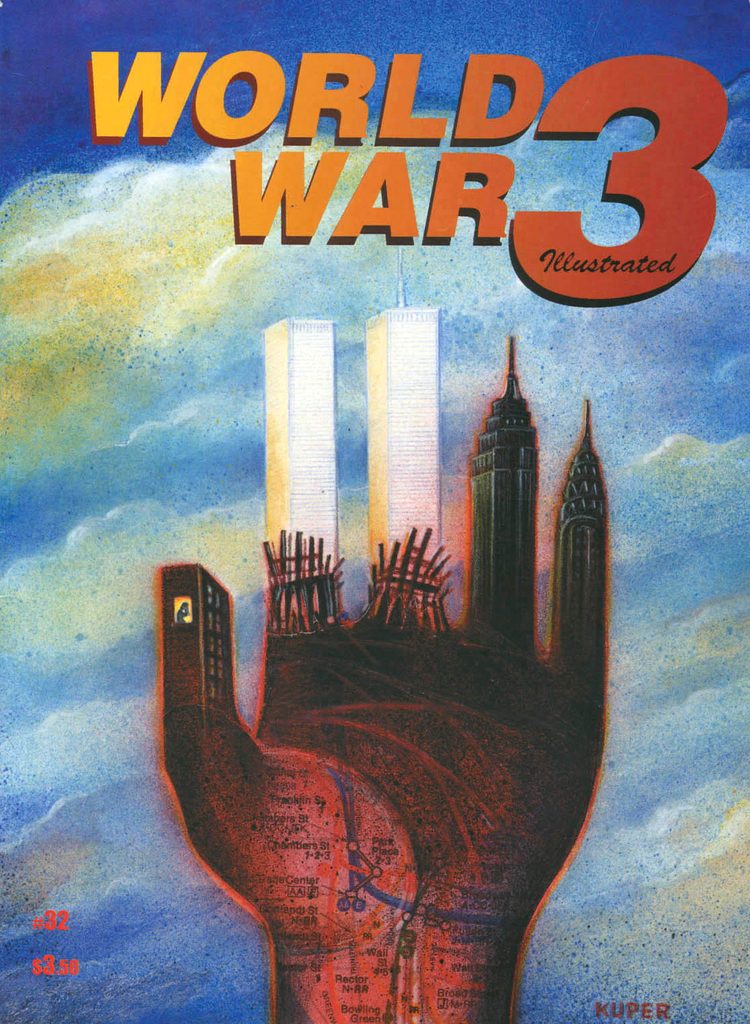
World War 3 Illustrated has never completely separated comics from political action: images could live on the page, but they could also become posters, flyers, or tools of protest. At the same time, over the years the magazine became a genuine collective, bringing together artists from different generations and with very different visual languages. How did you deal with artistic and political disagreements? Were there moments when you thought those differences might put the project itself at risk?
In many ways, we were still very much kids when we started the magazine, and were finding our way artistically. It wasn’t until several issues in that we started to have actual meetings that were sort of an open call where we would stand around, asking what people thought the theme of the next issue should be, and then go around the room one by one and people would express ideas. It was a bit haphazard, and many times there would be people who would talk a lot, but never produce anything. Meetings took place sometimes in one person‘s apartment or another, sometimes in a squat. A lot of remarkable work came out of these meetings. People just seeing the magazine, which was in many ways an anomaly, drew people into our circle, and there were many aspects of that that were very exciting, but not to over-romanticize it, putting out an issue was always a lot of work that included conflicting opinions about what we wanted to include. I definitely was pushing for people that were doing more finished work. I was developing my sense of artistic taste, and was more drawn to people who had more technical skills, but looking back, there were many people who were doing very interesting work that at the time I did not recognize.
For example, in the first issue, Seth brought in the work of Peter Bagge, and I thought his drawing was absolutely atrocious, but the writing was really great, and the more I looked at it later, the more I realized the lack of slickness didn’t matter as much as the quality of the writing.
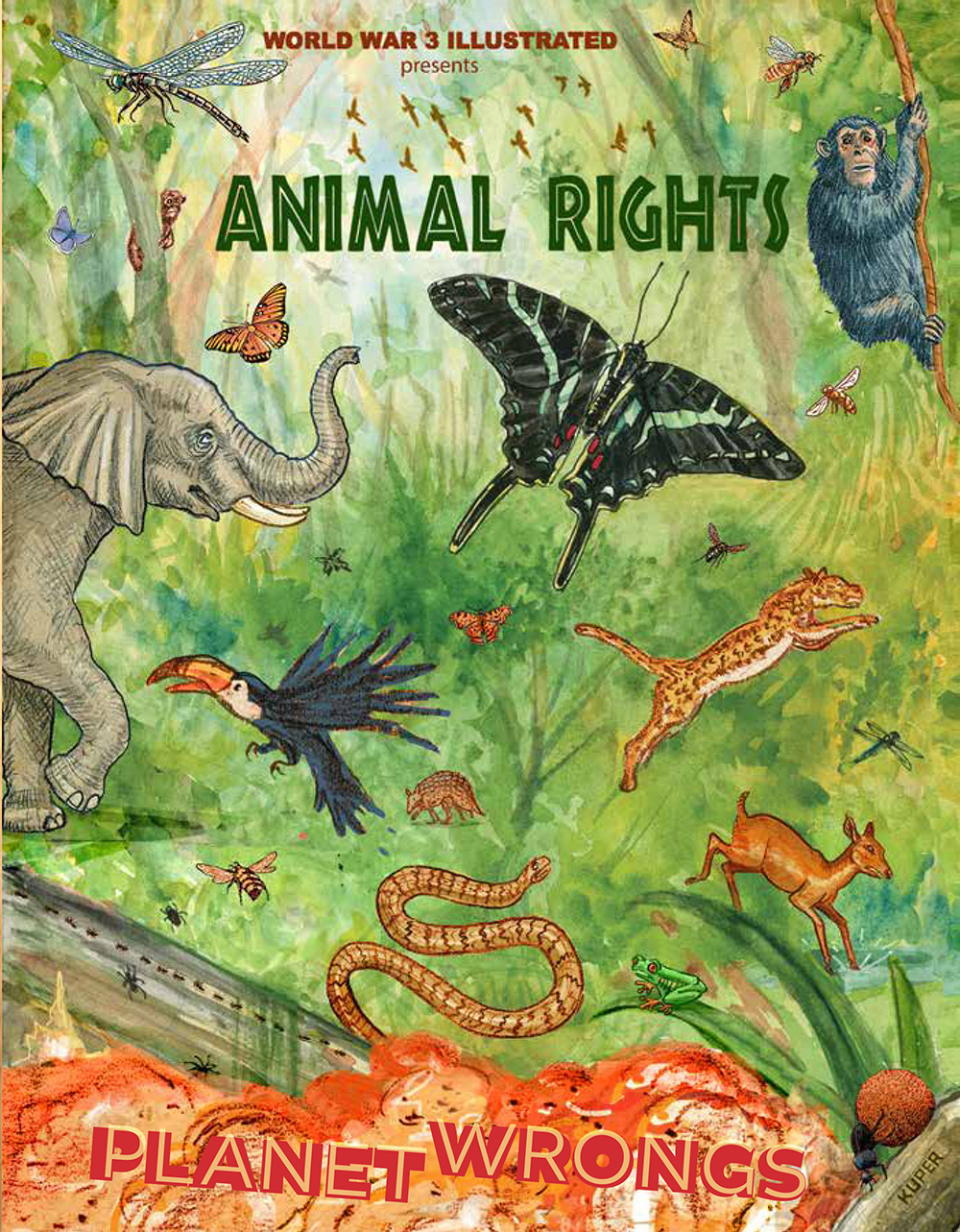
More than forty-five years have passed since the birth of World War 3 Illustrated. When you look back at those early issues today, what do you still recognize of yourself, of your ideas, and of the sense of urgency that drove you to create the magazine? Is there anything that, with all the experience you have accumulated since then, you would do differently today?
Very often when we finished an issue, it would have been so exhausting that the final step of promoting it would sort of fall away. Just getting it done seemed like a great effort, so following up with publicity, even just making sure every contributor got a copy, sometimes fell by the wayside, so people weren’t aware that an issue had come out necessarily.
I still hate many aspects of having to promote a project as necessary as I know it is, and back in those early days, we had no way to alert large groups of people as we do now with social media.
There are so many moving parts to getting a magazine out, dealing with distribution, taking it around the stores, following up, and collecting money that really none of us wanted to do, but are a necessary part of the complete process.
Though I do it, I still find promoting any project to be a fair degree of drudgery. I’m mostly interested in creating the work; I think that’s probably true of most artists.
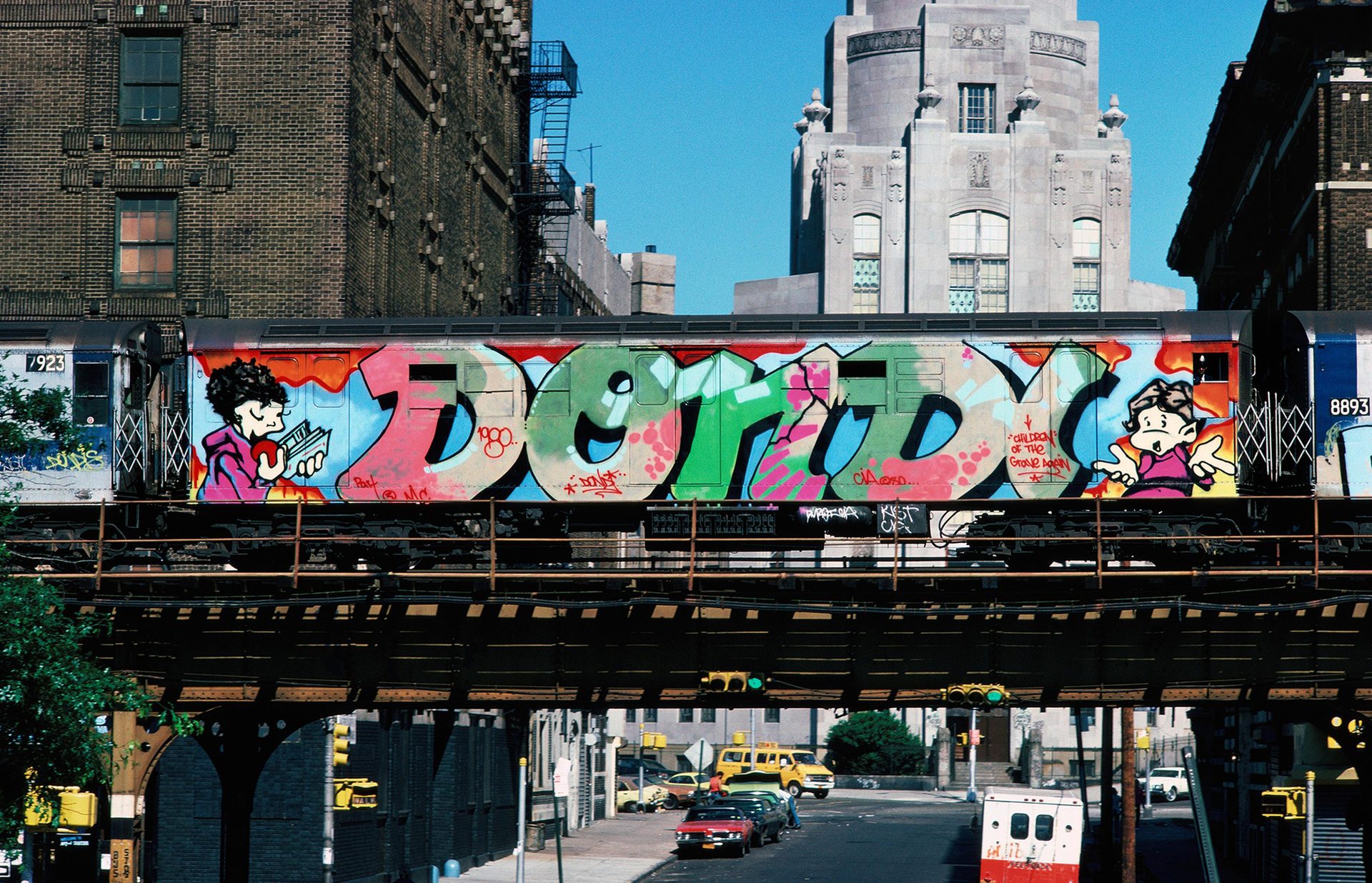
In the New York of those years, punk, graffiti, underground comics, political activism, music, and the visual arts existed in close proximity. Did you feel that you had entered a specific scene, or did all of those worlds simply overlap naturally? Where did you feel that energy most intensely? And after documenting New York for decades, was there a moment when you realized that the city you had arrived in in 1977 no longer existed? Can you still find something of that underground energy in New York today?
In some ways, it’s hard to separate my relationship to New York from the age I was when I experienced it. There certainly was a tremendous amount of energy in the late 70s and 80s that inspired the work I was doing, but it also was related to the age I was before I was married, before I had a child, being pretty broke, but happily around the time that things were pretty cheap, made for a lot of exploring of the environment — I was footloose and fancy free!
Yet I still find many aspects of the city that give me the same injection of energy. So many people jammed so close together riding on the subway doesn’t feel vastly different than it did when I first moved here. And I do often feel like the moment I step out the door there could be a million interactions. Seeing people in desperate positions living on the street, while somebody obviously wealthy strolls by walking their dog – those kinds of encounters, the collision of different cultures and types of people, are ongoing and affecting.
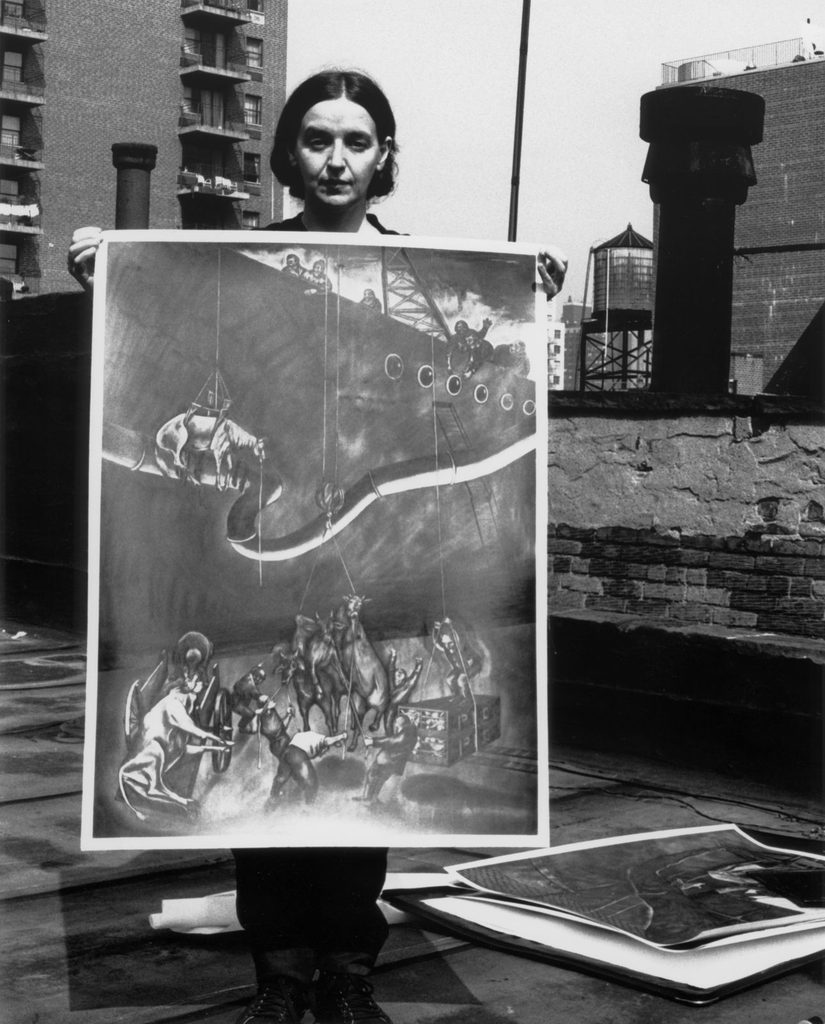
Who were the people you met during those early years who made you realize that it was possible to live differently as an artist? Were there artists, cartoonists, writers, or activists you met in New York who changed the direction you were taking?
The short answer is, “YES!”
Back when I was still in art school, there were a number of teachers who were opening doors of possibilities. Before that, going to comic book conventions all the way back to the age of 11, I was meeting artists who were adults doing the kind of things that made adulting look like a hell of a lot of fun and pointed the way towards that career. Sue Coe came and gave a talk when Seth and I were in art school, and she really blew my mind with the possibilities of being an illustrator and doing political art, but also the recognition that you didn’t just make it and then everything was smooth sailing from there. It was an ongoing process of creating work, finishing a job, then needing to do it all over again. Sometimes it surprises me that I managed to get through the difficult process of being completely unknown and having to go door-to-door looking for work. I got some of that reality working in Howard Chaykin’s studio; seeing artists producing seven days a week put me on the road to being a workaholic. Also discovering just getting art jobs wasn’t enough for me. The content of what I created became more and more important to what I saw as real success.
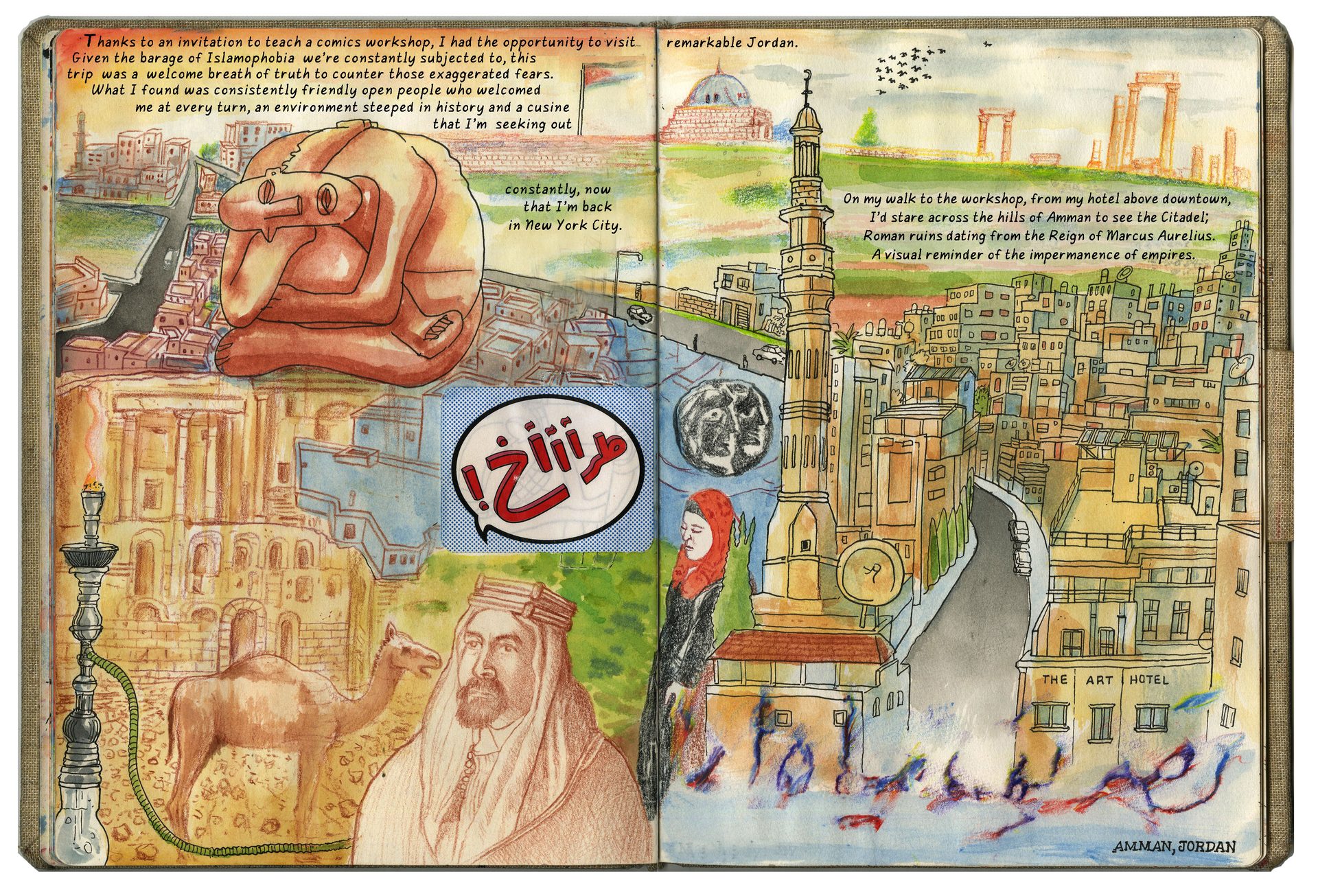
An important part of your work comes from direct observation: traveling, walking, sitting somewhere, and drawing what is happening in front of you. In an age when we are constantly surrounded by photographs, videos, and images on screens, what does it mean to you to continue drawing from life?
Drawing from life and experimenting in my sketchbook opened the door to a variety of different approaches and subject matter. I do more life drawing when I’m traveling as a way to take in the environment, though I have found I’ve used more and more reference material in my work. This was especially true when I was working on Insectopolis because I wanted to get the drawings of insects to be really accurate as well as the architecture of the environment. I was drawing the complicated designs of the spaces in the New York Public Library — that’s the backdrop for a lot of that book, and I needed tons of reference to get that right. I go through phases where I’m doing lots of drawing with photo reference, and then I want to break away from that and draw from memory or life. Generally speaking, I like getting good references for almost anything I’m drawing, with the exception of maybe Spy versus Spy. Reference material ends up being important to me in order to fully convey most of the stories I wanna tell, but I really want to be free from worrying about style and have every project I do appropriate to the story. Sometimes that’s more cartoony, sometimes it calls on me to use a lot of photographic reference. I just want the freedom to not worry about having a “style” that I have to stick with.
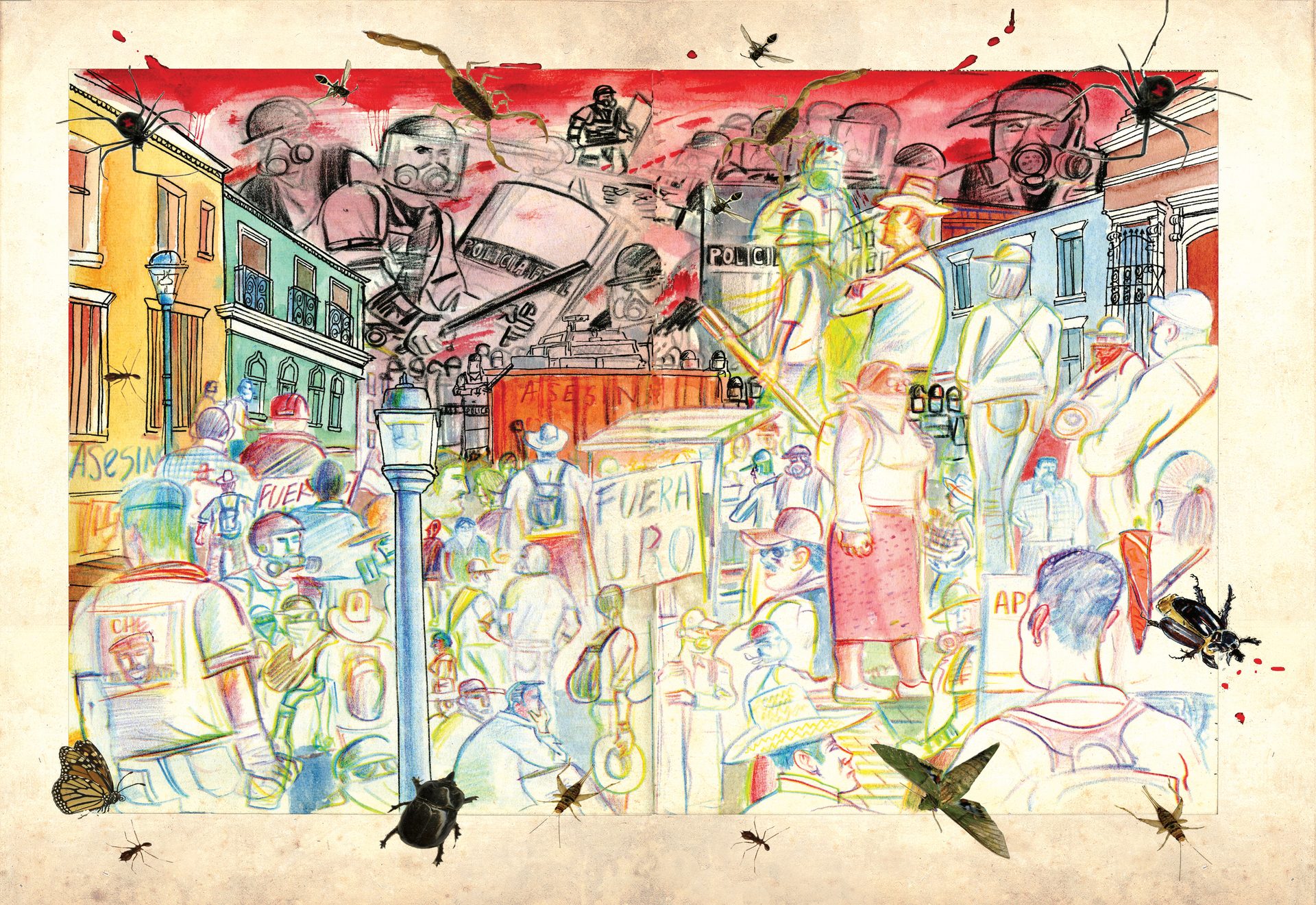
Let’s jump forward in time to 2006. When you moved to Oaxaca with your wife and daughter, you were also looking for a break from New York, from work, and from the political climate in the United States. Instead, you found yourself in the middle of the teachers’ protests and a violent political crisis. What happens to an artist when a place they came to experience and observe suddenly becomes a place where they feel compelled to bear witness to what is happening? At that point, did you still feel like a traveler, or had you somehow become part of the story yourself?
As you said, I was looking for a break from years of drawing George W. Bush and the horrors of the Iraq War.
I thought Oaxaca was going to be a quiet time to sketch cactus and butterflies, but when the teacher strike was exploding in front of us, I realized I wasn’t so much trying to escape politics as looking for a different environment, come what may.
Originally, I started drawing the scenes because that was what was in front of me, and it also was a way to share with friends and family the story of Oaxaca that we were experiencing. But after a short time, I realized from their bylines that there were no reporters in Oaxaca. The reporting about Oaxaca was being done from Mexico City and basically telling the story that the government was handing the reporters, so I felt there was real value in sharing my direct experience more widely.
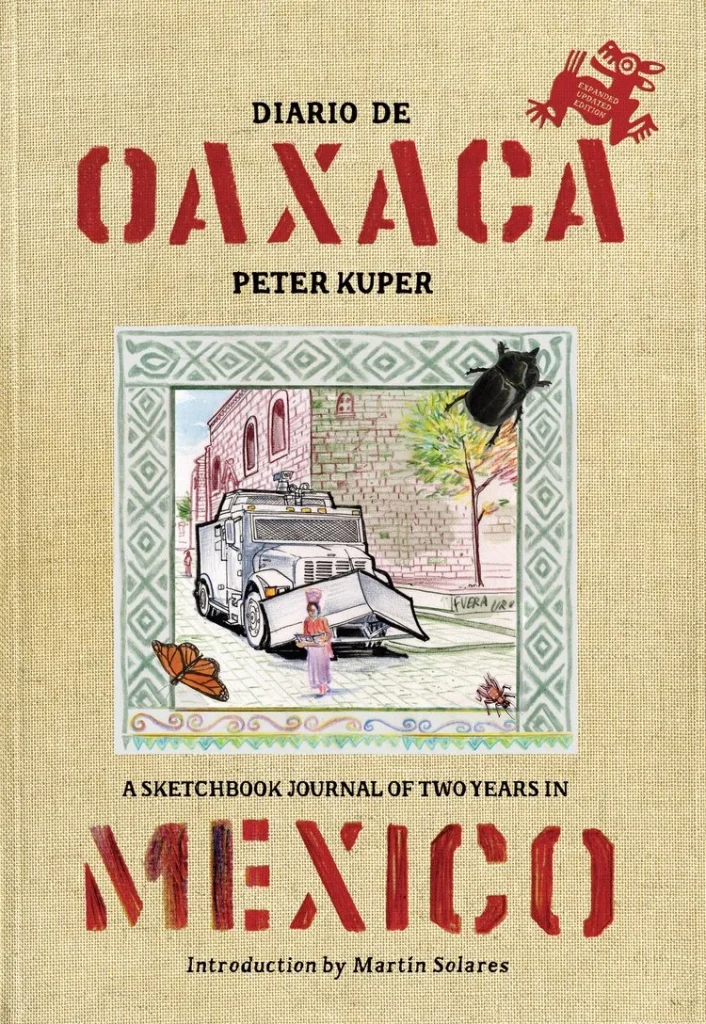
In Diario de Oaxaca, you draw demonstrations and clashes, but also markets, insects, landscapes, ruins, and moments of everyday life. The result is neither exactly reportage nor simply a travel journal. How did you decide, day by day, what deserved to enter your sketchbook? And do you think drawing something while you are actually experiencing it creates a different kind of memory and testimony from photography?
The development of drawings in my sketchbook was very organic. Sometimes I would work on multiple pages and just jump around depending on my mood or what I had already put down on a page. The thing about drawing in the moment is you are getting input from sound and smells and temperature that is going to get into the drawing, and if it’s a complicated piece, there’s a big-time factor. At one point, I was drawing a group of encamped protesters, and at first, they were suspicious. Then they sent one of their children over to see what I was doing. Then they came over, offered me a chair and water, and we had a real interaction based on my drawing — this was before I could speak much Spanish. I sat there in the sun, drawing for hours, getting sunburned, and by putting in time, so I became more connected to what they were going through. When I finished, we were hugging and handshaking. I closed my sketchbook and walked up the street, and a few blocks later I saw another encampment, and being tired, I just snapped a quick picture. The strikers surrounded me and were very angry and thought I was perhaps with the police. They wanted my camera, and I had to talk my way out of them keeping my camera. I realized that snapping a picture was almost like robbery. I didn’t have to participate in any way or interact with them. I could snap a picture quickly and move on. Not that photography is extremely valid for capturing moments, but drawing was a much deeper interaction with the experience.
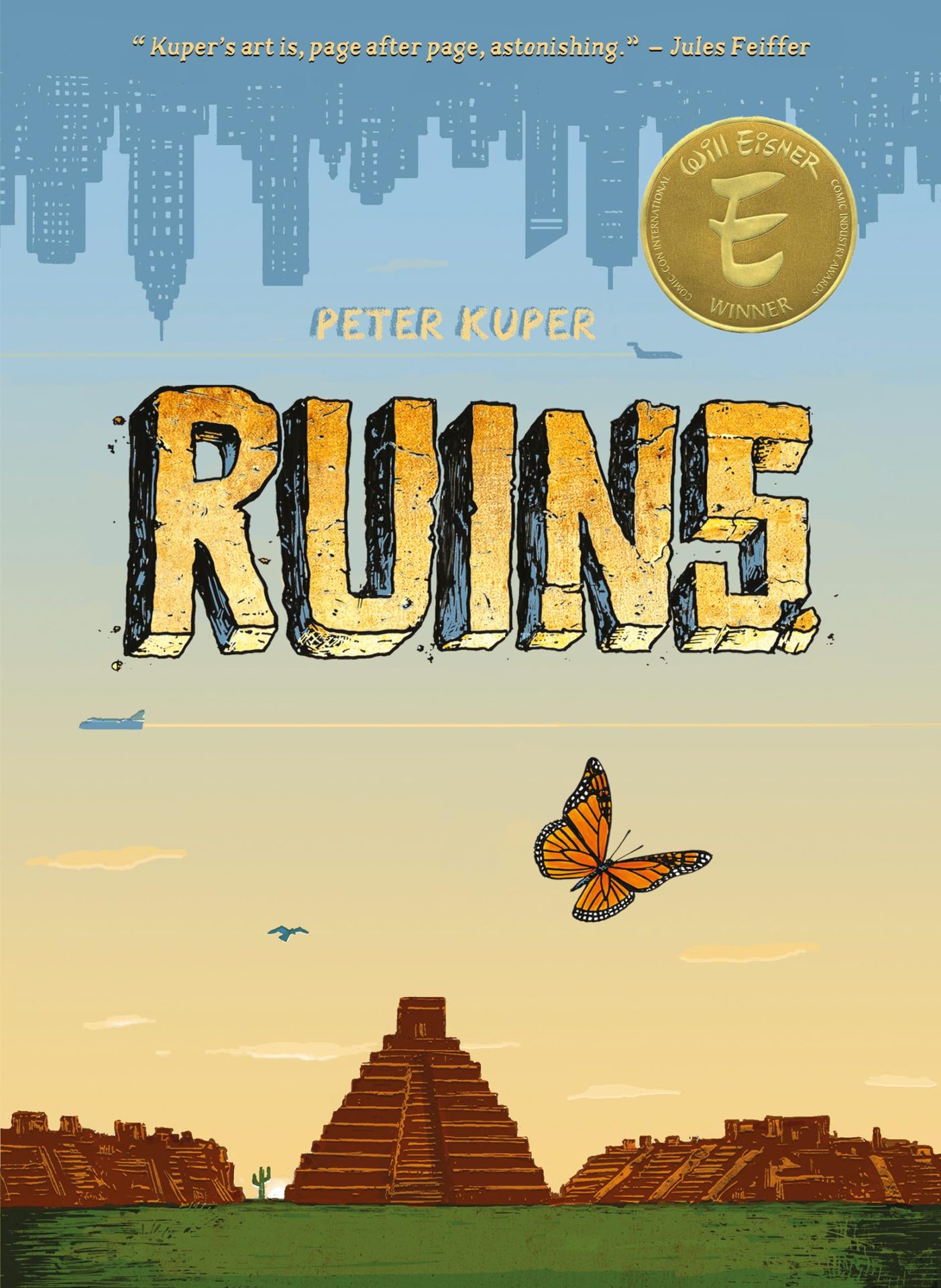
The idea of borders appears repeatedly in your books: borders between countries, cultures, social classes, human beings, and nature. In Ruins, for example, a monarch butterfly can freely cross the border between Mexico and the United States, while for human beings, that same line can become an insurmountable obstacle. Why do you think the idea of the border keeps resurfacing in your work? And has living, traveling, and drawing in different places changed the way you think about what it means to belong somewhere?
I met my wife while traveling in Europe. She’s also American and had been traveling around, and that set the tone for our long-term relationship as travelers together. We went on an eight-month trip through Africa and Southeast Asia, among many other adventures (I collected my sketchbook from that time in a book called ComicsTrips). We had so many experiences, crossing borders that were sometimes treacherous or complicated, getting stopped and having questions about visas. All the things one encounters crossing a border and the different problems one can encounter sensitized me to the power of borders. Of course, these days, given all the talk about immigrants and the huge pressure to close borders, it makes that especially part of my consciousness.
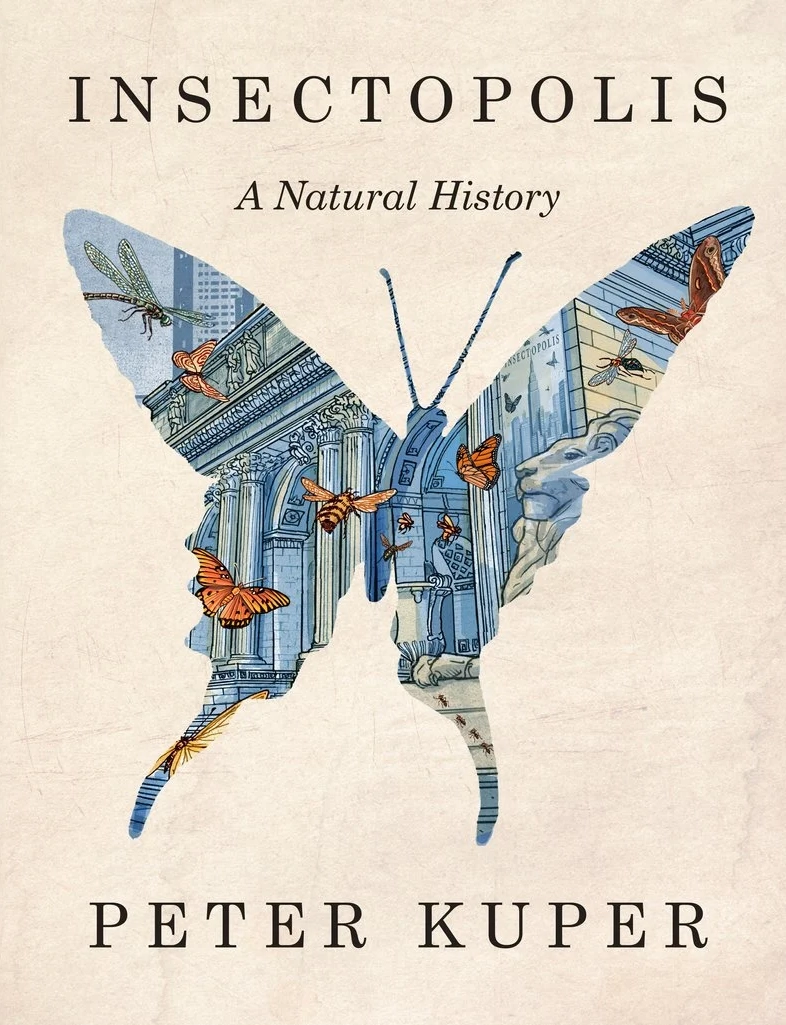
Your books are numerous and very different from one another, but Insectopolis seems to take you directly back to the child you once were — the four-year-old who was fascinated by cicadas and decided he wanted to become an entomologist. After a lifetime spent drawing politics, cities, journeys, and conflicts, what did it mean to return to insects? While working on the book, did you feel that you were rediscovering something of that child and the sense of wonder with which he looked at the world?
Absolutely! Working on that book was a deep dive, not only into the history of the people I was studying, but also into my own relationship to insects and the natural world going back to my childhood. I can’t express what a deep joy it was to spend that time with that subject matter and get in touch with my inner entomologist. My approach to the book was also unique since I didn’t really know where I was going with it, and it all felt like jumping down a rabbit hole not knowing what would be in the next turn, what new discovery I would make that would bring me closer to the subject matter and my own history. As a teacher, I’m always telling students to identify what they are passionate about and if you can bring together more than one passion, as I did with Insectopolis, then it’s possible to have the stamina that virtually any graphic novel takes, but especially if it requires years. Also, you can’t lose doing work that you love, because at the end of the day that is time well spent. I’m constantly working on a deadline, which is the fact I will eventually die, so I really do want to work on things that matter to me in the short time that we all have.
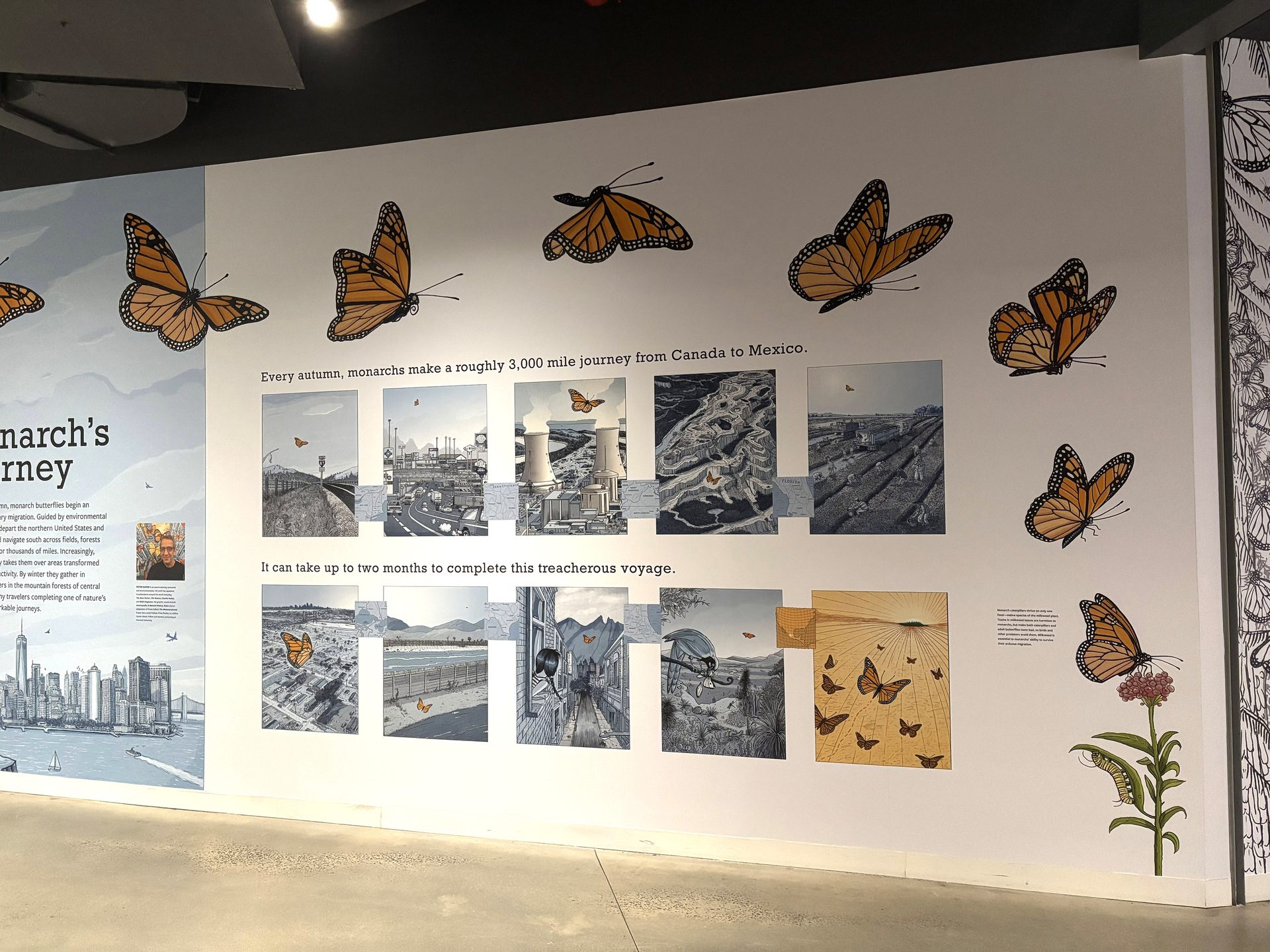
Insectopolis is an extraordinarily complex project, bringing together science, history, observation, and personal narrative. How did you actually go about constructing the book? How much time did you spend on research, how did you choose which species, stories, and scientists to include, and how did you manage to transform such an enormous amount of information into a comics narrative?
In many ways, I stumbled upon my approach since all I had was the basic idea that I was going to do a book on the history of insects and the people who study them, but I really did not have a clear framework for how to approach that. There was a large degree of luck just in discovering a book or seeing a documentary that inspired me, but most especially being at the New York Public Library during COVID, and very suddenly realizing it was the perfect backdrop for my book. I was only really figuring out where any chapter would go one spread at a time. As soon as I knew what would happen on the spread, I would start drawing rather than trying to map out too much. This was contrary to my normal way of constructing a graphic novel. Normally, I would thumbnail the whole book and then do small drawings of what would happen on each page, then do a slightly larger version, then enlarge that and do a tighter pencil, and then enlarge that to do finished art, whether black-and-white or color. I was so concentrated and focused on the subject matter of Insectopolis that I was constantly getting new ideas, virtually in dreams, and waking up with an idea for where I would go next in a chapter. I also hadn’t even decided where the chapters would fall until, really, the very end. So it was more of a high wire act than I was used to, but that activated the material in a way that was really gratifying creatively. By starting in on drawing a page, I could then simultaneously listen to a podcast or watch a documentary out of the corner of my eye, and that would apply to the particular insect I was drawing and give me ideas as I moved forward. For some sections, I did read whole books on the person. I was trying to do a biography on, or at least do a deep dive on the Internet because in many cases there were no books about the people I covered.
I just happened to read a book about Alexander Von Humboldt called The Invention of Nature, and though I had not intended to include him in the book, he was so fascinating, I knew I had to find a way. In that way, not planning the book out in advance was better for the project. Another very lucky factor was that when I finished my fellowship at the New York Public Library after a year, I was offered an exhibition in the library. This got me to develop many of the images further in color and created enough work for a solid proposal I could pitch to a publisher. That meant I could get an advance to continue working on the book. Also, simply by having to make a proposal, it made me solidify some of the ideas that were still forming in my head.
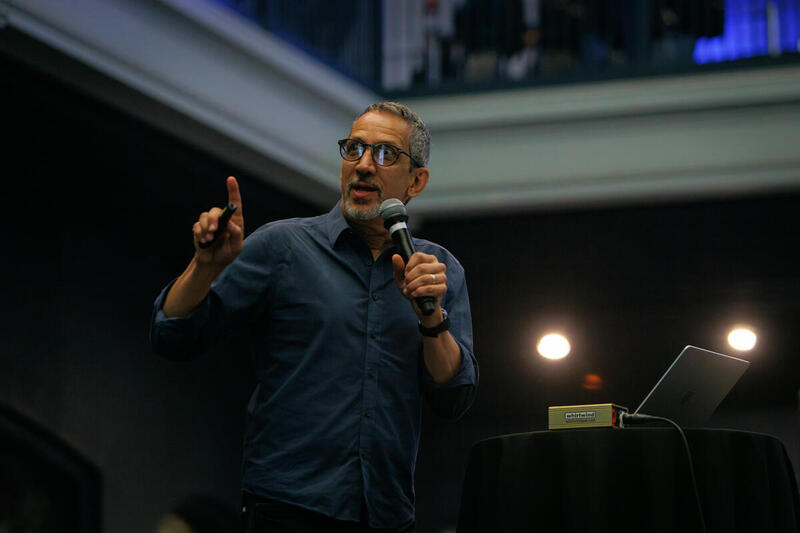
One evening in New York, I attended Comics for the Planet, an event organized by Seth Tobocman where you were also taking part. For me, it was a very particular experience: I felt as though I had stepped into a movie set in New York, surrounded by the cartoonists I had admired since I was young. Watching all of you that evening, I also had the sense of a community built over decades, where comics, politics, friendship, and activism continue to come together. How important has that community been to you? And do you think younger generations of artists still have the possibility of building something similar?
I often experience New York City through the eyes of the movies I saw of it. It’s one of the aspects of living here that I really love. I also spend a fair amount of time connecting with other artists through shows or talks, and very often find myself in a dream state, being able to chat about the art forms with other artists that, over the years, have created bonds for me in many areas, including among illustrators as well as cartoonists, and now it’s starting to move into the world of entomology.
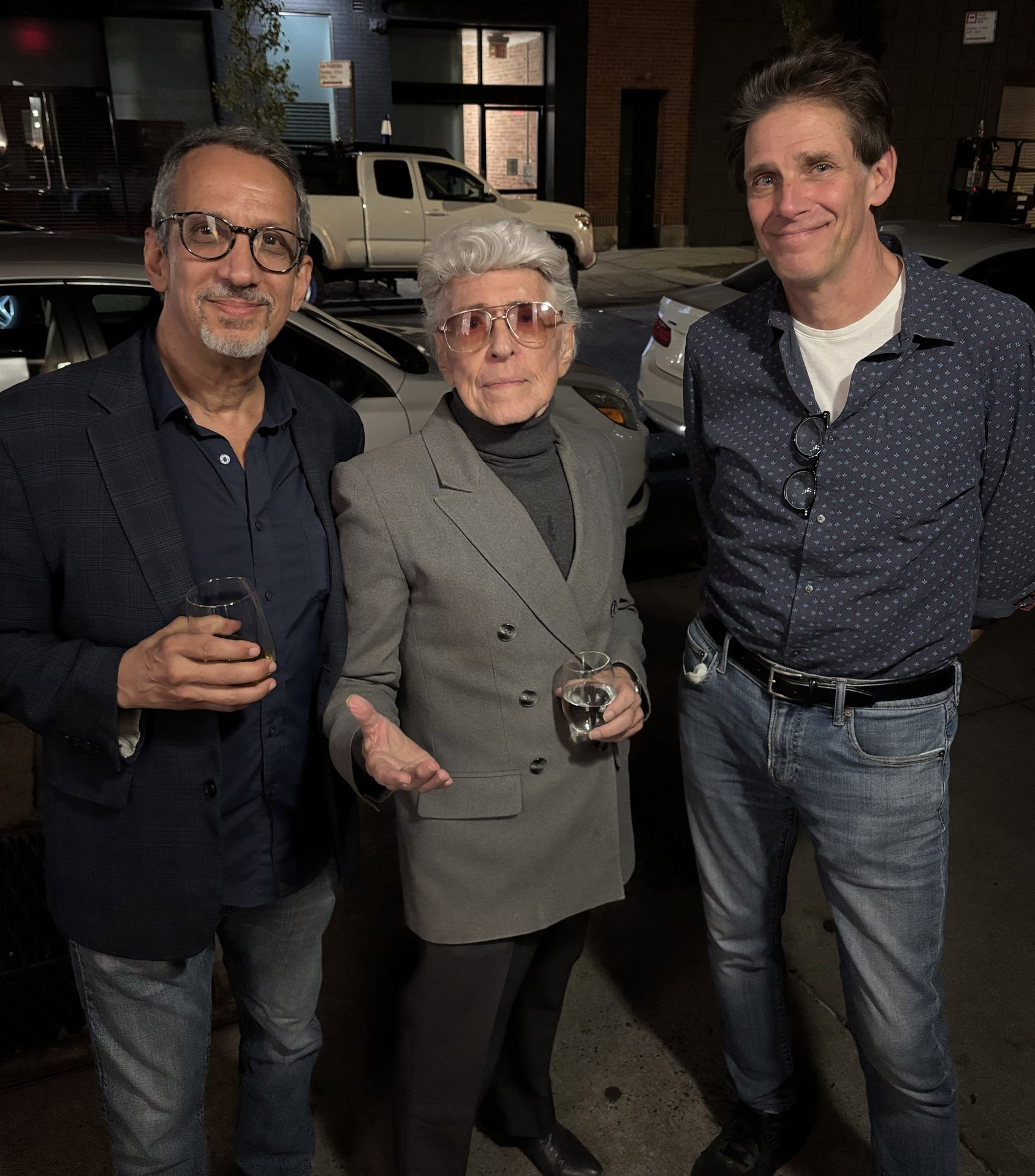
I think art school is a good place for younger people to start, as it naturally creates opportunities to interact with other artists and many of the relationships that can last years after school. It can also come from attending Comic Festivals, going to talks and exhibitions, and interacting with people there. That, of course, can sometimes be difficult if you’re a little shy, and it is something that happens over years. Just recently, I went to an opening, and I was talking to the illustrator Peter de Sevé, who did all the animation designs for many of the Pixar films as well as Ice Age. I was telling him about my first convention in 1970, where one of the big cartoonist guests was Jim Steranko. And in walked Jim Steranko! I had first met him when I was 11 years old and had seen him at Comic Conventions over the years. So, it was this great connection to my history, and then I got to listen to him talk to us about the history of comics that he participated in. Unfortunately, he’s kind of an asshole and a Trump supporter– – but that didn’t stop me from enjoying hearing somebody talk about working with Jack Kirby or Stan Lee or a million other people, long since dead, that were part of the comics history who he knew personally!
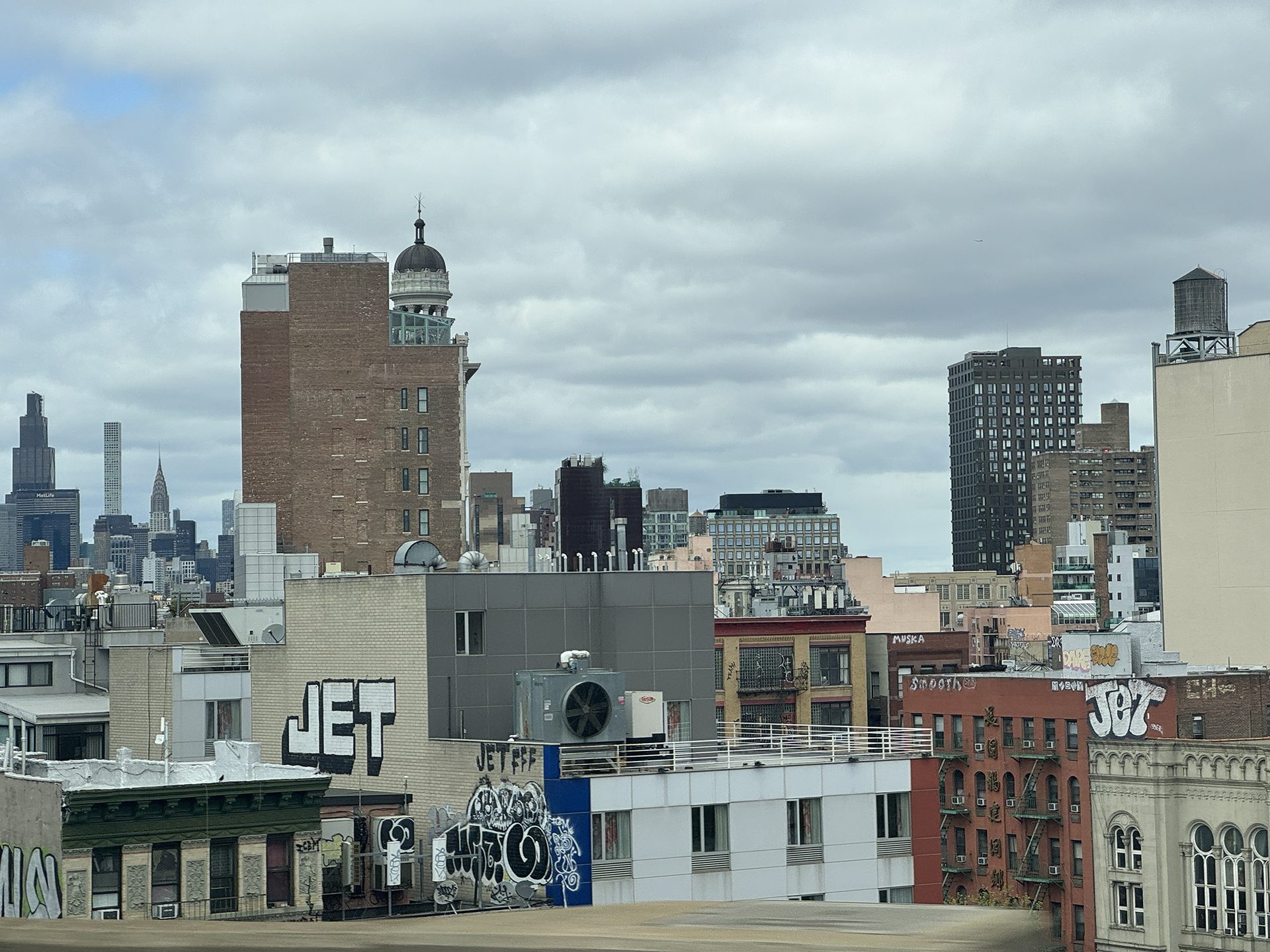
When you walk through the streets of New York today, can the city still enchant you the way it did when you were young? After almost fifty years of living in it, observing it, and drawing it, do you still love this city? And what about New York can still surprise you?
Well, I may have answered this in previous questions, but New York is a place that is constantly changing and therefore is always challenging your senses. These days I’m distressed at how expensive everything has become, especially thinking about the extent to which it makes it difficult for a young person to do what I did and just show up here and find a place to live that’s affordable. But that doesn’t take away from the fact that there are tons of things that you can do here that don’t require a dime. Like a walk through Central Park or gallery openings. And the fact is, New York itself is like a museum of world culture. You can walk through Chinatown or the Village, and there’s all this history and many things that are in the process of becoming history before your very eyes. There are many aspects of New York that are still holdovers from the very first day I got here, and there are many things that are not even recognizable from my earliest days, like Times Square, which, as a resident, I can’t stand to walk through and yet ironically so many tourists make that their first stop!
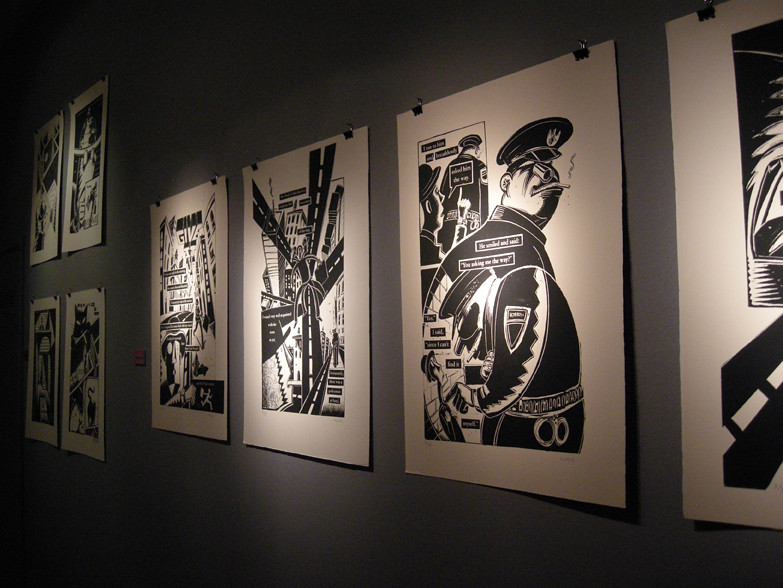
When you were young, after making one of your first political drawings, you remember looking up at the ceiling and making a promise: if comics gave you a voice, you would try to use it to say something useful. Many years have passed since then, and that voice has accompanied you through books, travels, protests, and political change. Do you feel that you have kept that promise? And today, when you begin a new drawing, do you still feel that same need to say something through images?
I have the good fortune to answer yes, that voice has remained in my head. It probably comes from many places, including my parents and the environment I grew up in, but also the urgency of current events that makes me want to make sure I’m not fiddling while Rome burns. When it comes to comics, especially doing a graphic novel, it’s so much work; the idea of not having it be something of significance to me seems like a crazy waste of time. But I am extremely lucky because many of the choices I made, particularly wanting to draw comics, was not an obvious good choice for making a living, it transformed into that over years. Doing comics was almost a suicide mission in the beginning since there was no pay really, but my love for the form was so intense. It was something I would do regardless. The fact that the publishing world came around to seeing the value and discovering there’s readership for it came much later. Thankfully, I stayed with the form, so in those years leading up to that acceptance, I was able to develop my craft so that when the door opened, I was ready to seize the opportunity.
SOLRAD is made possible by the generous donations of readers like you. Support our Patreon campaign, or make a tax-deductible donation to our publisher, Fieldmouse Press, today.
Leave a Reply