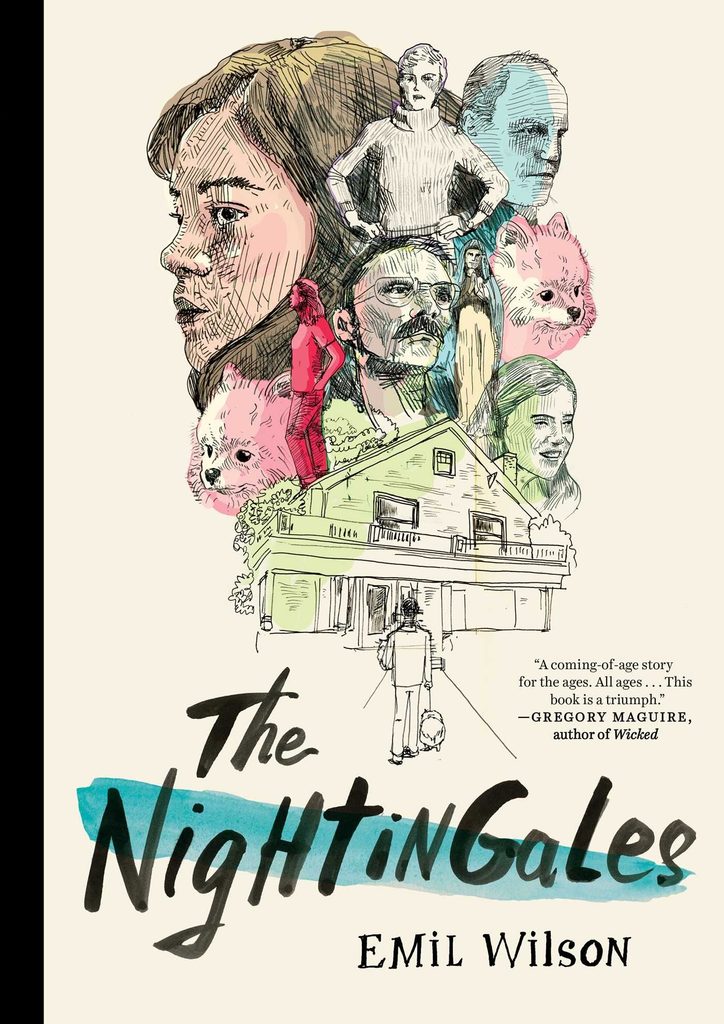
Emil Wilson and I met last year at a zine fest in San Francisco where we both live, and discovered some other things we had in common. We had both recently gone back to school for an MFA in comics after long careers in other fields (he in advertising, me in librarianship and arts education). We were also both working on graphic novels based on family stories for our thesis projects. One major difference is that Emil actually finished his! Six months later, he showed up at my table again at a different comics fest and handed over the publisher preview of his new graphic novel, The Nightingales (Avid Reader Press, Simon & Schuster). The preview pages were so gorgeous that I gobbled the rest of the book up on NetGalley that night.
I loved it so much I asked Emil for an interview and he sat down with me at a cafe in the city a couple weeks before his pub date (Aug 4) on an uncharacteristically sweltering afternoon. After commiserating about our commonalities like being the oldest people in our respective MFA programs, we dove into discussion of the book. My short review is that it’s stunning, y’all. You will want this beauty to take up space on your shelves and in your heart.
But if you want to know more about why, read our chat below to learn how he pushed the boundaries of the comics format, how his career in advertising helped shape the book, why he chose not to tell this family lore as traditional memoir, and why it matters as graphic medicine, as AIDS history, and as a beautiful story that just might get non-graphic novel readers to pick it up and love it, too.
This interview was shortened and condensed in the interest of space.
Cassy: I was blown away by this book. I just absolutely loved it.
Emil: Oh, thank you. It’s always great when somebody who’s a cartoonist says that because you know what goes into this.
Cassy: What’s your quick elevator pitch or back of the book description of The Nightingales?
Emil: It’s based on a true story that happened in 1985. My father had a coworker who was dying and he invited him to move into our home. He and his two dogs moved in, and it turned the house upside down. It just brought out the best and the worst in everybody in the family.
It’s ultimately a book about kindness. What I wanted to explore is that kindness can be a wonderful thing and can also be complicated. It can be transformative to the person who gives the kindness and to the one who receives the kindness.
We come to find out that the guy my father brought home is dying of AIDS. When you talk about somebody who has AIDS in 2026, people are like, oh, yeah, yeah, we’ve been through that, and that’s in the past, and all of that’s kind of over. Or they’re like, I don’t know what that is. Which is wild and sobering, and that’s a whole other discussion.
So, it’s a book about AIDS, but it’s also a book about this family. And I really wanted to explore the family and sort of what motivated them to do it and what they felt doing it and how it transforms them.
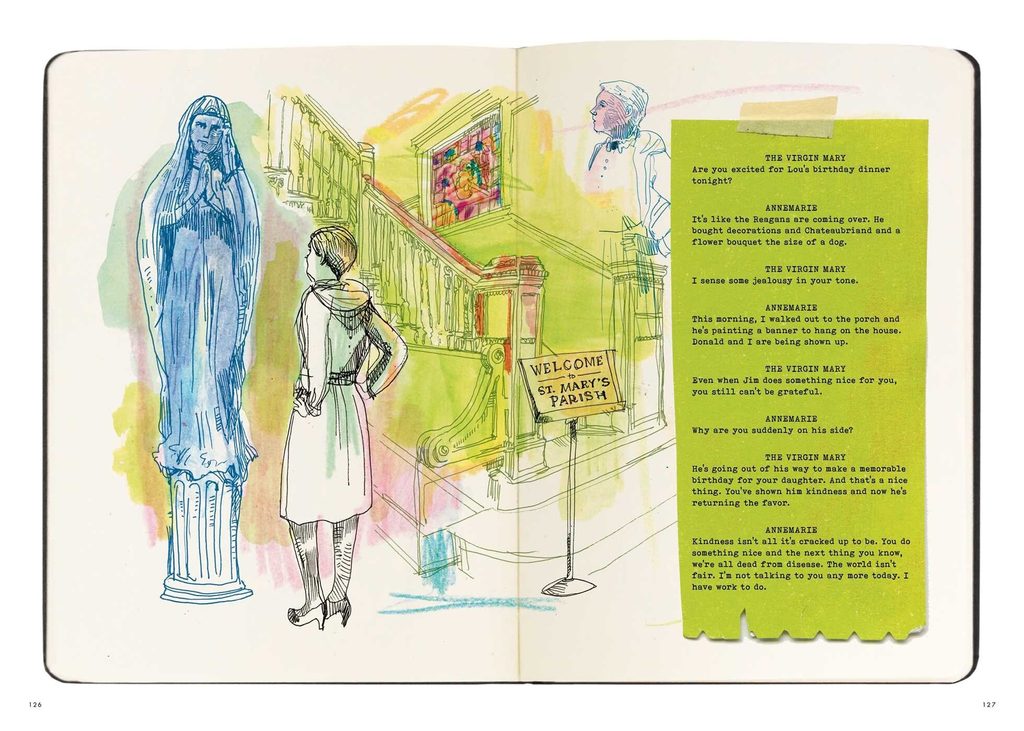
Cassy: It’s beautiful. The sketchbook-style drawings seem carefully observed, making it feel very intimate, like you’ve stumbled onto the artist’s diary. And your choices not to have word bubbles and comics panels and instead have the dialogue in scripts taped onto the pages – these choices all push the very definition of “comics.” How did you come to this style for the book? And do you even consider it comics?
Emil: I do consider it comics. I didn’t grow up reading comics, and my background is in advertising. I sort of came to this book in terms of the way you approach advertising, which is, what’s the visual language that you use to help tell this story?
Because I didn’t grow up in comics, I don’t really think the same way about panels and word balloons, and I find it a little bit overwhelming when you sort of look at a page of traditional comics. For me, there’s always a sense of how does the eye travel across the page? What’s the thing you’re looking at? How does the visual language tell the themes that are here?
It’s not that I didn’t want it to look like “comics,” but in my process of drawing, the sketchbook part looks to me like the way memory feels. Like Lou says in the book, it feels like some things are really well remembered, and some things aren’t.
It was interesting going back to school. At Cartoon Studies, there’s a lot of traditional comics you learn from. People who make comics look at a lot of comics, which helps them understand how to tell their stories. When you’re in advertising, what’s profoundly different is that you never look at other advertising when you’re making advertising. You don’t want to be influenced by it. Because the whole point of advertising is to stand out and do something different, and to break through the noise, and you don’t want to be derivative. So you always kind of surround yourself with things that are not advertising.
Bringing that sensibility into school was problematic, because I kept showing things in class that people were like, “I don’t think that that’s a comic.” Well, what does that mean, exactly? There was one instructor who said, “Look, I mean, it’s visual. I was moved. There’s a story.” Maybe that’s all the criteria for what a comic is.
Cassy: I am one who does not care to get hung up on definitions.
Emil: But some people are. I’m sure you went to school with people who did the same thing. Like, I remember there was this one instructor, in particular, who was just on me in terms of, like, “I don’t know what you think you’re making here, but this isn’t what this is.” And I was like, you’re not the comics police, and I don’t have to listen to you.
Cassy: I love how you played with the form. It’s very unique, and so it does make it stand out.
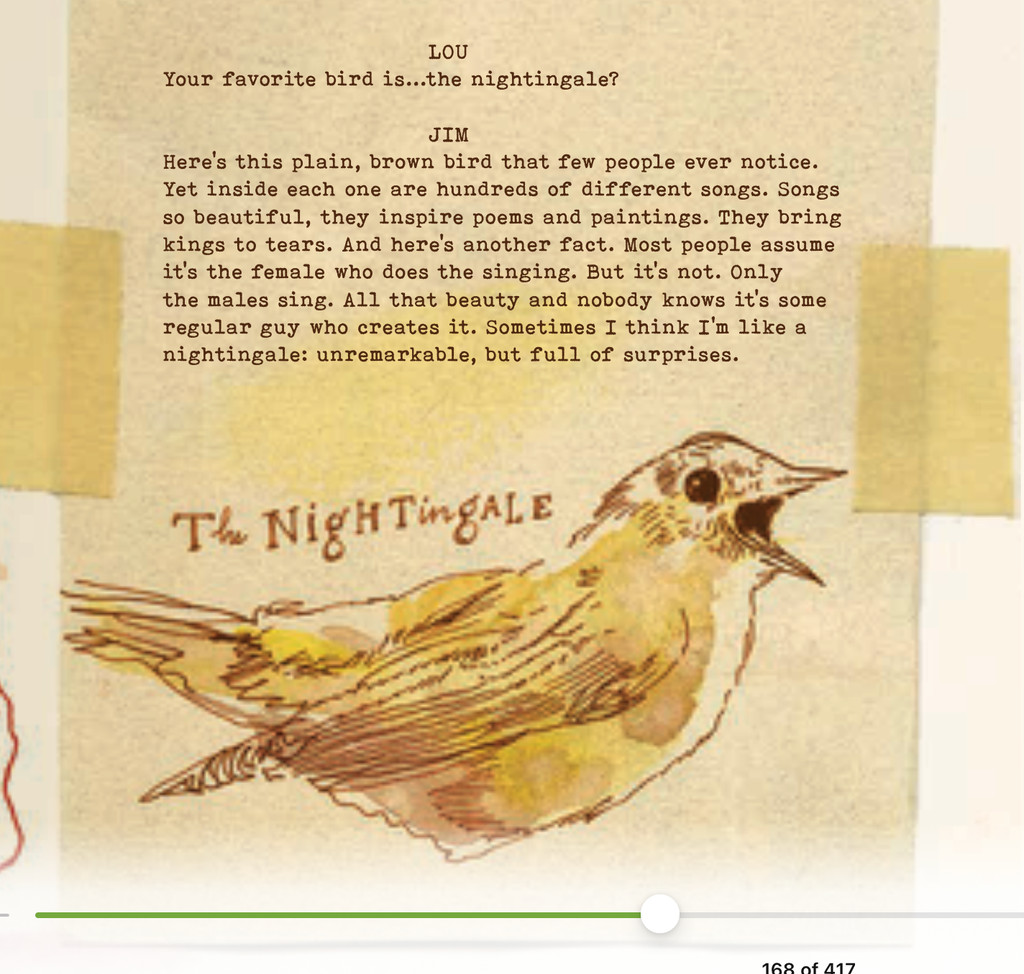
Emil: One of the big things that I’m proud of is the dialogue. I’ve always really struggled with traditional dialogue in comics. I find the box stuff really isolating. I’m always like, this is the box. And then I go to the next box, and I look at what’s happening, and then I read the dialogue, and I go to the next box, and I’m like, what’s happening? I find that kind of stop-start in dialogue frustrating.
I wanted to find some way that you read the conversation in one bout. And I’m really happy with that. I love the fact that it’s just about the dialogue. There’s nothing distracting from it. You don’t need an environment on every page. On this page, this conversation is the primary importance, so that’s what I want you to focus on.
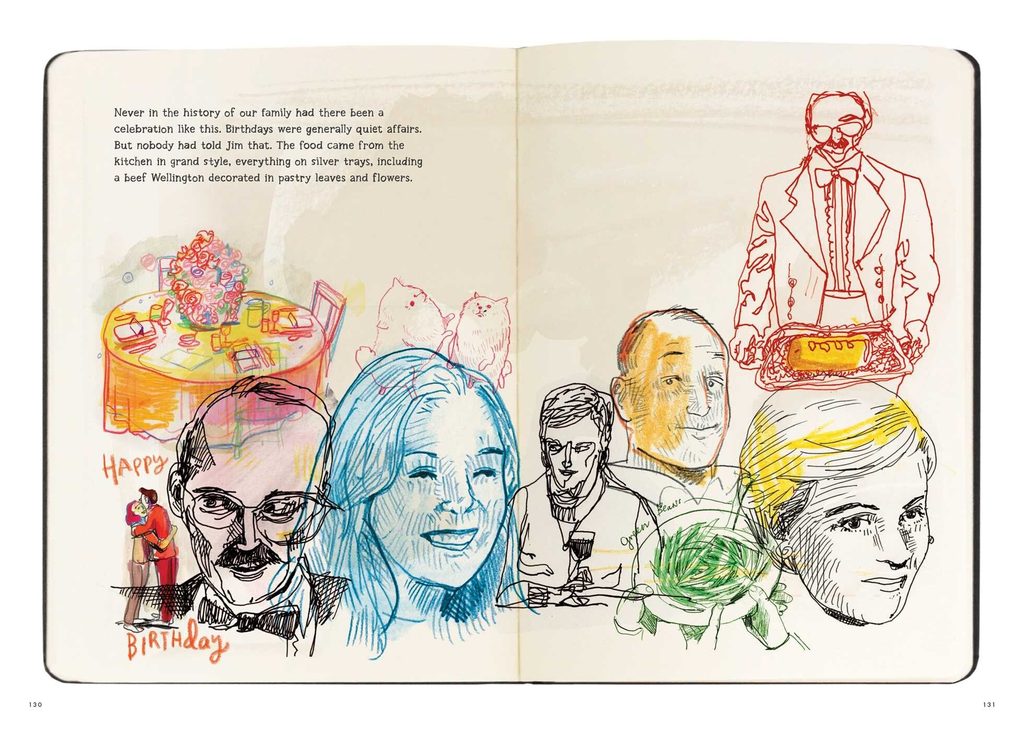
Cassy: It looks like you very carefully observed real people for each character. As far as the reference for the drawings, is it from old photos? Did you have people pose as reference?
Emil: We all learned new skills in the pandemic. I took a bunch of life drawing classes where you would just look at something and then have to draw it. And for some reason, after having grown up with live model classes, where the whole figure is a dimensional thing, to do it on a screen, everything’s very flat. So I just got very good at being able to draw what I could see.
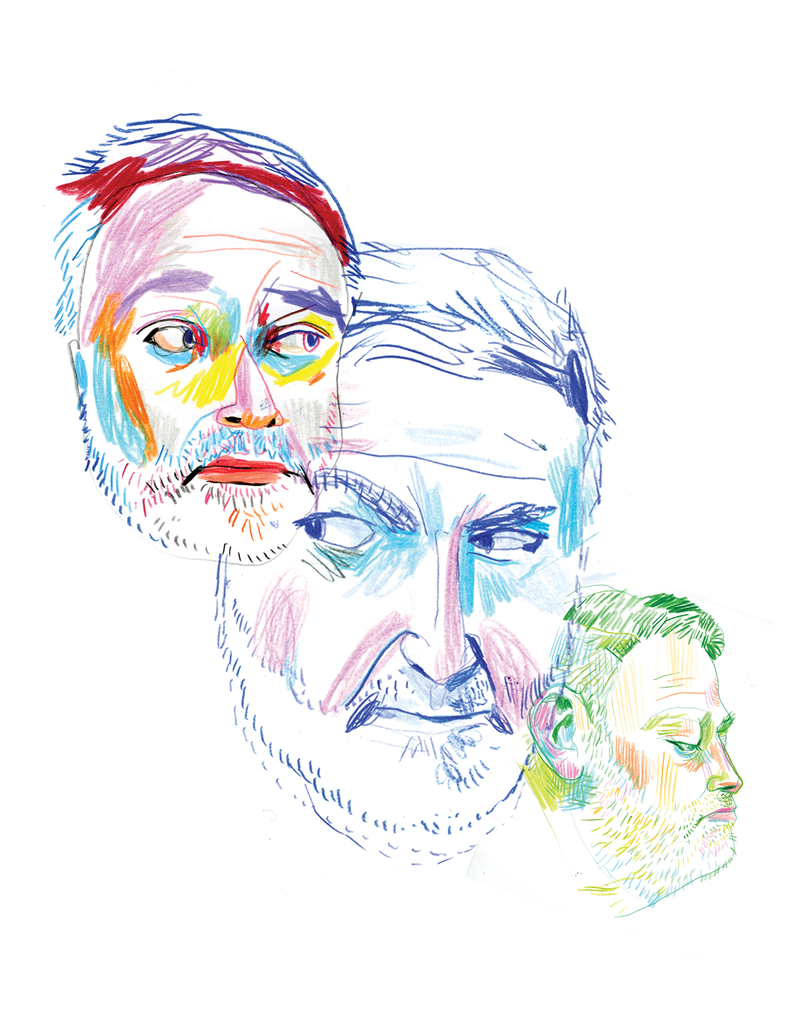
I found that after a while, I knew what the characters looked like, and it was a matter of just finding a reference for how the head was turned and being able to add a character’s long hair or eyebrows.
When I look at the book, I think I became a better artist in the course of it. I look at the drawings at the end of the book, and I want to go back and either make the first ones better or I need to make the later ones a little rougher.
Cassy: How long did the whole thing take?
Emil: I did the first sixty pages and scripted the whole thing for my thesis. And then I spent about a year, just kind of redoing those sixty pages over and over and over and over.
My father passed away. He was sick for a year and a half before he passed, and so I went and stayed at home to help my mother and dealt with that. Then I took about six months to do those sixty pages one more time, and then I applied to the Comic Arts Workshop, and that’s when I was like, I gotta put this behind me, and I gotta look forward. I think all in all, it was about a year and a half, but the first sixty pages were about sixty percent of that time.
Cassy: And what is the medium? Was it actually a sketchbook or is it digital?
Emil: Everything was created analog and then scanned in and fixed up in Photoshop. For the little script pieces, I scanned a piece of paper with some tape on a scanner, and then took that and superimposed it onto the page. I feel like when something’s really digital, it looks too clean to my eye, and I keep wanting to see the hand of the artist. I mean, this book is a little over the top in terms of, like, there are smudges all over the pages.
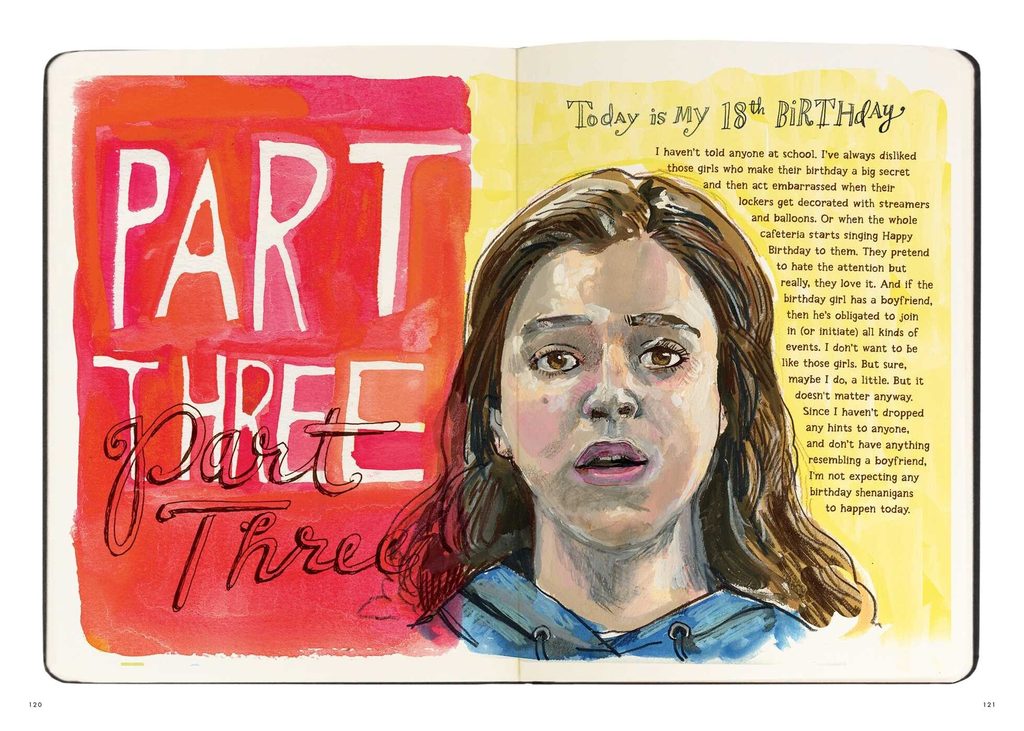
Cassy: In the author’s note, you let us know that this is not a memoir, though it is based on an actual family story that you took liberties with. I feel like the tricky part of memoirs when you tell family stories is that you reveal things that kind of blur the lines of privacy. It must have been really freeing to decide you weren’t going to do a straight memoir and you could play with it as needed. How did you decide to make it from your sister’s POV?
Emil: The biggest reason was that I wasn’t there. Pretty much everything in the book happened. Who it happened to and the order that it happened is what I played with.
My father really had this man move in. I met him when I came home one weekend to pick up some clothes. For the most part, the whole first sixty percent of the book is as it played out.
The biggest reason that I didn’t want it to be a memoir was because I had written a memoir script years ago, and when I would workshop it, the note that I kept getting back, is, you’ve got to go deeper, and I was like, there’s no more deep. It’s as deep as it goes.
I didn’t want to mess with that. I wanted to deal with people who I know, characters who I intimately understand, which are my sister and my parents. And I want to be out of the story, and I want to work with them, because they feel like characters.
The real memoir stuff was when I went to New York and worked as a buddy for AIDS patients. I was assigned to somebody and kept a journal in the three or four months that I was working with him, and all that stuff at the end of the book is the conversations that he and I had.
I mean, I changed certain things. Like, my parents didn’t split up, although whether they should have is a whole other conversation. And my sister didn’t go to New York; I went to New York.
Cassy: Did you tell your sister and your parents you were doing this? And then did you interview them to help fill in the gaps for the things that you weren’t there for?
Emil: The thing that was great about it being semi-autobiographical, and not a memoir, is that there were plenty of things that I would ask my sister or my mother or my father about. And they’d be like, I don’t remember, and I’d be like, great, I’ll make that up.
And that kept happening. Like, there was a point when I first thought about the book, I said to my sister, I have this idea for this book, except the ending kind of turns Mom into a monster. And she asked, Well, what is it? I said, What happened to the dogs? And she was like, I don’t know. And I said, Well, I have this idea to sort of do this with it. And she was like, I don’t think that that’s fair. She’s like, look, I was there. I think that’s very far from the truth. I don’t know what happened to the doggies either, but that’s certainly a scenario I entertained. And I was like, We’re good. I’m gonna just run with that.
I did show my father some initial sketches before he died. He was very angry that I had made him bald. He really leaned into that in a way that I was like, Dad, this is the story. He was like, I don’t care about the story. I have a full head of hair. Why am I bald on this page? When I showed my sister the sketches, she was like, why is my hair so limp? And I’m like, what is the preoccupation with their hair? Like, you guys are all monsters on the page. Doesn’t that bother you?
My mother’s still alive. She has read the book, and she read the draft that I sold. We softened a bunch of it. We gave the mother a bigger backstory. We altered the ending. The editors felt that the mother was too rough. So if you think she’s rough now, she was really rough before.
I had changed enough that she could tell herself it wasn’t true. And the stuff that was true, it was like the changed things gave her permission to think, Well, this stuff didn’t happen, either.
One thing I’m happy about is that when I was workshopping the book, someone said, “I think the father is the asshole. I think the mother has every reason to feel uncomfortable about having the stranger in her home.” And it was one of those moments where I not only reconsidered the character, but I reconsidered my mom, and I was like, right. This is part of what was really upsetting to her, and why didn’t I put that all together? And it’s made me appreciate my mother in a way that I hadn’t before I did the book.
I was on this podcast where someone said, “I think that she’s really angry.” And I said, you know, I don’t think she’s angry. I think she is just from a generation of women that weren’t given a lot of choices. And I think that it’s easy to kind of dismiss her as angry, but I think that she’s really frustrated because she’s had no choices in her whole life. And suddenly, she’s… in this situation where she doesn’t have a voice. I think that that’s the truth with a lot of women of that generation. I remember my mother saying she had her own copy of Free to Be You and Me. She said all the problems that the author was having were because she thinks that she is the center of the universe. And I’m like, well, she should think that. We should all think that. And she just kept saying, “I just don’t think that she just should be able to just do whatever she wants.” And I’m like, We should all be able to do what we want. It felt really indicative of women who are now in their eighties, who are watching women succeed in a way that they couldn’t have.
Cassy: I love how you captured their backstories. The Donald Miller Operational Manual for your dad, and the dress-up dolls of your mom. These very 50s-inspired formats were a super clever way to let us get to know them.
Emil: I am really pleased with those. I mean, that’s like an advertising solution 101. I have a lot of information I need to convey. It’s gonna be boring if I don’t do something different here.
Cassy: Really well done. They provide insight, and maybe a little empathy for why they acted as they did. Again, I know it’s not memoir, but how much of that was speculation on your part, about your parents’ feelings and past experiences, and how much was based on talking with them?
Emil: My mother talked about her childhood and her feelings a lot. My mother’s brother, who was two years her junior, got a car and got to drive it. She didn’t get driving lessons because my grandfather used to say, “You don’t need to worry about driving. Someone’s gonna drive for you.” And he said that all the way up until she was about 20, and she married my father at 22. All those stories sort of become family myth. So I basically just wrote what I knew.
I’m interested in how that’s gonna come back to haunt me with her relatives. She talked about it freely as we were children, but now that it’s on the page, I’m worried that she’s gonna be like, “Well, I don’t know where he got this from.” And she’s gonna completely throw me under the bus, which would be fine. Like, that’s absolutely acceptable.
But my father, before he died, I kept trying to ask him things, and he’d be like, “I don’t remember any of that.” I knew enough for the manual, and I made up the rest. Like, I knew that he had a problem with his mother. I knew how his parents had met. It’s pretty much like 95% true.
Cassy: One of the things I’m super interested in exploring in comics is graphic medicine, or this idea that there’s healing aspects of telling a story. While you’re not the star of the book, you do show up in a scene where you come home, and now I know that’s based on an actual relationship you had. And in the operating manual section you get vulnerable about a suicide attempt. What was the emotional process like for you in creating this? Did it feel healing in any way or retraumatizing in some ways?
Emil: I think it depends. I didn’t try to kill myself in high school. My sister did. And so I literally lifted her story and put it onto mine because I’d put so many of my stories onto her character. When it came to Jim, and then Michael, who was the guy that I worked with in New York, I was really interested in how the information and the history about AIDS hasn’t sort of followed us into the moment, that there are so many people that I’ve talked to, most of them under the age of 35, that are just like, I don’t know anything about it.
I don’t think there’s a lot of what I would call “graphic medicine” in this book, but it shows the idea of men who died and how they died, and especially those early days, those early years and months of AIDS, where people were just dying, like, they’d be diagnosed in June and be dead by July or August. When I met the guy in New York, my volunteer job was supposed to be to go and do pharmacy and grocery runs, but he had a boyfriend who didn’t live with him, who did all that. What he had asked GMHC for was somebody he could talk to about his disease and how he felt about dying and what’s happening with him, without making his boyfriend depressed. I had no experience in counseling or anything like that. I’d never even been on a plane before I moved to New York. I was a kid with a suitcase getting off the bus and being like, Oh, my God, I’m in New York. Wow. And then three months later was sitting in this man’s living room, and he’s telling me about the history of AIDS, and how he had come to New York, and how he had been to bathhouses, and that sort of oral history that I think has been a little lost.
Graphic medicine is such a great thing, and yet, I don’t know where the lines are drawn. I feel like this kind of falls somewhere in the middle, but it’s about somebody who’s healing, somebody who’s dying, and somebody who’s helping them. But it’s also about a marriage that’s falling apart, and it’s about coming of age.
Cassy: Graphic medicine can be outward facing, like educating others about a medical condition or an issue, but it can also be a very cathartic or healing process for the creator. I wonder more specifically, did it feel like medicine for you while making it?
Emil: It did. At the time I was working with that guy, I was 22. He was over the age of 35. To my 22-year-old eyes, he looked like he was 80, and he was also emaciated by the disease. So, he could have been anywhere from 35 to 50. I’m 60 now, so I’ve lived longer than he did by far.
I think the thing that I appreciate now, that I didn’t appreciate then, is all of that oral history that he was giving me. It helped me understand where my community had been and where we were going, and in terms of coming out, it was incredibly empowering.
It was healing just to sort of understand where I had been and how important that time was to me. But it also was about me wanting to write something that focused on my family, and kind of picked apart what was going on in that marriage.
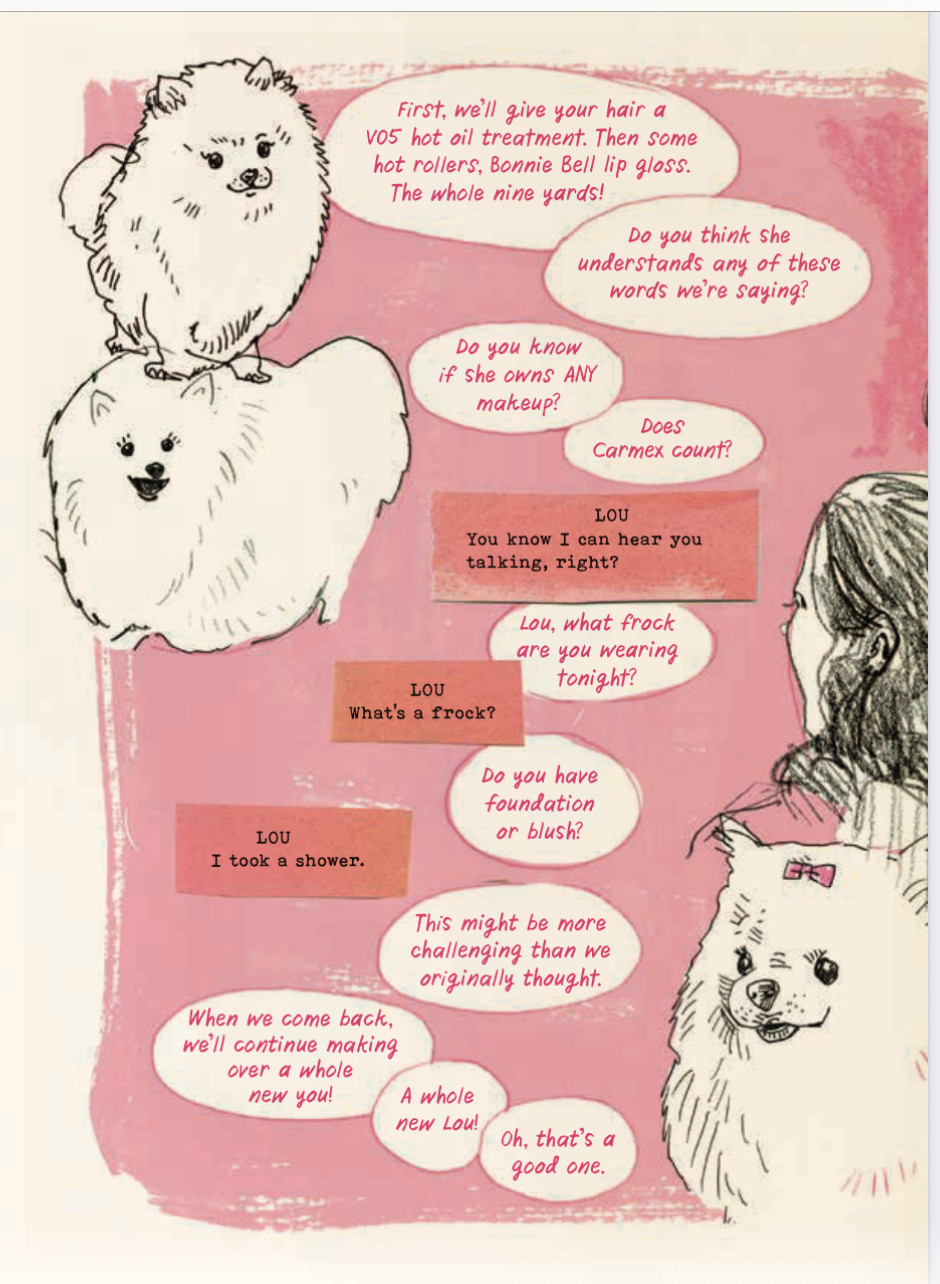
Cassy: For sure. So, pivoting a little, we can’t not talk about the show stealers, Henny and Penny, the two dogs that came along with Jim to live in your family’s house. You mention in the author’s note you took liberties with them. You made them Pomeranians and fabulous talk show hosts. At what point in the development of the story did they start speaking to Lou and helping to tell the story? Was that part of your vision from the beginning?
Emil: Yeah, that was always intended. They were actually Shih Tzus. The kind that look like they’re fluttering on the floor with their long fancy hair. They were identical. And he would put different colored bows on them so you would know who was who. Their names weren’t Henny and Penny. I don’t remember what their names were, neither could my sister.
The thing that I do remember is that my mother hated those dogs because they shed. And they were also so manicured at the same time. Like, they were so beautifully groomed. And they were so clearly girls.
And I thought they were great as the vehicle for the backstory. And I wanted them to be fun.
In the first draft of the book, we learned that they had been put down, but we took all that out. The editors said, “We want you to want to change the ending. We think it’s a little too rough. So think about it. If you don’t want to, we’ll publish the book anyway, but we want you to think about it.”
I found this website called DoesTheDogDie.com, which is a site for people who are triggered by animal violence, and they basically go to look up movies, books, television shows, to see if any animals have been harmed in the things that they’re watching.
I met one guy who said, “When I pick up a book, and there’s a dog in the first chapter, I’ll read the last chapter, and if the dog is not mentioned, I won’t read the book.” And I thought, well, I don’t want to lose that reader. So on the second-to-last page of the book, the dogs are in a park with Lou. I put that there for that guy. Because of course he’s gonna go to the end of the book.
The other funny story was that we had this cat that we had adopted, like, two years earlier. We loved this cat, and I’m not a cat person at all, but we loved this cat. And she went outside, and we have a place in a sort of rural area, and something got her. We found her collar. We never saw her again. And every day, I would come downstairs, and I would leave the door open in case she came back. And my husband walked downstairs one day and was like, “You know she’s not coming back, right?” And I was like, You know what? I don’t have to believe that. I can believe whatever I want to believe.
And I think it was the combination of those two things. I was like, Okay, I can write that in there. I can make the ending about the absence of knowing.
My editor said, “Look, I just want to be really honest with you about something. If it is clear that those dogs have been put down, people will hate not only you, they will hate the book.” She said, “there are places and times when that is important to do, but I don’t know if this is that book, and I want you to understand the weapon you’re playing with and how it might be turned on yourself.” And I was like, Well, it’s not about the dogs dying. It’s really about getting Lou out of the house and getting her to New York. And so I just need whatever that is to happen.
Cassy: Well, I was just so taken by the whole thing, and I know so many readers will be when it comes out soon. Is there anything you hope for by putting it out in the world?
Emil: There’s one thing, especially, that I’m really excited about.
I talked to about five agents when I was pitching this book, and the majority of them were comics agents. The guy that I ended up going with does not usually do comics. He even said, “I don’t read graphic novels, and I don’t really like graphic novels, but I like this graphic novel, because it just doesn’t feel like what I thought a graphic novel would be.”
For that reason, I wanted him to represent it. He has been the godfather of this book in ways that I couldn’t have imagined.
The thing I hope is that people who don’t read graphic novels will pick up the book and say, “Oh, but I like this one because it feels different.”
SOLRAD is made possible by the generous donations of readers like you. Support our Patreon campaign, or make a tax-deductible donation to our publisher, Fieldmouse Press, today.
Leave a Reply