For years, I attended comic conventions the way most people do: I went to discover new books, meet creators I admired, listen to panels, and spend more money than I intended on comics and collectibles. The convention floor felt less like a marketplace than a temporary city built by enthusiasts: cosplayers posing for photographs, collectors carrying stacks of carefully protected comics, long conversations about fictional characters unfolding with the seriousness usually reserved for politics or religion, and, like many attendees, I mostly looked outward, toward the spectacle.
At some point, however, my attention shifted.
I found myself standing behind convention tables more often, and from that position, the convention floor looked different; the chaos was still there, but another pattern began to emerge. Some artist tables were constantly surrounded by people, while others seemed deserted for long stretches of the day. Some creators appeared comfortable speaking with strangers, and, in the other extreme, others remained focused on their sketchbooks, waiting for readers to initiate every interaction. The differences were subtle at first, but once I noticed them, I couldn’t stop noticing them.
One of the people who made me pay attention was my friend Sergio Rios. Before dedicating himself fully to independent comics, Sergio had worked in environments where interacting with clients was simply part of the job. Watching him at conventions, I became aware of how unusual that experience was. He knew how to start conversations without appearing pushy and knew how to recognize curiosity before it became a question. He seemed comfortable introducing people to his work rather than waiting for them to discover it on their own.
At first, I assumed this was simply a matter of personality. Some people are naturally outgoing, others are not, but the more conventions I attended, the less satisfying that explanation became. What I was seeing wasn’t merely a difference in temperament. It reflected a deeper tension that seemed woven into independent comics culture itself.
Sergio’s behavior looked entirely normal to me, yet it often felt atypical within an Artist Alley. That realization led me to start observing creators differently; I was no longer looking at them primarily as an attendee or even as a fellow creator, I began watching the interactions happening around the work: the hesitant conversations, the awkward introductions, the reluctance to discuss certain topics openly, and the ease with which other topics could fill an entire afternoon.
What struck me was not that creators were trying to sell comics, because, frankly, everyone at a convention is trying to sell something, whether that thing is a book, a print, a commission, a Kickstarter campaign, or simply the possibility that a reader might remember their name: that’s normal, natural. The surprising part was how uncomfortable many creators seemed with acknowledging that fact directly.
A creator could spend an hour discussing paper stock, drawing techniques, narrative structure, printing methods, or artistic influences. These conversations often unfolded naturally and enthusiastically, yet conversations about pricing, sales numbers, or commercial decisions frequently produced a different reaction altogether. Confidence gave way to hesitation, the details became vague, and more importantly, the atmosphere changed.
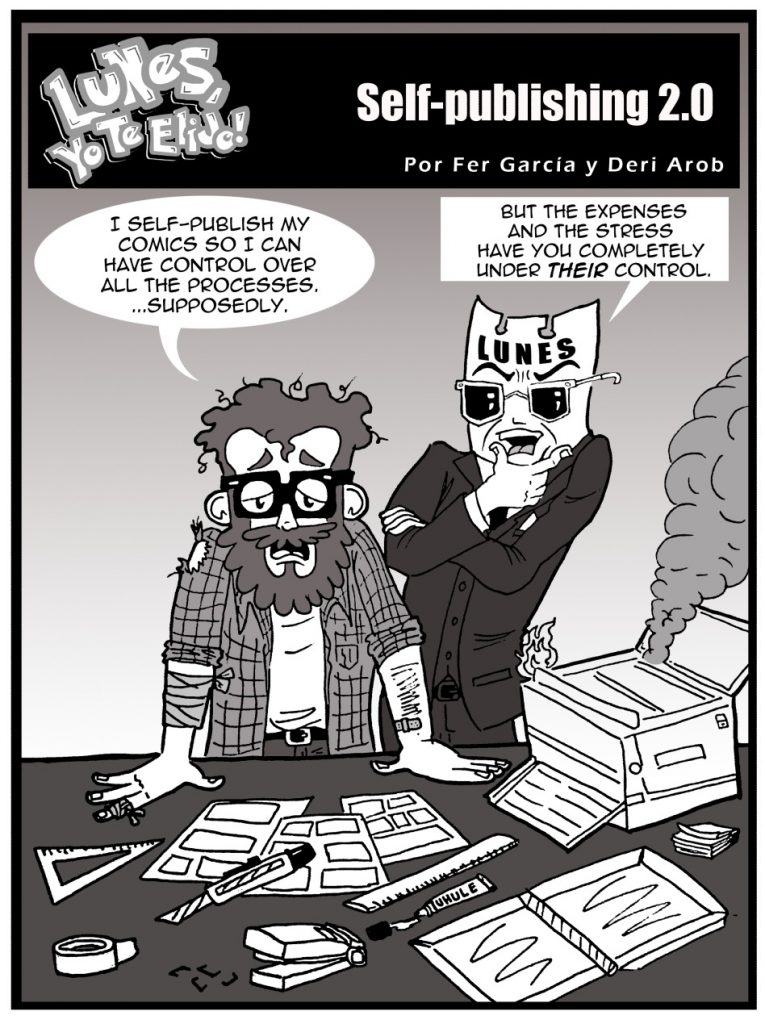
At first glance, this might seem insignificant; after all, people are private about money in many professions. However, the pattern appears often enough in comics culture that it begins to suggest something larger than simple privacy. The discomfort seems less connected to financial information itself than to what financial information symbolizes, because talking about artistic process reinforces an identity that comics culture readily celebrates. Talking about sales can feel like stepping outside that identity, even when sales are what allow the work to continue existing.
This creates an unusual contradiction: Independent comics culture often celebrates authenticity, personal vision, and artistic commitment, those values are not imaginary, most creators genuinely enter comics because they love the medium, because they want to tell stories, want to draw their vision, to create something that did not exist before, yet the same culture that celebrates those motivations also depends upon a vast amount of labor dedicated to visibility, promotion, relationship-building, and economic survival.
What fascinates me is not the existence of that labor, because every creative field contains similar realities; what fascinates me is the way comics culture often seems reluctant to describe that labor in direct terms. For example, audience-building becomes community-building, which is fine, but then promotion becomes “sharing enthusiasm,” and marketing becomes simply “talking about the work,” and selling? selling becomes almost anything except selling.
These distinctions may sound semantic, but they matter because language reveals what a culture feels comfortable acknowledging about itself. If the same activities are routinely described using softer or more socially acceptable terms, that suggests the tension is not really about the activities; it suggests the tension may be about identity.
The mythology of the artist occupies a powerful place in comics; even now, many of the stories we tell about creators revolve around passion rather than sustainability. We admire the artist working late into the night because they believe in a project; we admire persistence, sacrifice, dedication, and celebrate the creators who remain committed to a personal vision despite difficult circumstances. There is something admirable in that mythology because it protects values that many creators genuinely care about, yet every mythology leaves certain realities in the background, and this one is no exception.
The independent creator who spends months drawing a comic eventually needs readers; if this creator is launching a crowdfunding campaign, this creator has hopes that these readers will contribute. The creator who is paying for travel, lodging, printing, and convention tables hopes enough books will sell to justify doing the convention. None of these realities contradict artistic authenticity. Yet they often occupy an uneasy position within the culture’s self-image, as though acknowledging them too openly risks contaminating something important.
I recognized some of this discomfort in myself. One of the most difficult things I experienced as a creator had nothing to do with writing or publishing; it involved charging money, more specifically, it involved assigning a price to something I would happily spend time doing for free. This is a challenge many independent creators understand intuitively because comics emerge from enthusiasm before they become products.
Long, long before a creator thinks about pricing, inventory, or sales, they are usually thinking about characters, stories, worlds, and ideas. Their work begins as expression, the source is passion, and, because of that, the transition from creation to transaction can feel strangely personal. The question is no longer whether the work matters to you, but whether someone else believes it matters enough to pay for.
That distinction may help explain why selling feels emotionally different from creating, even when both activities are necessary. Creation exposes artistic judgment while selling exposes value, and economic value. The very possibility of rejection exists in both cases, but it arrives wearing different clothes.
The contradiction became especially visible to me during a conversation I witnessed at a convention. One creator criticized another for trying too hard to sell comics; the criticism carried a familiar implication: that excessive attention to selling somehow diminished the artistic integrity of the work. The response came immediately: “Yes,” the creator replied, “Because this is my job. I eat and live from selling this. What do you expect? To give it away for free?”
The exchange lasted only a few moments, but I have thought about it for some time, not because the response was shocking or inappropriate, but because it exposed something everybody involved already knew. Nobody at that convention genuinely believed creators should give their work away for free, and nobody doubted that artists deserved compensation, yet the accusation still carried cultural weight.
That, more than anything else, is what interests me: the contradiction persists not because comics culture rejects commerce (independent comics would be impossible without commerce). Rather, the contradiction survives because many of the activities necessary for artistic survival continue to occupy an ambiguous place within the culture’s imagination. We rely, participate, and benefit from them, yet we often prefer to describe them using other language.
Standing behind convention tables, watching readers drift through the aisles, I sometimes wonder whether the figure of the pure artist survives precisely because it helps us avoid confronting that ambiguity directly. The myth captures something real about why people create comics in the first place; most creators are not motivated primarily by money, yet the same myth can obscure the countless acts of communication, persuasion, and relationship-building that allow creative work to reach readers at all.
Perhaps that is why the convention floor remains such a revealing place; it is one of the few spaces where the mythology and the reality are forced to coexist in public. The artist, the salesperson, the storyteller, the exhibitor, the community member, and the small-business owner all occupy the same folding chair behind the same table; separating them becomes increasingly difficult the longer you watch.
And perhaps that difficulty is the point. The contradiction is not that independent creators secretly engage in commercial activities, but that comics culture continues to imagine artistic purity and economic necessity as opposing forces even when, in practice, they have become impossible to untangle.
SOLRAD is made possible by the generous donations of readers like you. Support our Patreon campaign, or make a tax-deductible donation to our publisher, Fieldmouse Press, today.
Leave a Reply