
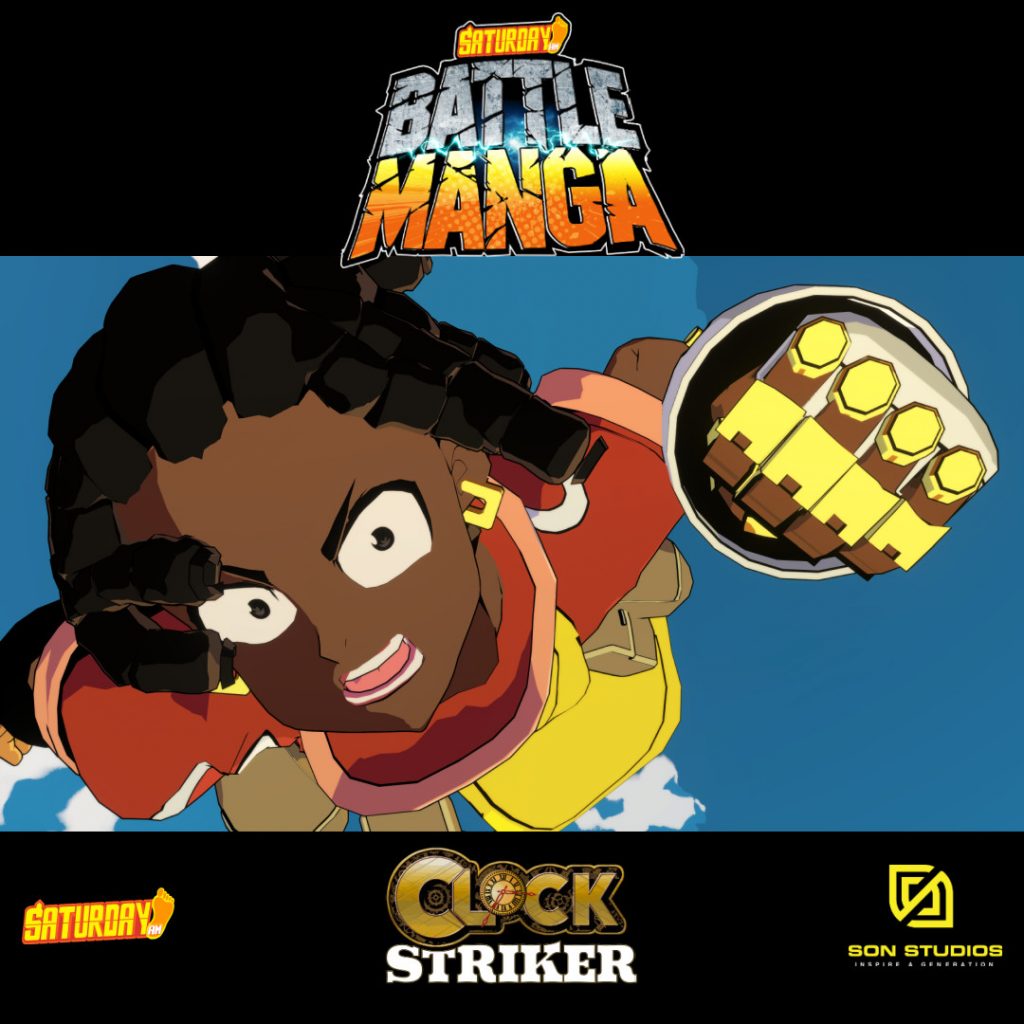
Earlier this year, Volume 3 of Saturday AM’s manga series Clockstriker was released everywhere books are sold, physically and digitally. At the same time, Saturday AM’s multiversal crossover event Saturday Wars recently returned with a new short story manga anthology Frontlines, which is available to read online via Saturday AM’s manga app. SOLRAD Solarad contributor Latonya “Penn” Pennington sat down with Saturday AM’s CEO and writer Frederick L. Jones to discuss their growing platform, Clockstriker, and accessibility in comics.
Latonya Pennington: In 2025, Saturday AM announced a partnership with the digital comics platform WEBTOON, which also made deals with Dark Horse Comics, IDW Publishing, and Disney to counter a decline in global readership. Why do you think that WEBTOON’s reading format is perfect for Saturday AM’s line of work?
Frederick Jones: So to be clear, the last numbers that I saw, WEBTOON generates about 70 million unique visitors per month in the US alone. They’re not hurting. Now, for Saturday AM, our partnership with them was something that was presented to us as a possibility, and after some time spent considering it, we agreed for many of the reasons I outlined before. They are FAR BIGGER than we are, but we believe that our unique, diverse manga content is important in continuing to highlight the idea that manga & inspired comics can succeed regardless of the creator’s place of origin, their ethnic identity, or the regional setting of the stories told. My job is to not just help the best new artists create the best new stores, but to make they get read by as many people as possible.
Saturday AM’s award-winning manga has been developed with our own platform (Saturday AM- Global Comics app – currently being rebuilt) as our first consideration, books that one would purchase in stores as our second consideration, and now with the incredible growth in digital readership in the US and in Japan in particular, we want to make sure that our content is available digitally as well; and again, WEBTOON is the most significant digital platforms globally and is an efficient way for a lover of comics to discover new content and creators.
Pennington: In addition to being on WEBTOON and other digital apps such as the hoopla library app, Saturday AM also has its own digital comic book reading app that takes after manga reading apps from publishers like Viz Media. How does Saturday AM’s digital content differ from the physical graphic novels?
Jones: Our Saturday AM – Global Comics app was something that took us several years to develop, and now we’re in the process of redeveloping it again to get closer to the standards that our fans and manga fans in general expect. The goal is always to achieve the best reading experience possible for each platform’s users.
For example, our app is typically the first experience that people get with our exclusive titles as the latest chapters of series like CLOCK STRIKER, UNDERGROUND, APPLE BLACK, and GUNHILD serialize within our magazines such as Bi-weekly Saturday AM, Monthly Saturday PM, and soon to re-launch Saturday Brunch. Therefore, you’re reading the chapters alongside each other via each new issues ala Japanese manga magazines like Weekly Shonen Jump. Conversely, when you read our content on other digital platforms like hoopla, you’re reading the book volume editions, which are fairly synonymous with our physical book product.
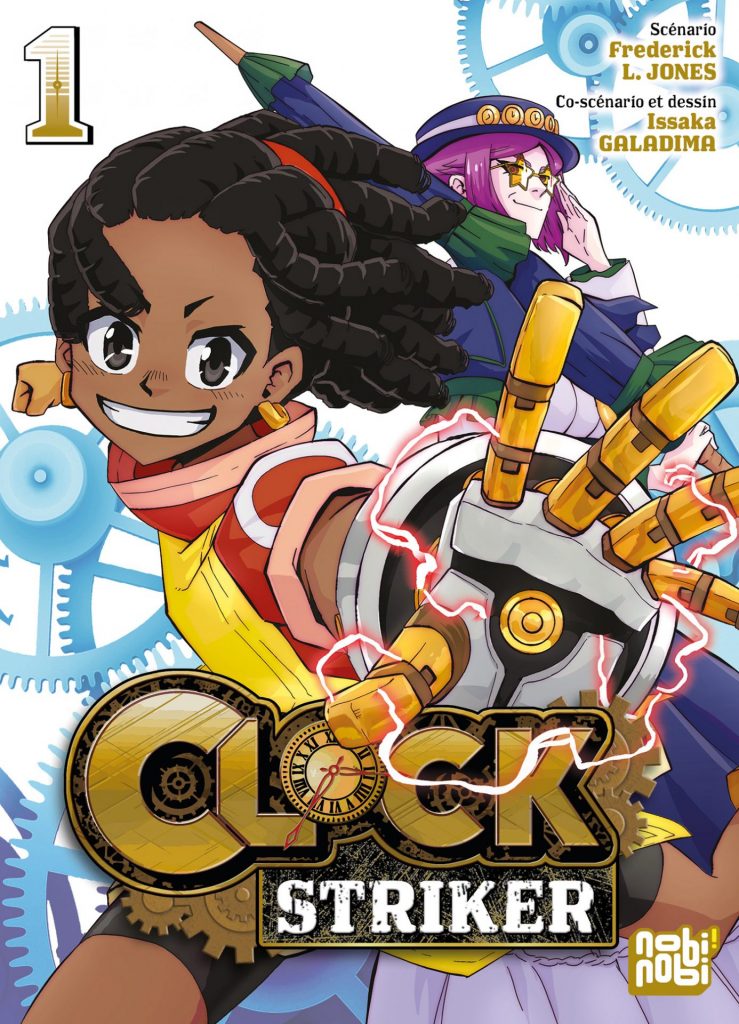
Pennington: Cast, the Black disabled female protagonist of CLOCK STRIKER, has been featured in her own solo series, a crossover series, and Saturday AM’s upcoming fighting game Battle Manga. Why do you think Cast is so versatile across different media?
Jones: I think, first of all, it is really exciting to see a Black female lead character in any type of mainstream comic and/or manga series. There’s such a lack of ethnic diversity in comics & manga that to see a fun, colorful, young Black female protagonist in a steampunk fantasy battle manga situation is just really different from the norm. I think, therefore, people have found a lot of energy from Cast being so refreshingly different rather than the standard manga presentation of a spiky-haired young white and/or Asian protagonist.
I think it’s also important because, at the end of the day, we’re talking about a series that takes on the question of humanity’s role in a digital future. Where does human ingenuity lie versus technological superiority? Cast is at the center of that conversation as both a female who is disabled as well as a young person from a town that is lacking in basic financial wealth and social services. And when you combine that with her belief in herself, her smarts and willingness to learn and therefore her battles against individuals who have power, wealth, and technological might, I think Cast becomes an incredibly ‘zeitgeisty’ underdog that everybody, especially in this moment in history, can see themselves in.
What’s really awesome is how Cast has become a real beacon for fans as they have followed her into many other arenas. People are buying the clothing, tech companies have partnered with us a la Sandisk, who made a special SSD drive featuring Cast. She has appeared in museums like the Kyoto International Manga Museum. Fans are already telling us they want to main her in the upcoming 2v2 Fighter videogame, Saturday AM: Battle Manga, and they’re asking us about pre-orders for a statue that we’ve started teasing from our upcoming IKONIK WORKS line.
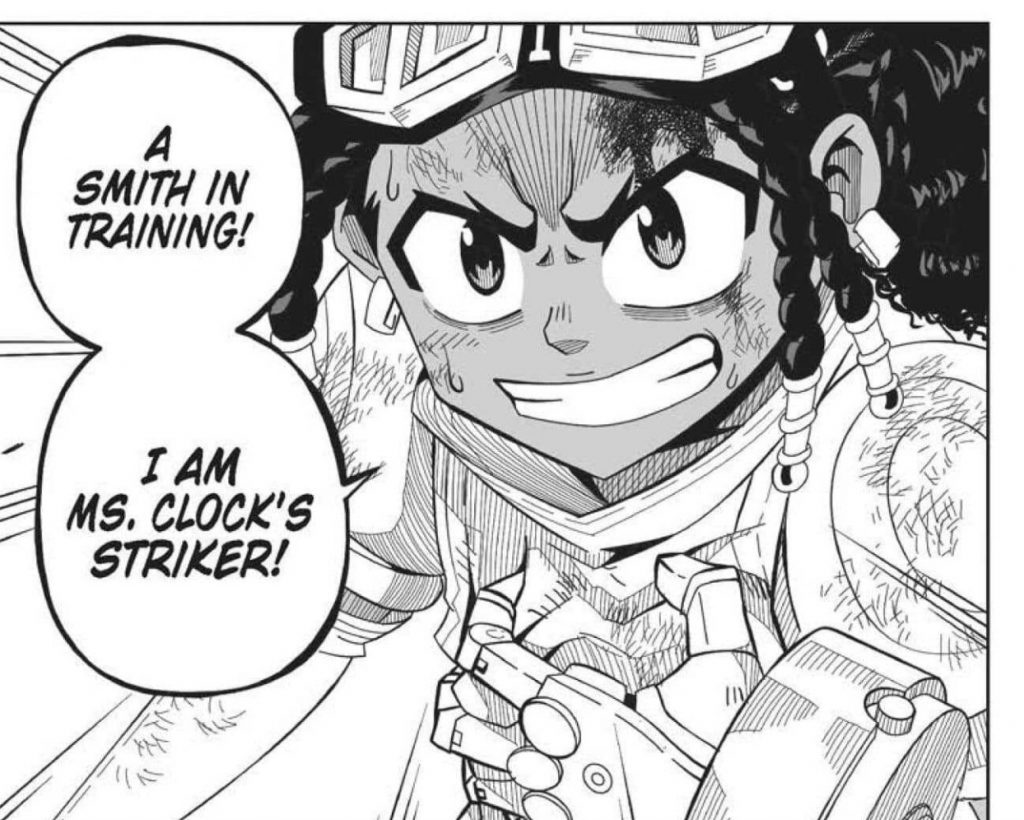
Pennington: As any manga enthusiast will tell you, it can be an expensive hobby, especially for longer series. Yet Saturday AM is dedicated to making their comic books as accessible as possible. Why do you think it is important to invest in accessibility as much as diverse characters and creators?
Jones: It starts with our mission to normalize diversity within manga. Considering that Black Americans, for example, are 13% of the US population but represent about a quarter of the anime / manga consumer base – then growing more diversity of the characters and creators of manga is morally, ethically, and financially the smart thing to do.
Once you accept that mission then there is one key strategy that you have to consider and I believe that is access. If you want diverse creators – then how do you find them? We take pride in making pathways for creators from Eastern Asia, Africa, the Americas, and Europe. Our annual events – an art contest – March Art Madness and a short story submission event, #summerofmanga, have been instrumental in discovering creators globally.
Likewise, the prizes of those events provided funding and art supplies (ala iPads and/or markers) which is so crucial for creators as depending on their country — technology and imported supplies can be extremely cost prohibitive. Artists need both inspiration but also ladders to continue to improve and showcase their work.
The artist ALWAYS begins as a fan and if they cannot afford to collect every manga they’re a fan of then they’ll never find the works that can inspire them to pursue this as a career. Therefore, libraries, digital platforms (of which for both the US and Japan over 70% of new customers are using it to discover and read manga vs print), and working to have our books in a variety of retail locations in over 30 countries are really important to building that audience and potential artist.
We actually care about the continued growth of this industry and that means diversity. To get there, then we believe that there’s nothing more rewarding than access for our (and others) manga in whatever manner is a legal and cost effective way for every customer.
SOLRAD is made possible by the generous donations of readers like you. Support our Patreon campaign, or make a tax-deductible donation to our publisher, Fieldmouse Press, today.
Leave a Reply