It’s an understatement to say Francesca Lyn loves comics, though she does. She’s more a champion of comics, even a paladin for comics, without the suit of armor, at least she wasn’t wearing it at our interview. Lyn believes comics are powerful, beautiful, and vital to culture, history, and storytelling. Her dedication is reflected in the many ways she engages with them. She’s on the committee that organizes SPX (Small Press Expo) every year, this past year she served as the Ignatz Awards coordinator. She co-founded with Christine Skelly, Comic Arts Richmond, a local annual comics show in Richmond, Virginia. She serves on the Board of Directors of Fieldmouse Press (Fieldmouse is the boss of SOLRAD btw). She’s a professor at Virginia Commonwealth University (VCU) and teaches classes on autobiographical comics and how women of color use them to tell their own narratives, and with VCU colleagues, she co-founded and co-runs the Graphics Narrative Lab, a hub for the scholarship of sequential art. In her spare time (lol), she’s edited comics for the publishers Street Noise Books and First Second (aka :01), and most recently finished writing the script about the Underground Railroad for First Second’s graphic novel series History Comics.
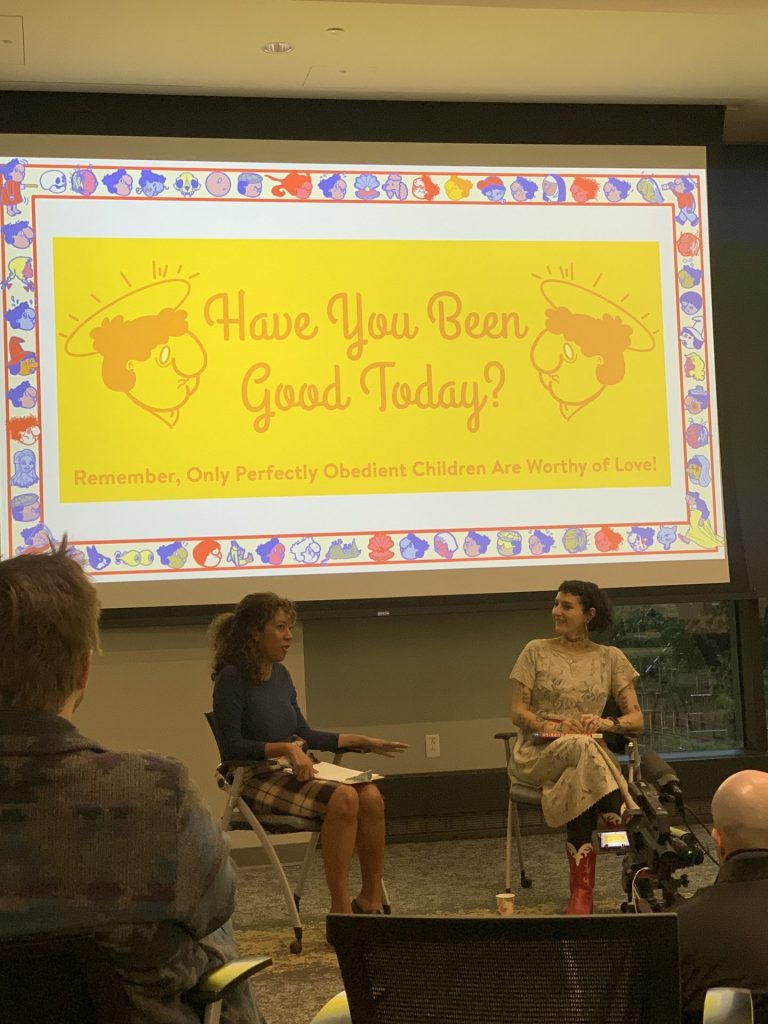
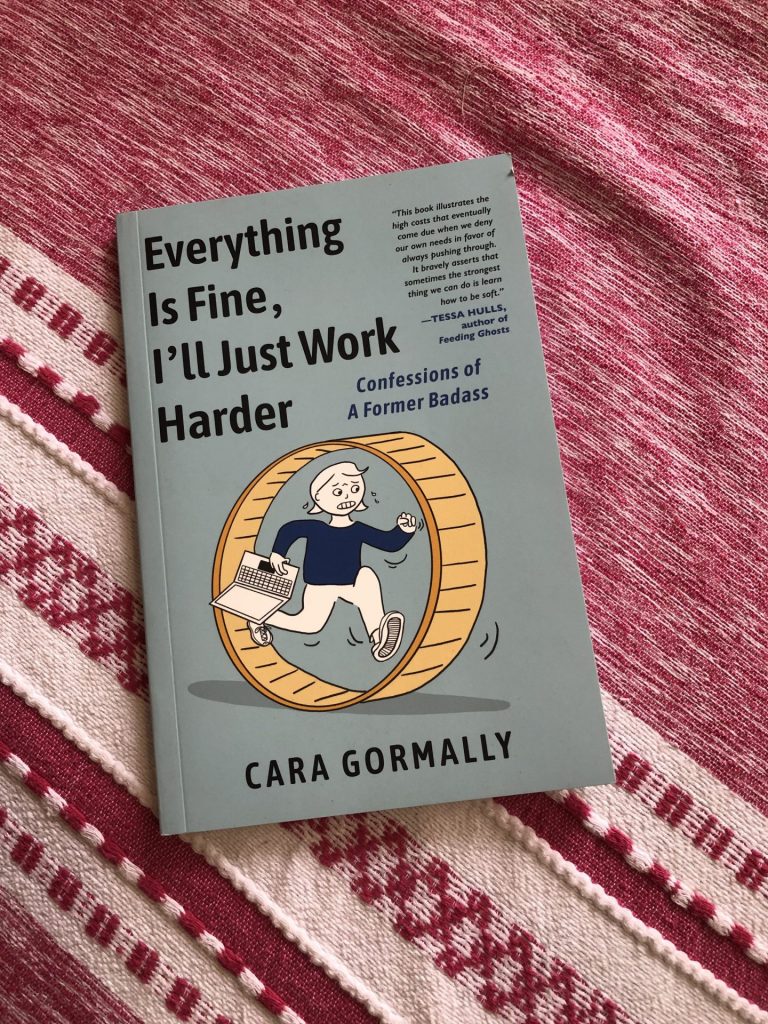
I met up with Lyn shortly after a graphic novel she edited, Cara Gormally’s Everything Is Fine, I’ll Just Work Harder (Street Noise, 2025), was released. She excitedly showed me a copy and we talked shop for over an hour. She told me what a comics editor does, what it’s like to write a script for a historical graphic novel, what she learned while researching the Underground Railroad, and how important it is to make comics fairs affordable and accessible.
Sommer: When you edit graphic novels and comics, are you looking at storyboard pages or is the text separate and you’re reading it as a story or…how does that work?
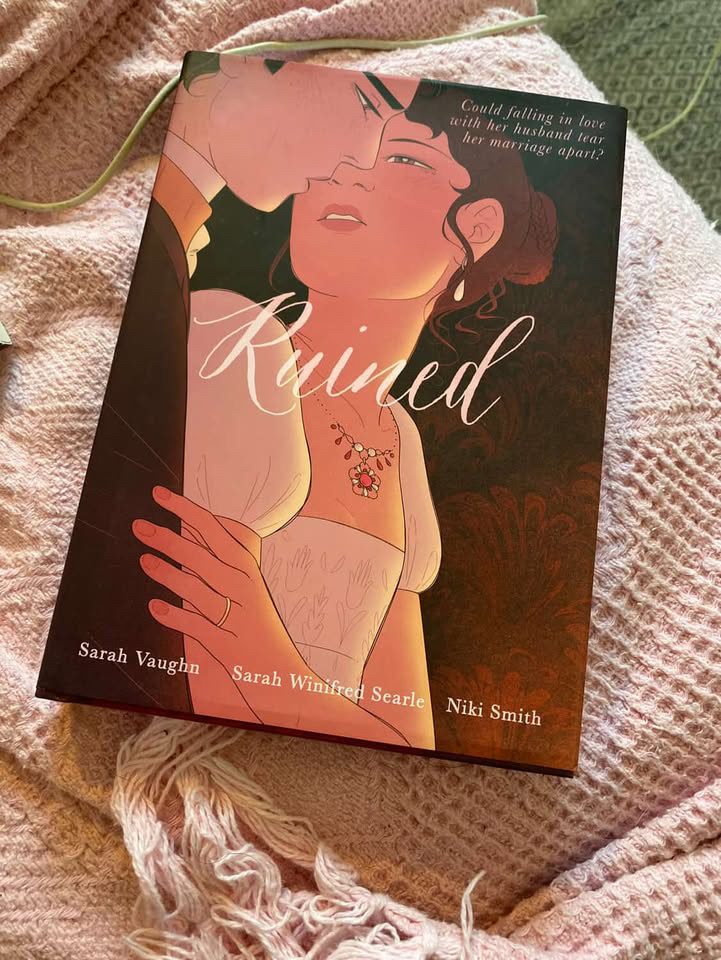
Francesca: This is a really interesting question. I feel like this probably is super inside baseball, but I find it interesting, too. So, for Ruined (First Second, 2023), the author [Sarah Vaughn] and the artist team [Sarah Winifred Searle and Niki Smith] were not the same person. It was literally a written script. I was looking at it even before the artist got it in order to make sure these things could be translated as comic pages. So, [my] edits were what can’t work and what my suggestions were. And then we got into the pencil stage, and I went through page by page, and I looked for consistency and things. For Everything Is Fine, I’ll Just Work Harder, I worked with the cartoonist and the publisher—it was drawn at the same time as it was being written because [the writer was the artist]. So, I looked at it and [said] I feel like we need more explanation here or less here. Or can we maybe see this [drawing] from another angle and direction because it will help tell the story better, those kinds of things. I think every process is a little bit different. I love a script, I’m primarily a writer, but a lot of times that is not necessarily the way a cartoonist finds it most useful to work. So, a big outline sometimes is really helpful. And then some of them will make thumbnails and they’ll be like, What do you think? And sometimes people will go straight to maybe making pencils. It’s been different every time.
Sommer: How has it been to work on the History Comics Underground Railroad book? You’re writing that?
Francesca: Yes. I completed the script. It’s off with the artist. Once there is a stage to show me, they might ask me about certain things or have questions. But that was an interesting process because I’ve never written something and not known the artist [Maya Henderson is the artist for this book].
Sommer: Did you have to do a lot of research?
Francesca: Yeah, [it] blew my mind, thinking about stuff that probably would be necessary to draw that I knew I wasn’t going to have to draw. But I’m like, I wouldn’t know what that would look like, so I pulled a lot of things, references, and even inspiration [for the story] from first-person narratives, particularly from things that were collected by a man named William Still. I learned a lot.
[I had to] wrap my head around just walking by yourself for such a long time, being unsure if you were going the right way. In some of the letters and other records, [they would say things like] I realized I had walked the whole day in the wrong direction. [Imagine] that terror.
Another thing that occurred to me while I was writing it is, what did they eat? And when I was looking at that, I was surprised by how much of this research has been done fairly recently. There’s an archeologist, [Dan Sayers], I’d have to look up his name again, that is doing research on the people [who escaped and] lived in the Great Dismal Swamp. But a lot of the stuff that’s been uncovered about that has only been uncovered in the last couple of years.
To me, that’s wild because for something that has such a long legacy and so much history, there’s still a lot of stuff we don’t know and don’t have a clear picture of within our popular consciousness. I feel like we all know Harriet Tubman and we should, and it’s really interesting, but I’m like, if I say the name William Still to most people, they would be like, who is that? In his lifetime, he published a book of all of those records that he wrote down a couple of years after Emancipation. He published that as a document. It’s still something that you can find today. I have a copy of it. And to me, that’s amazing that a Black man of that time published all of these narratives as a primary document in that time.
Why don’t we know about that? So, I’m like, that’s going in the book. There were almost too many fascinating stories to put in this book. And it was sobering. I also had never read a book or a fictionalized version of people escaping by use of the waterways. I’m sure there are some, and of course there are stories of people crossing or wading in water to evade slave catchers, but not anything about people taking a boat or stowing away in steamships. That was a major way that people in border states were able to escape. We are in Richmond right now and the James River was such a site of that—I was like, this is so incredible. Sometimes it was people just doing this completely on their own, like a young teenager just doing this on his own. It’s inspiring but also terrifying…
Sommer: And without any modern equipment…
Francesca: Not even a compass, probably trying to figure it out with the stars if you could. Maybe there were other people that you could depend on. It’s definitely documented a lot of places that people pretty quickly would catch on to the Quakers’ dress. It’s so distinctive. They knew maybe not every Quaker would be actively helping with the abolitionist effort, but most Quaker people would at least not turn in somebody. So that would be maybe someone to see while you were doing this, but you have no way of really knowing. And I think that terror of the unknown, that was something that I really wanted to capture in the book.
Sommer: I wonder if not knowing the details of the treacherous, scary, terrifying escapes and not knowing about all the many different stories of freedom, feeds into this thing people ask: why didn’t they just escape? Why didn’t they just leave? It lets people have this false narrative that it must’ve been pretty nice on the plantation or whatever.
Francesca: You’ll find that there’s a lot of routes and stuff that actually did exist [besides the Underground Railroad], people escaping to Mexico, for instance, that we talk about a lot less. So, this idea that why didn’t they escape? It’s like, well, a lot of people did. And in some places, they didn’t really report it because what would that do if other people found out? In some places, we do have records that enslaved people did escape; we know this because of insurance records on these people. They were insured the same way you would insure a piece of equipment.
And there’s this idea every enslaved person was illiterate. But we know that there were people that either taught themselves how to read or someone else taught them how to read. Even the ads for runaway slaves mention so-and-so can read or so-and-so might be seen with a book. These things were maybe very cleverly hidden from other people. There were always these smaller sites of resistance in places even if you could not escape. People resisted.
So, it is really, really a great project to work on, and I’m so excited that it is going to be a book that’s for younger people, not just adults. And our editor [was careful to say] that it be appropriate for younger people and have younger characters in it, but that it is not sugarcoated in any sort of way.
The History Comics series is just fantastic; they’ve done so many great ones. I became aware of it through doing some work as an authenticity reader or sensitivity reader for several books in the series. It’s amazing, the kinds of stories they’ve chosen and the kinds of people and cartoonists they’ve gotten to write and draw some of these. The one on Stonewall in particular is one of my favorites.
Sommer: When will it be out?
Francesca: It’s projected to come out in 2028.
Sommer: You’re also a stand-up comedian, and I see a lot of similarities between the comics and comedy scenes here in Richmond.
Francesca: Yes. [In both communities] one person will say, I got this [new comic] book. [And the other will say,] Awesome! Or I got this [comedy] show. Awesome. I’m coming! And I’ve always really, really loved that and wanted to be supportive of that. And I think that’s really important. When I think about community, those are the first things I think about.
And of course, we all need to pay bills. That’s always a struggle. With Comic Arts Richmond, that Christine Skelly and I have done now for a while, we always want it to be affordable to table there, but we also always are like, we want to make sure people are coming [to the show]. People are selling their books, that’s how they’re paying their rent or that’s how they’re paying their bills. And so not only do we want it to be affordable, we want to make sure we always promote it enough so that a lot of people are there and they are buying stuff so [cartoonists] can make some money because it’s very, very hard.
There are amazing and brilliant cartoonists that come [from Europe and other places]. They come over for SPX and their consulate will pay for them to come over. Or they’ll have some sort of grant from the government to come, that they’re able to make artwork with. I’m sure it’s probably still a struggle for a lot of [them], but they’re able to have less of a stress because they have some sort of funding. They don’t have to worry about health insurance or a medical problem bankrupting them. That’s not the reality we have here in the United States. And so, we try and make everything affordable and hopefully the people [tabling] can make some money. I really, really, really feel strongly about that.
Sommer: Let’s end with you telling me about the work you do with SPX.
Francesca: I am part of the executive committee for the SPX as a whole. It is wonderful. We like to call it comics camp. I’ve been doing it for such a long time. SPX is special because, although there are some other shows like this, it is a lottery system, meaning that someone who’s never tabled before could just happen to get into the lottery and be able to table at SPX right next to someone who has been a comics legend for 30 or 40 years. They all get to be together in a space that is amazing. And also, the ticket [prices] are relatively low to attend, but with that ticket, all of the workshops, all of the panel presentations are included. So, you get to really sit in with people that maybe you’ve been reading their comics for years and years, or you get to discover someone that is doing something that you’re super interested in horror, for instance, and go to that panel and be like, oh, I have my new favorite cartoonist and I got to hear them speak for an hour and ask them questions. It’s such a wonderful place. We also partner with the Library of Congress. There’s a whole collection of things [on display] at SPX [from the Library of Congress] and anyone can go and see those things, which I think is awesome. And we have also the graphic novel gift award where a whole bunch of graphic novels are donated to schools that serve underserved populations. It’s amazing the kinds of things that happen. SPX is such a special thing for me.
The next Comic Arts Richmond will be held March 21, 2026, at Basic City Beer Co. in Richmond, Virginia.
SOLRAD is made possible by the generous donations of readers like you. Support our Patreon campaign, or make a tax-deductible donation to our publisher, Fieldmouse Press, today.
Leave a Reply