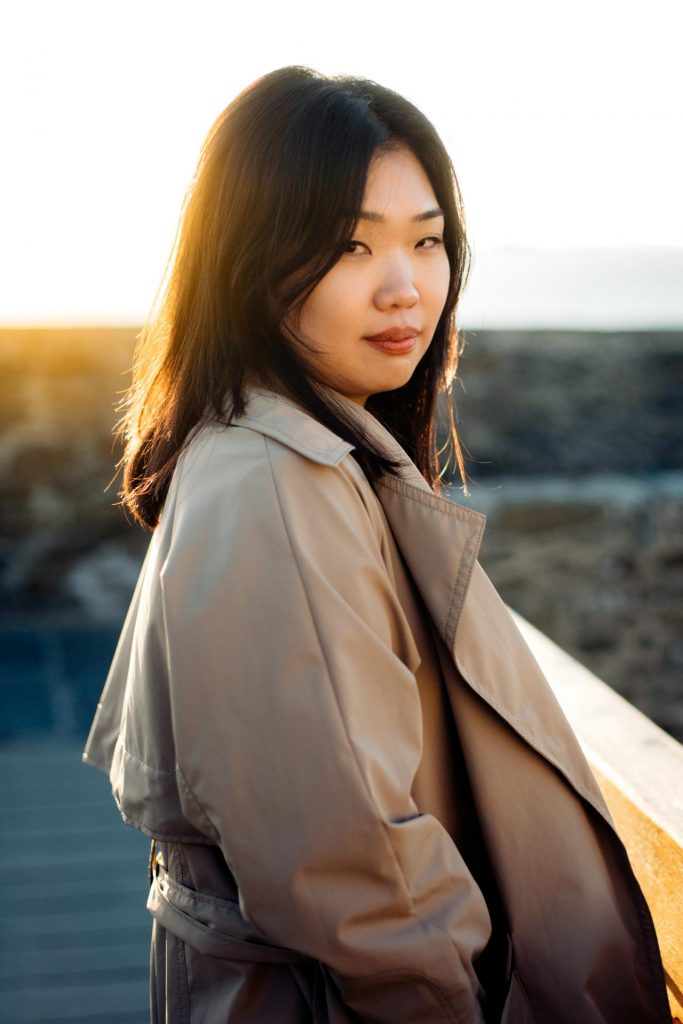
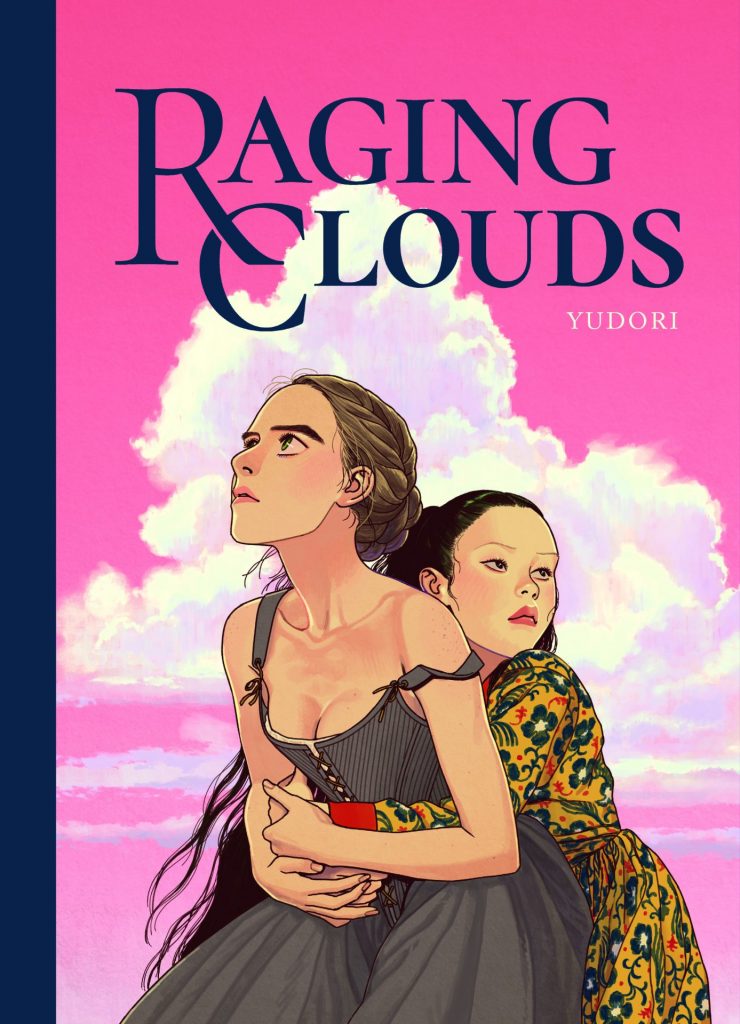
Yudori defies expectations — of genre conventions, of female representation, of queerness as a theme. Her sequential debut was the webcomic series Pandora’s Choice in 2016, which won the Lezhin Comics Award soon after. Her follow-up graphic novel, Raging Clouds, was published in English by Fantagraphics in 2025, and unsurprisingly, nominated for a Will Eisner Award in 2026.
Born in South Korea, Yudori lived in the Philippines for a year before moving to the United States, and then to England, where she now lives. Her comics are rooted in Korean traditions, yet her work is challenging to categorize: coquettish yet fierce, emotionally intelligent, and often wildly unexpected.
In anticipation of her second graphic novel, Lovers of the Empire (coming from Fantagraphics in July 2026), she was kind enough to share some insight with Aria Baci for SOLRAD.
Baci: Critics and readers in the US tend toward hyper-specific categorization — first, of the social identity of the creator, and then, of the style of their work. You’re consistently described in English-language media as a Korean woman, but also as a mangaka, a fully Japanese term. How do you feel about these designations? How much does your social identity inform your work?
Yudori: Frankly, I don’t know how much of my social identity is reflected in my work. Sometimes authors deliberately insert themselves into their narratives. Other times, there is no obvious relation between the author and the world they create. I think I’m somewhere in between; one foot in, the other foot exploring possibilities.
I’ve come to accept that people like to make sense of the world by categorizing — and inevitably flattening — others, and that I have no control over how they see me. Once a book is out, I treat it as something separate from myself. So I don’t find those misunderstandings as frustrating as one might expect, because I don’t feel especially attached to my work in that way.
Baci: It seems like you’re sometimes placed into categories that might not actually be a fit for you or your work. Is there anything about your comics that you feel is intrinsically representative of manga? Or because you’re of Korean descent, representative of manhwa? I mean, some of your books were originally published in France, so why not describe them as bandes dessinées too?
Yudori: I guess you could call my work bandes dessinées, if you wanted to categorize it by place of publication. But I don’t read American or European comics very much, to be honest — I actually find them quite hard to read. It’s not that I have anything against them, it just feels like a completely different visual language, almost like reading in a foreign language.
I’d say my visual foundation leans more toward Korean comics. When people hear “manhwa,” they often think of Webtoons, but there were generations of Korean cartoonists before that global wave: Lee Doo-ho, Shin Il-sook, Ko Woo-young, and Chon Kye-young, to name a few. As you can see, there are so many different subgenres and visual traditions within Asian comics that it’s almost impossible to define a single “manga style” or “manhwa style.” Categorization can be helpful in marketing and for readers to find what they’re looking for, but it comes with some oversimplification.
Baci: There’s a lot of discourse on the Anglosphere internet about the social identities of creators and how that relates to the characters they create. How do you feel about telling stories of lives that are different from your own — is that not part of the purpose of fiction?
Yudori: I think it’s impossible to write fiction without creating characters you don’t fully relate to. I’ve often centered my stories around characters I have little in common with: Chris in Pandora’s Choice, Amelie in Raging Clouds, and Jun in Lovers of the Empire.
I’ve noticed that some readers assume the Asian women in my work are direct reflections of me, but they’re really just vessels for exploring different themes. They’re often the kind of people I might not even want to be friends with in real life. But, like you said, that’s not really the point of fiction. Fiction exists because there are wounds and desires that are difficult to express in real life. So why not push it as far as possible? What’s the point of attaching yourself to your creation to the point that it’s just a repetition of yourself?
Baci: Pandora’s Choice is set in 1830–40s US, Raging Clouds is set in 16th-century Netherlands, and Lovers of the Empire is set in 1920s Korea. What is it about settings outside our contemporary moment that appeal to you as a writer and an illustrator? What inspired you to set your stories in these specific times and places?
Yudori: There was a girl I was in love with when I was 14. She was incredibly fashionable, and I was this dumpy, awkward kid. She knew brands like Vivienne Westwood and I thought she was so mature and cool for that. I wanted her to notice me, but I didn’t have the natural instinct for fashion or trends, so I ended up studying fashion history instead. I thought “At least I’m good at learning history,” and hoped that if I knew how Dior invented the New Look and stuff like that, she would… like me back?
That’s basically how it started. She never liked me back, but now I pick the settings of my stories based on how much I like the fashion of the era.
Baci: Are there other time periods that are particularly interesting to you? Do you have plans for other stories set elsewhere and styled differently?
Yudori: I love, love and LOVE French Rococo, and how it transformed into Neoclassicism with the Revolution. I’ve always wanted to write a story about Marie Antoinette, and how she so intelligently utilized fashion to gain political influence. I think she was vilified more than necessary, not because she overspent on clothes, but because she spent very deliberately and strategically, and people used to hate clever women.
I’ve also been thinking about writing a story about a married couple set in the present day, but drawn in a shōjo visual language. Shōjo often ends when the couple gets together or marries, and I’ve always wondered whether a story could sustain the same level of intrigue after the relationship is already “settled” at the beginning.
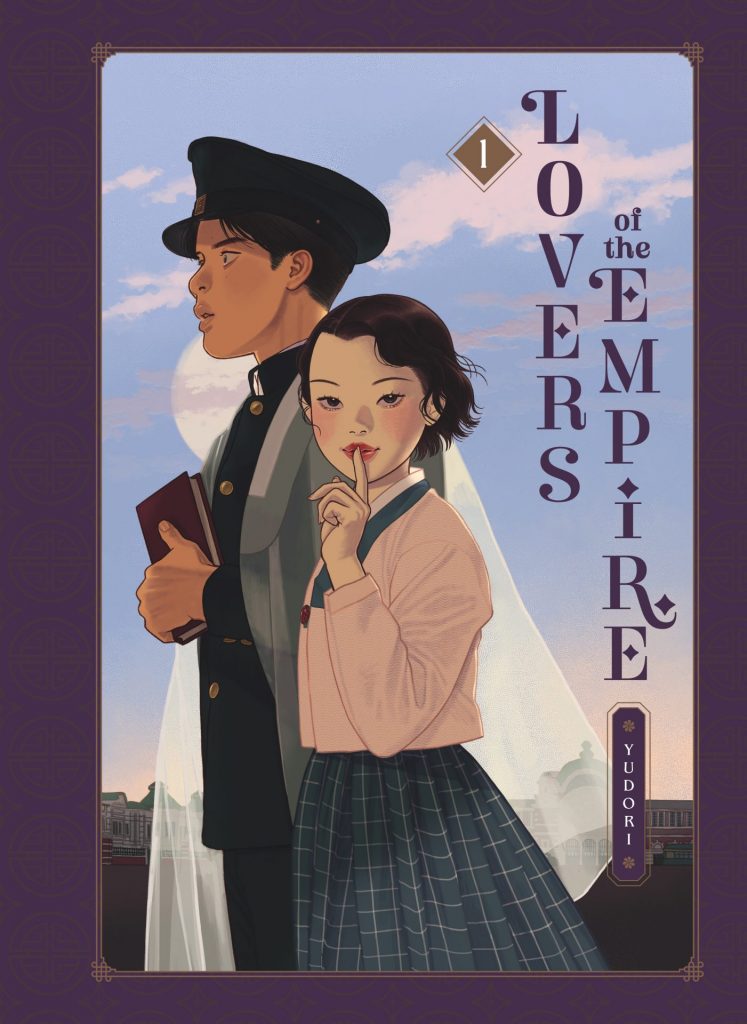
Baci: One of the most stunning details of your illustration style is the way you render hair, especially period-specific hairstyles. Are you interested in hairstyling beyond your drawing practice?
Yudori: No, I’m super clumsy, probably because of ADHD… Whenever I do anything three-dimensional, I end up destroying one side while working on the other.
Baci: You also draw draping fabrics and flowing textiles beautifully. There were panels in Raging Clouds that I bookmarked so I could go back and enjoy the drawings again later! Can you share some details about your process of researching period-accurate fashions and then developing costume designs for your characters?
Yudori: Thank you, that’s nice to hear! I try to read on it as much as I can. Working on 1930s have been much easier, because there are more visual resources available — movies, postcards, news articles, etc. I’ve also been collecting antique dresses and replicas.
When those kinds of materials aren’t available (like when I was working on Raging Clouds or Pandora’s Choice), I relied heavily on contemporary paintings and fashion plates, studying them until I started to internalize their beauty standards. For example, in Pandora’s Choice, all the women have rounded shoulders because that was considered ideal at the time.
Baci: In an Instagram post about the themes in Raging Clouds, you shared your thoughts about the ways it was critiqued, and the way some readers look to fiction to “rescue” them. Yet one of the most memorable aspects of this book is that it challenges ideas of compulsory heterosexuality, queer coding, and other ideas that originate in US culture. Can we talk more about how you navigate all of this?
Yudori: I strongly believe fiction should be a way of exploring the possibilities, not just a source of comfort. Of course, there are genres that exist primarily for comfort (like BL, which I love), but if we expect fiction to only affirm what we already know and believe, it becomes easily replaceable by AI, because that’s exactly what AI is good at: identifying patterns and appealing to what users already want.
By “rescue,” I mean expecting to have absolute certainty by the end of a story. I like fictions that leave me more confused than when I started them.
Baci: Thinking about the ways queerness is depicted in comics outside of the US and Europe, how much does the queerness of a narrative depend on its cultural context?
Yudori: You could argue that queerness is defined in relation to heterosexual norms shaped by culture. Without rigid definitions of what counts as “straight,” the queer identity wouldn’t exist in the same way. We would all be equally and peacefully who we are.
I can only speak from my perspective as a Korean. While contemporary Korean society is quite sexist and homophobic, historically, we didn’t experience the same kinds of state-sanctioned criminalization of queerness seen in early modern or 20th-century Europe. There isn’t the same legacy of people being imprisoned or executed simply for being gay.
Queerness, like everything else in human society, is named, understood, and expressed differently across historical contexts. Singling it out as a fixed, universal category feels somewhat limiting to me.
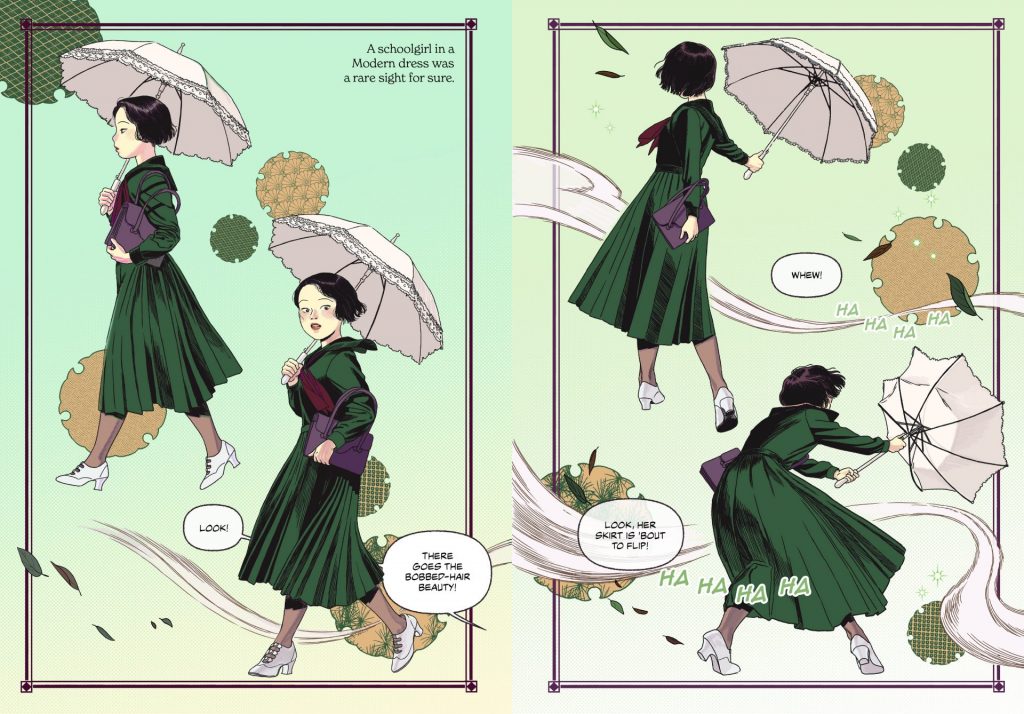
Baci: Raging Clouds subverts expectations about heteronormativity and queerness and leaves some of its thematic questions unanswered. How important is it for you to allow readers to interpret your narratives in their own ways?
Yudori: Going back to the beginning of this interview, I really feel that a book leaves my hands once I finish the last page. I have no control over how it is received or interpreted.
When it comes to Sahara and Amelie [in Raging Clouds], I just thought by the end of the story they were onto a lot of things other than sex… Like inventing an airplane or securing financial stability. Girls are not all about romance all the time.
Baci: Do you consider your comics to be feminist or intend for them to be liberatory narratives?
Yudori: Yes and no. It really depends on where the reader is in their life. I probably wouldn’t recommend my work to someone under the age of 20 or going through a difficult period. There are times in your life you really need uplifting and reassuring, and my work doesn’t exactly provide that.
Baci: So is it also OK for comics to just be aesthetically pleasing and sexy and fun without expectations of doing something revolutionary?
Yudori: I think so. If there are a hundred comics, there are a hundred different definitions of what comics can be. I love romance and erotica that embrace old-fashioned tropes. At the same time, every work can be a kind of revolution, whether in the author’s personal life or for individual readers.
SOLRAD is made possible by the generous donations of readers like you. Support our Patreon campaign, or make a tax-deductible donation to our publisher, Fieldmouse Press, today.


Leave a Reply