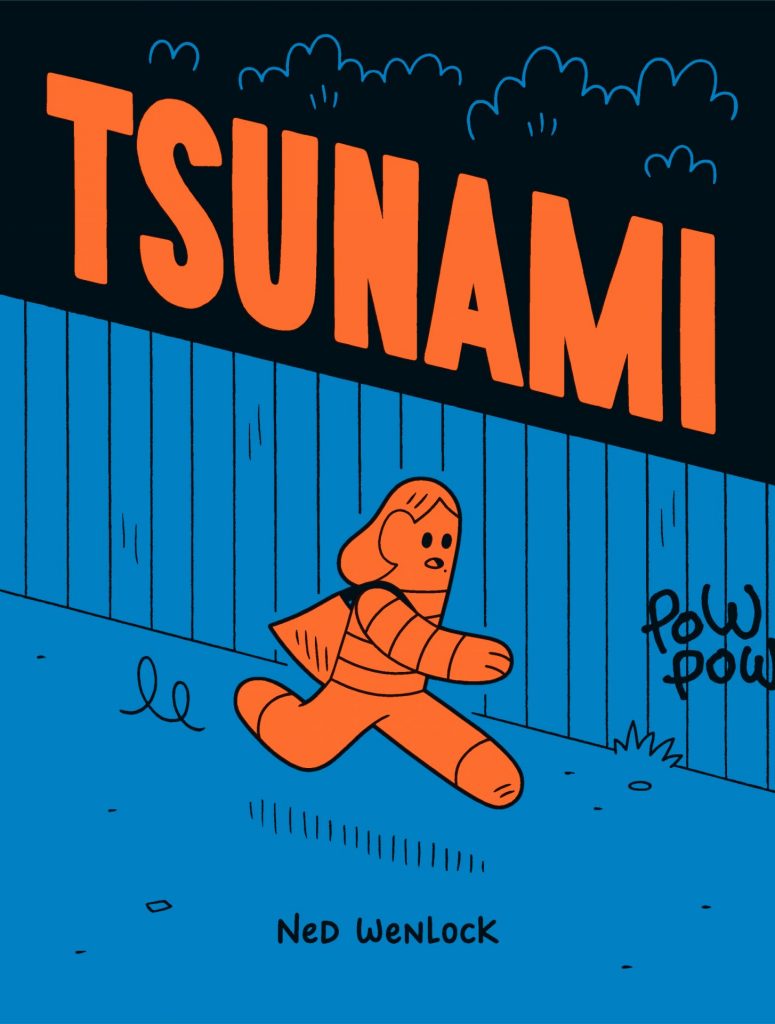
In Ned Wenlock’s new graphic novel, Tsunami, out from Pow Pow Press, the pressure builds as a young misfit struggles to fit in and deal with his violent bully while dealing with his first crush and the pressure to succeed in school. Wenlock’s black-and-white coloring choices capture adolescent angst, and his playful, bold lettering is reminiscent of a schoolboy’s handwriting. The cartoonist uses the language of comics to convey how lonely growing up can feel, and how seemingly miniscule social dynamics in childhood shape us into our adulthood.
Readers will appreciate the simplicity of Wenlock’s cartooning: his ability to clearly communicate a narrative through simply shaped characters who feel alive on the page. We open with single panels, six weeks before the term, with Peter, the protagonist’s mother, expressing her concern for his ability to survive the semester. In terms of physical appearance, he’s a bit behind. She remarks: “Some kids his age are giants.” This conversation, set in the wilderness of New Zealand, sets the tone for the rest of the book. Peter is a classic underdog: easily bullied, a moving target, a class misfit, and an artist. Wenlock seamlessly switches to pages full of sequential panels with no need for intruding captions. He lets the story he’s telling unfold as if we were watching a movie: scene by scene, capturing essential details and expressions in the most concise format possible, no different than how Ernest Hemingway wrote using only words that were absolutely necessary, allowing us to create a deeper meaning as readers between the lines. No panel or line drawn is ever wasted. The constant variety in the number of panels per page keeps the reader engaged in the conflicts depicted and speeds up or slows down the pacing based on the tension needed for the plot. The grayscale color palette also helps set the tone and captures Peter’s feelings of isolation from his peers and his intense struggles to fit in as a result of the bullying he faces ad nauseam. Beneath the surface of the central storyline around the protagonist and Gus, a troublemaker with an eye for revenge and a habit of resorting to violence against his victim (Peter), there also appears to be a social critique of masculinity and the expectations society places on young men.
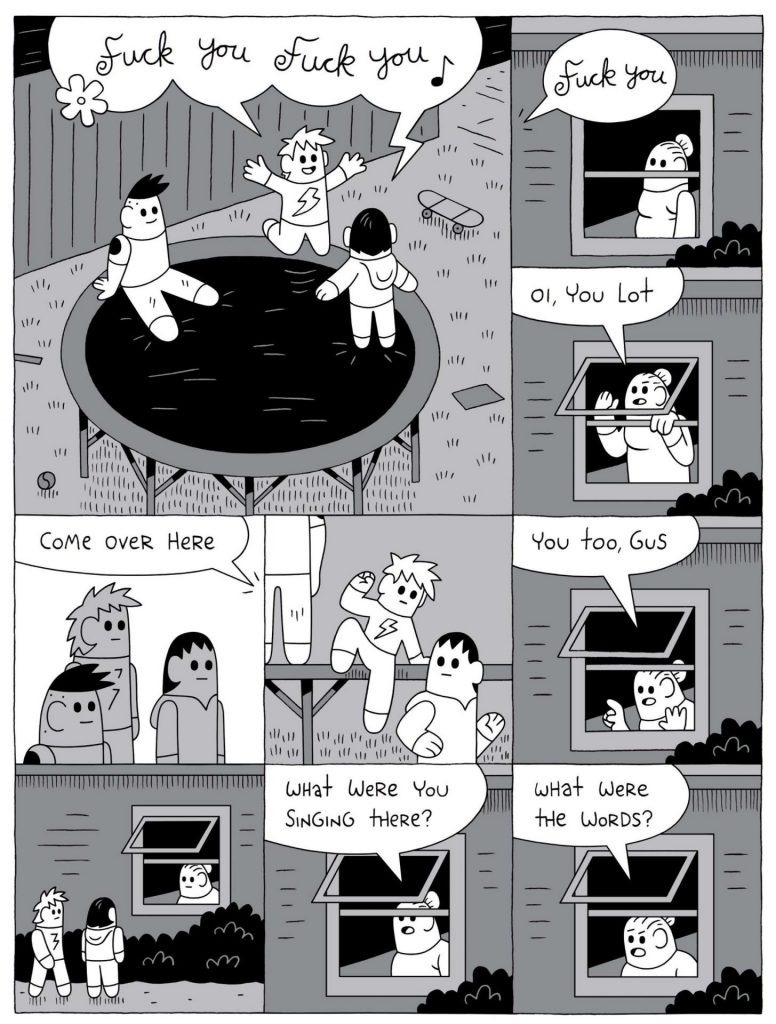
The gender and queer theorist Michael Foucault once wrote that “schools serve the same social functions as prisons and mental institutions – to define, classify, control, and regulate people.” Gus tries to regulate Peter into fighting back against him, into being more aggressive, more tough, more of what he thinks a man should be. “Do you even care about being cool?” A peer asks. His classmates attempt to classify Peter into a category they understand. Through this lens, it’s clear the school serves merely as a vehicle for Wenlock to explore the consequences of this conditioning for boys like Peter, who don’t conform to the same impulses we expect them to.
So Peter is not cool, nor is he, as his crush Charlie says, a “badass.” He’s friendless, soft, rather susceptible to getting picked on, definitively nerdy, and, in every way possible, fails to meet Charlie’s definition of being “someone you don’t mess with. . . because they’re dangerous.” She tells him, “A real badass doesn’t do something bad. They do something terrible. So terrible, in fact, that they never have to prove themselves again.” But even though he won’t do something quite so bad, Peter constantly wants to prove himself. He wants to prove he’s right and Gus is wrong, that he can get even with his enemies and be worthy enough of the girl he loves. Gus, meanwhile, both literally and figuratively, tries to put him into a box more than once. “If you don’t give me what I want,” the antagonist threatens him at one point. “I will put you into a box.” What happens when we don’t fit into these boxes? How do these moments change us forever?
The plot seems to fall under the category of literary fiction, since Wenlock’s primary concern behind storytelling lies in the characters themselves rather than the action they take. While Peter does face a constant series of conflicts from his peers, primarily being bullied, his main development comes from his evolution after these incidents occurred. The graphic novel isn’t without humor, though. When Gus and Peter find themselves unexpectedly working together, they discover they have more in common than not, and being together in an isolated setting with Chelsea, his new friend/prospective love interest, allows them, much like the ragtag group in The Breakfast Club, to break out of the labels their school assigns them (bully, nerd, wallflower) and find an unexpected point of connection. Wenlock’s poignant, near-poetic drawings of the natural world, an abandoned place where the troubles in the classroom disappear, illustrate how being alienated from their ordinary world allows the group of misfits to bond with one another in the most unlikely circumstances possible.
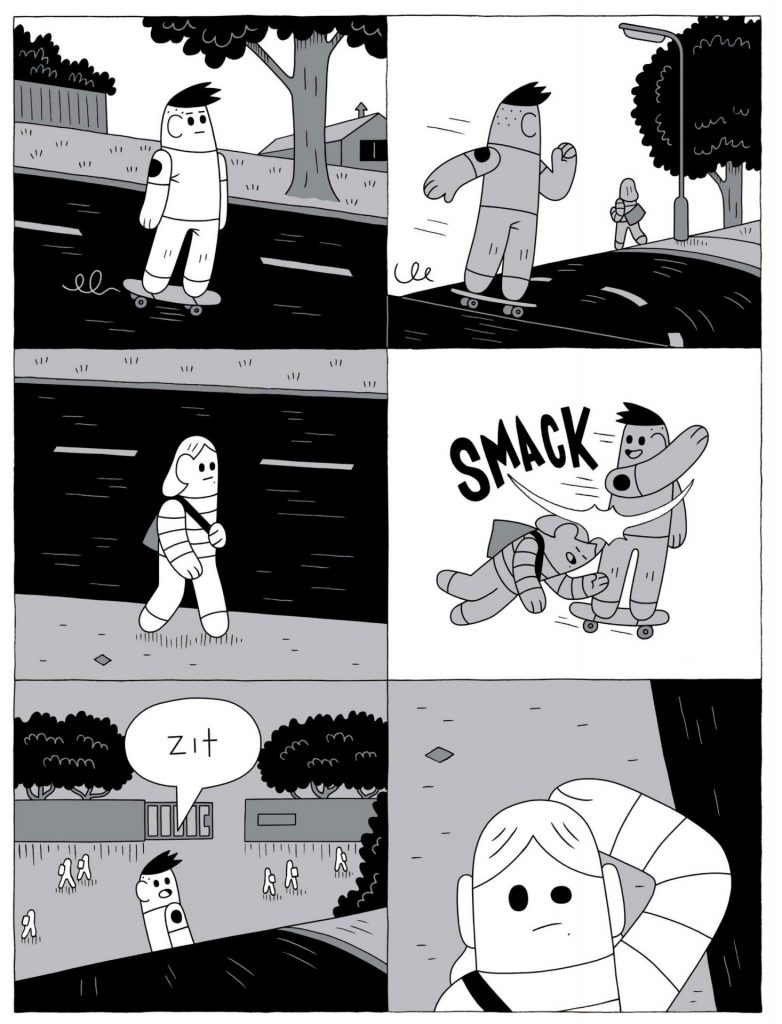
Wenlock’s goal is to highlight the isolation and internal struggles of young boys and the pressures they face to conform to the standards of toxic masculinity. He is successful in his portrayal of a young misfit’s struggles to follow the guidelines other boys set out for him, though as a reader I wished for Peter to have more agency. He sometimes falls flat as a character, perhaps due to the lack of interiority we receive from him, and though being a teenager often makes you feel powerless, I wanted him to make more decisions. Even if they are small, choices propel characters forward in a narrative.
Sometimes his antagonist feels more like a main character purely because of his greater narrative presence and all the choices he makes. They make him interesting and engaging, despite being wholly unlikeable in his moral decisions. While Peter reflects a certain archetype of boyhood, a softer, nerdier kid, I think I still hoped to see him change a bit more by the end of the story. Lee Lai’s Cannon is a prime example of a quiet narrative wherein the character’s choices, though seemingly insignificant in the grander scheme of things, are magnitudinal in their lives. Running away from his problems is still a big choice, but the story could have benefited from getting to see more of how that moment changed him externally and internally. How do the tiny choices we make change who we are? How do they shape us?
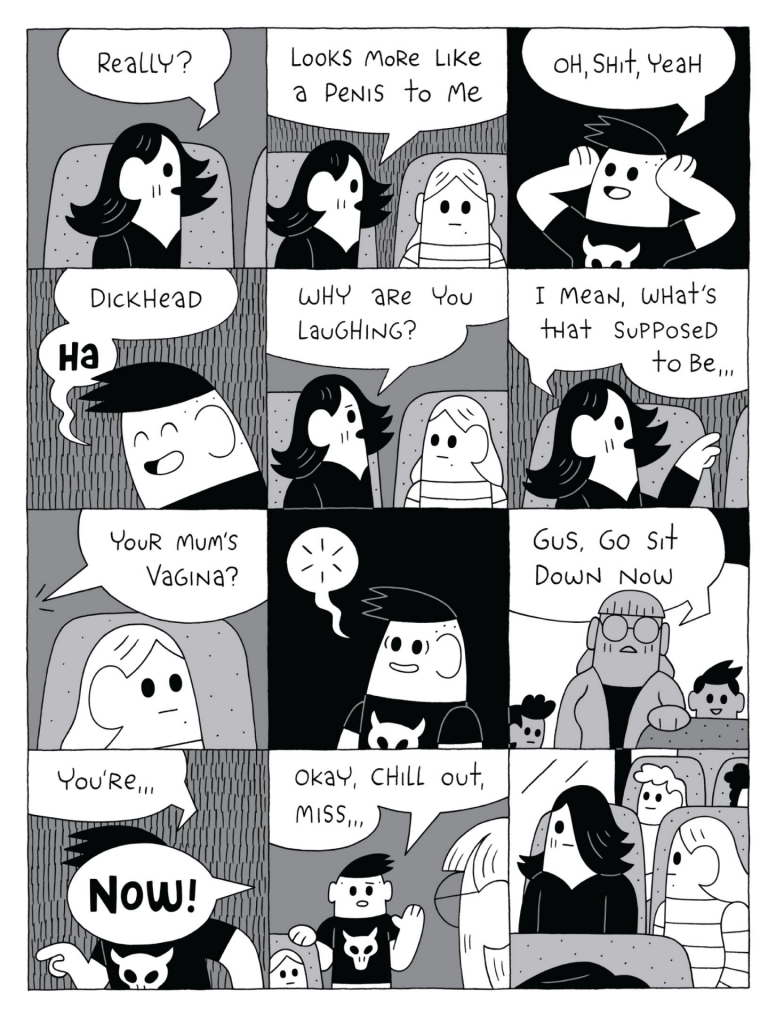
According to the National Ocean Surface, a tsunami can be defined as “a series of waves caused by earthquakes or undersea volcanic eruptions.” These waves, small at first, eventually build up over time to reach the level of destruction they’re known for: a giant crash over a town, a city, a world. The same can be said for the tale in Ned Wenlock’s charming, witty Tsunami.
Sources Cited:
SOLRAD is made possible by the generous donations of readers like you. Support our Patreon campaign, or make a tax-deductible donation to our publisher, Fieldmouse Press, today.
Leave a Reply