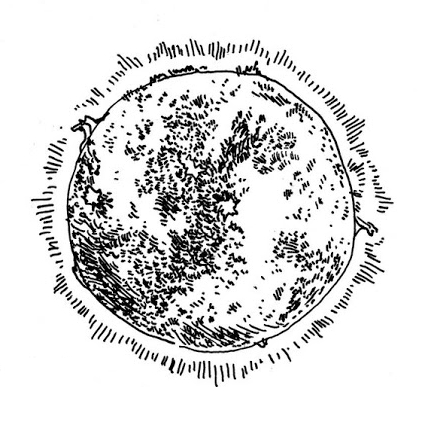
The first work of poetry I ever read that combined words and images was Claudia Rankine’s Citizen. Her genre-bending lyric broke free from the constraints of tradition and found a new way to spark conversations about race in American culture, situated somewhere between poem and essay. I loved how free the language felt, how, together with images, a story could do anything. I did not yet have permission to try to put them together, but I remember wishing my work would operate in a similar space. When I look back at old documents where I brainstormed the shape my thesis might take: a memoir in prose poems, a long lyric essay in short bursts, a memoir in vignettes, a memoir with text and image, I can see the hints of a comic. When I look at my comics, which dwell outside of panels and sequences and dance in the lyric, I can see the hints of poetry. My words and images never behave. Poetry comics taught me they don’t have to.
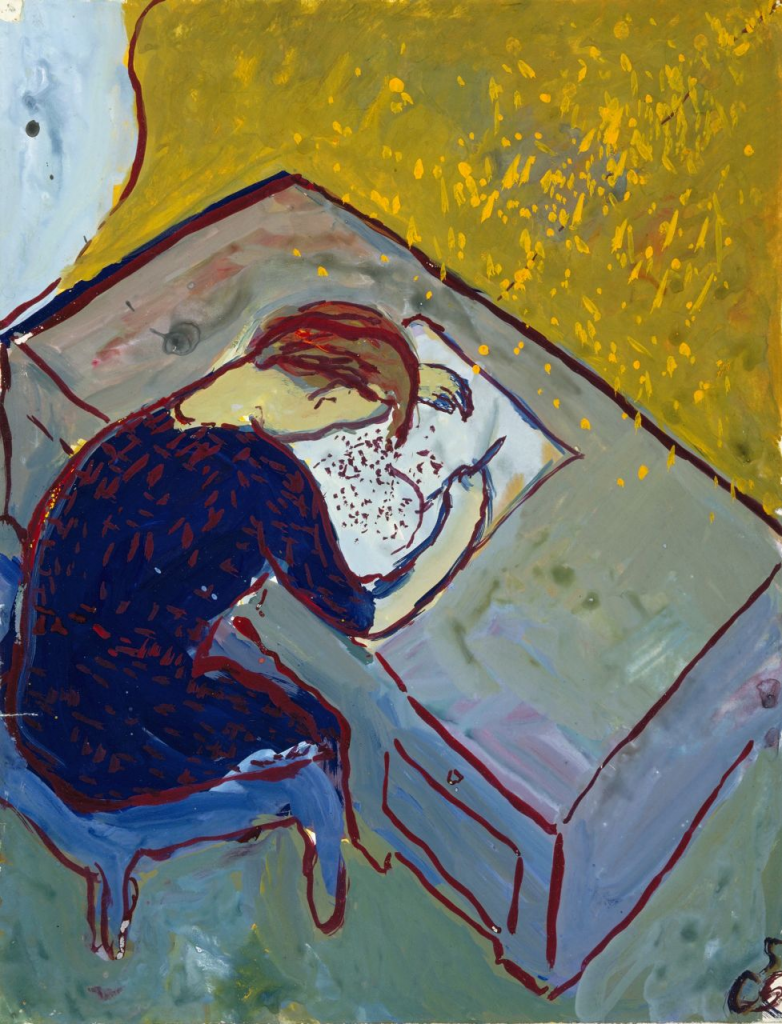
I have a theory that the original pioneer of the poetry comic was Charlotte Salomon, a Berlin-born Jewish artist, who, at 24, the same age as me, “felt herself faced with a choice: either to end her life or to undertake ‘something really extravagantly crazy’. She went into retirement, as it were, and in a burst of wild creative energy, started to paint. So it was that, outdoors in the sunshine of southern France, she produced a series of almost eight hundred gouaches (watercolours). Between 1940 and 1942, in eighteen months of concentrated work, she painted her life’s story, titling it Life? or Theatre?” Charlotte Salomon would be deported to Auschwitz-Birkenau on October 7th, 1944, where she was killed in the gas chambers, pregnant.
Her work, for the most part, remains obscure, yet she should receive credit for the graphic novel. Discovering the story of Charlotte Salomon gave me the courage to take the leap into a life of art.
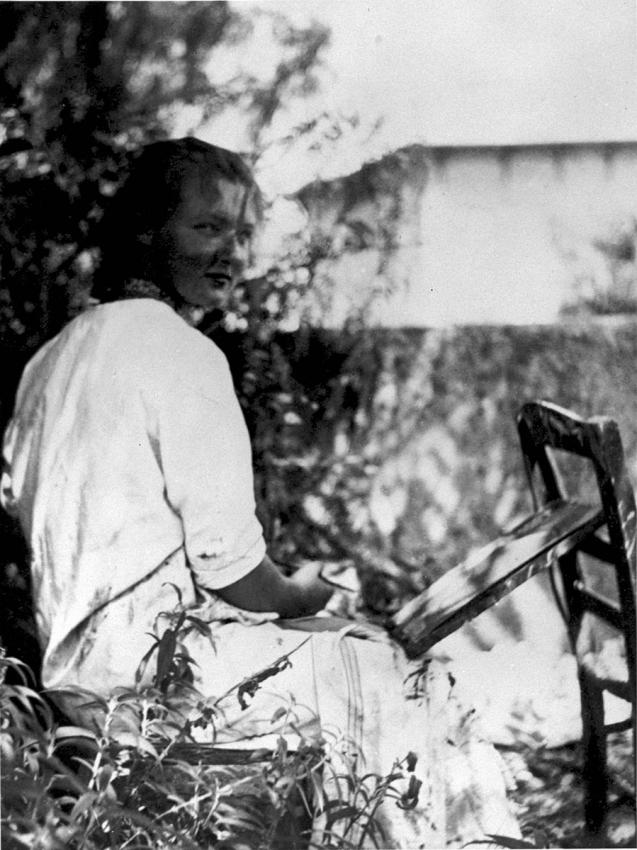
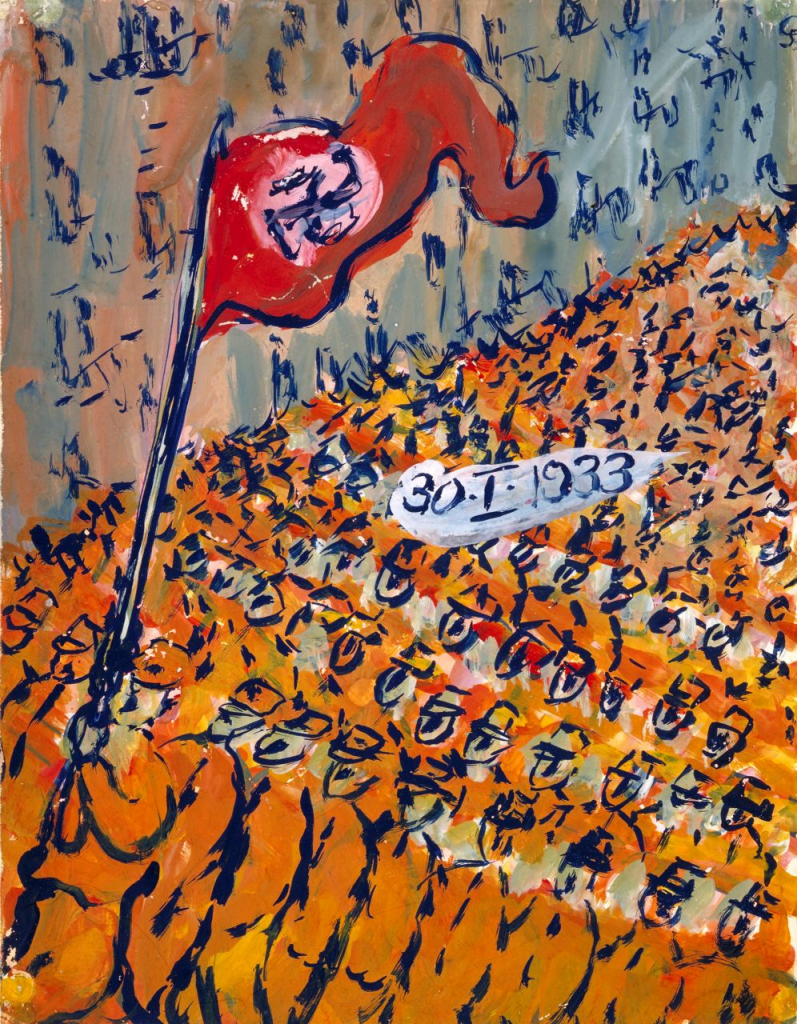
Salomon combined image layered with text, and bursts of short prose paragraphs and sentences to accompany the text. It is a play, a biography, a family history, combining writing, paintings, and musical notation. Charlotte Salomon paved the groundwork for modern poetry comics before comics were invented, permission to try doing “something extravagantly crazy.”
This is a genre still in the act of becoming itself. There is no MFA in Poetry Comics, no academic framework for how to make them or why, or who should. In his review of Nick Francis Potter’s poetry comics, Big Gorgeous Jazz Machine, critic Leonard Pierce finds them difficult to analyze, saying they are “poetry of the word and poetry of the image, and thus doubly elusive and doubly difficult to critique in any meaningful way.” However, he admits, there is beauty in a thing being undefined. “The endless potential of so many contemporary artforms, from jazz to poetry to comics, allows for much work that does not reach out a hand to grasp or define a place to meet it halfway.”
Each of the books I studied in an independent study on Poetry Comics with Dr. Melissa Crowe during my MFA at The University of North Carolina at Wilmington opened doors of discovery, potential, and play. I began to consider how comics can challenge norms.
In the summer of 2025, I met briefly with the poet Julie Funderburk, a mentor of mine, at Queens University of Charlotte. Her advice for my thesis was to ignore any pressure to publish and simply focus on making art. Her words stuck with me after: “The victory is in the making.” Every comic I made this semester has felt like a tiny victory, even if they looked like a mess.
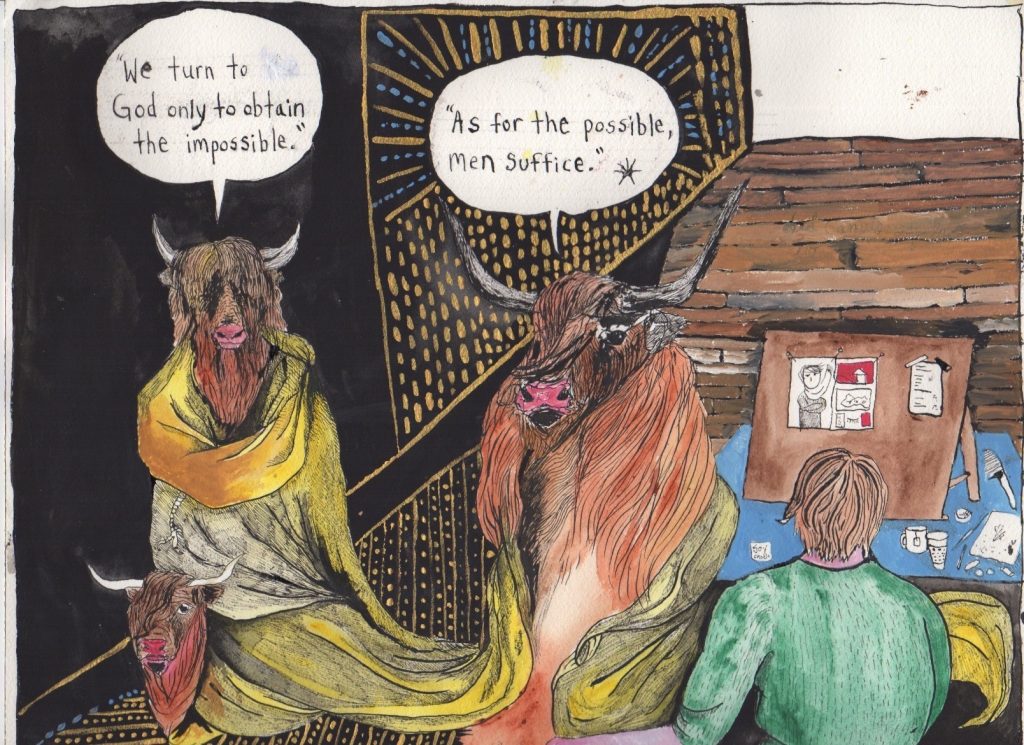
In Bianca Stone’s essay, Why I Make Poetry Comics, the poet reflects on what it means to make art that is “unloved and unfeared–just as poetry is.” According to her, the practice of poetry comics depends on John Keat’s negative capability, which is to say, a healthy embrace of Uncertainty – a willingness to try, and an equal willingness to fail. Bob Dylan says creativity isn’t “like a freight train going down the tracks. It’s something that has to be caressed and treated with a great deal of respect. . . you’ve got to program your brain not to think too much.” Though they aren’t freight trains, poetry comics are vehicles driven by feeling. A desire to convey an ineffable experience, map a memory, or liberate the self appear to be at the root of why one might choose this peculiar form of storytelling. For me, poetry comics have provided permission to test the boundaries of comics and take risks in my work. I think this is because, as Bianca Stone puts it, “Poetry comics confront two sides of our brain, and like existentialism, reject a systematic philosophy, or any vow to define the world of human existence with a neat formula that limits metamorphosis.” I hope to create comics that are always evolving, in a state of metamorphosis. Not thinking too much unlocks this freedom. However, that’s not to devalue the labor of comics.
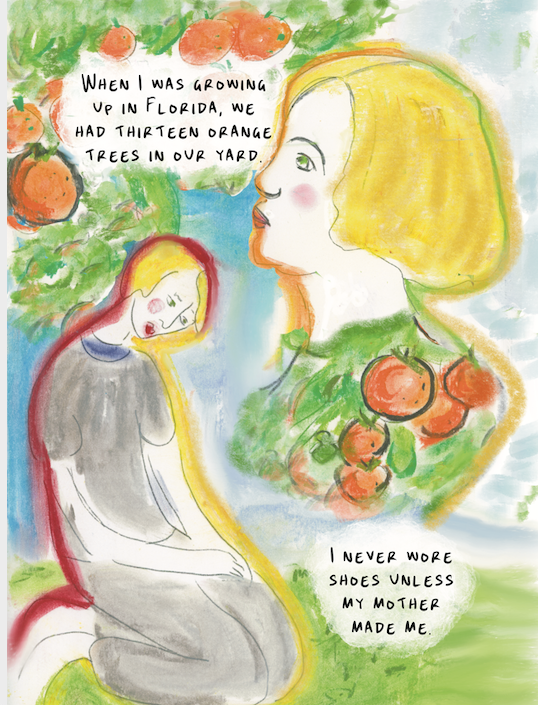
Poetry comics are not only uncertain, they are unclassifiable. They defy the conventions of both their form and genre. Jesse Lee Kercheval’s graphic memoir, French Girl, published by Fieldmouse Press, is pitched as graphic memoir, yet also appeals to poetry comics in its lyrical, nonlinear vignettes. If we adhere to Harvey Pekar’s definition of a comic as “words and pictures,” wherein “you can do anything with words and pictures,” then French Girl is a comic, but it has no traditional sequences, no gutters, no clear narrative arc beyond an internal search for meaning.
Lynda Barry helped me unlearn the barrier between words and pictures in order to just embrace creativity and storytelling, to put art over categories and make comics as authentically as I can by seeing art as a place I can go to in my composition notebook rather than a thing I do. Barry helped me realize that just as “there is no correct way to use this book,” there is also no correct way to make comics. The best art has the same quality of aliveness that children have when they scribble on paper – the lines are free, untethered by any theory or dogma, and alive.
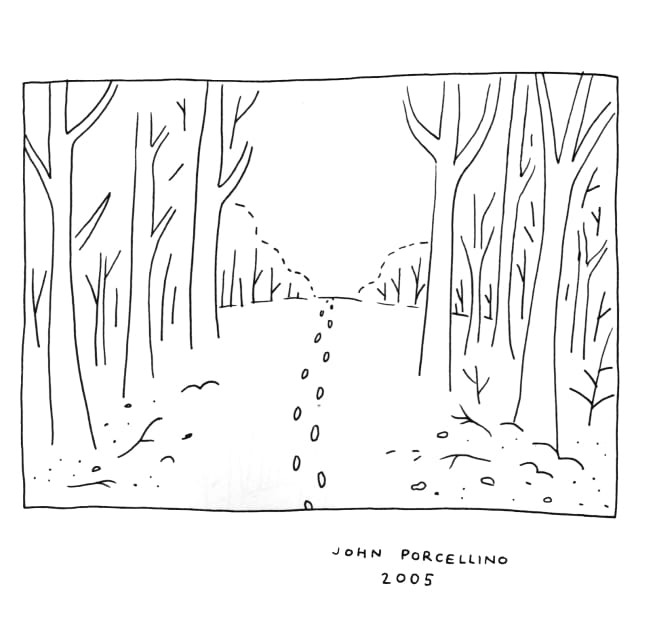
John Porcellino’s From Lone Mountain was another permission granting book. I realized comics are not bound by any traditional format or panel by panel sequence. They can include any combination of words or images, as long as they express some emotion or feeling to the reader. Sometimes all you need is three panels. The act of compression can benefit nonfiction narratives.
The Will Eisner books, Comics and Sequential Art and Graphic Storytelling and Visual Narrative, offered foundational craft techniques to help me learn the building blocks of what makes comics great, what comics can do that other media can’t, and how to make my own. The Rose Metal Press Field Guide to Graphic Literature showcased the full potential of the medium and inspired me to take way more creative risks, following Nick Francis Potter’s advice to “take your line for a walk” and see where it leads, letting my hand guide me across the tundra of the blank page. Poetry comics are a space for exploration and self-discovery, for liberation and the ineffable. Poetry comics say fuck what anyone else thinks a comic should be. This is mine.
Comix artist and poet, Mita Mahato, author of the collection Arctic Play, defines the poetry comic as “a hybrid form of poetry and comics. Not a new form, its roots extend to ancient hieroglyphs and cave paintings, in the idea that stories can be told, and songs recorded, in words and pictures. Both comics and poetry have grounding in image, in movement, and sequential structure (think stanzas and panels). More recently, aided by the visual accessibility of digital media, comics poetry (and its cousin motion poems) have exploded as an evocative art form.” When people ask me why I make comics, especially in a writing program, there is often an underlying question hiding behind the first one: why make comics when you could just write?
My answer has always been terribly unacademic: Because I love comics. Because comics can say the unsayable. Because I want to take my messy lines on walks forever like dogs without leashes.
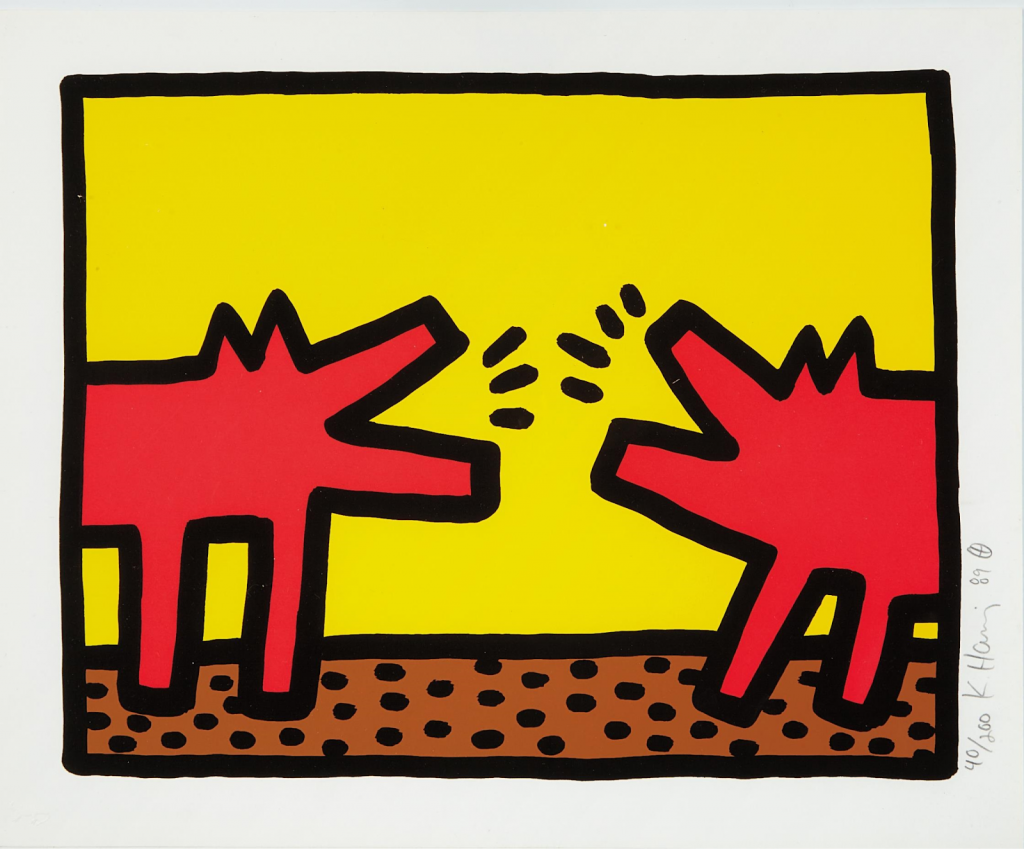
My definition of poetry comics might best fit Judith Butler’s definition of love, a medium that is: “not a state, a feeling, a disposition, but an exchange, uneven, fraught with history, with ghosts, with longings that are more or less legible to those who try to see one another with their own faulty vision.” From poetry comics, I learned making art is not about attaining some goal of technical perfection or seeking external validation. I don’t care if someone thinks I’m making art the wrong way, or not doing what I’m supposed to. Like Keith Haring, I believe “Art should be something that liberates your soul, provokes the imagination and encourages people to go further.” There’s something punk about disregarding the rules in favor of authenticity. I learned that, ultimately, this craft is a pursuit that depends on observing yourself and the world around you, and being bold enough to believe in your vision even if nobody else does. In other words, making poetry comics taught me that art is not about being good, it’s about finding new ways to see. It’s about seeing your art as worthy of being made, even if it doesn’t fit into any defined box.
Sources Cited
https://jck.nl/en/stories-and-analysis/meet-charlotte-salomon
https://www.thestranger.com/books/2015/10/29/23078057/short-run-festival-spotlight-mita-mahatos-cut-up-comics
https://plumepoetry.com/why-i-make-poetry-comics-by-bianca-stone/
https://www.tcj.com/reviews/big-gorgeous-jazz-machine/
https://www.printed-editions.com/blog/keith-haring-quotes/
https://www.mutualart.com/Artwork/Barking-Dogs-from-Pop-Shop-Quad-IV/7E47EBD94FF2E2A4
https://artline.org/2023/05/29/charlotte-salomon-leben-oder-theater-aus-den-fugen-geratene-zeit-und-welt/
https://jck.nl/en/stories-and-analysis/charlotte-salomon-voor-beginners
SOLRAD is made possible by the generous donations of readers like you. Support our Patreon campaign, or make a tax-deductible donation to our publisher, Fieldmouse Press, today.
Leave a Reply